Back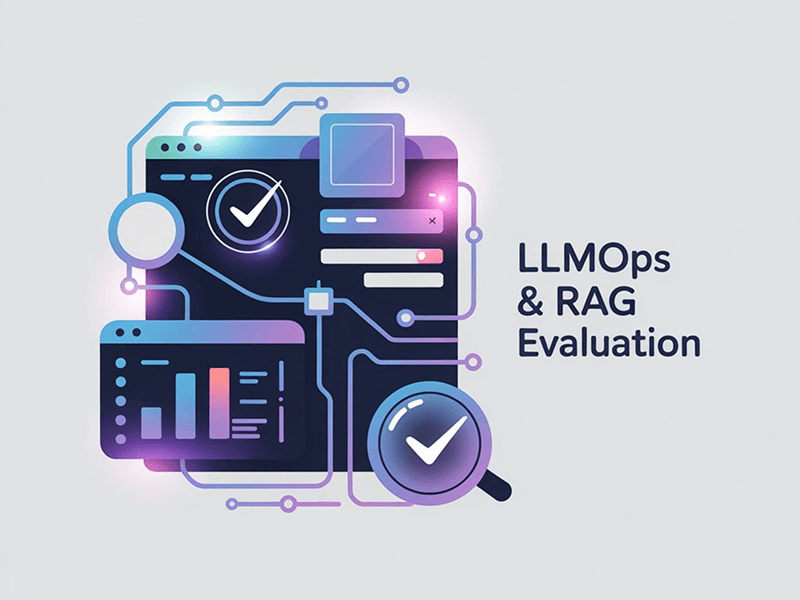
Collection17 articles
LLMOps & RAG Evaluation
Tools for testing, evaluating, monitoring, and managing the entire lifecycle of your LLM systems.
Curated Articles & Updates


GLM-5.2 vs Claude Opus 4.8 vs GPT-5.6 vs Kimi: Best Coding AI (2026)
June 30, 2026
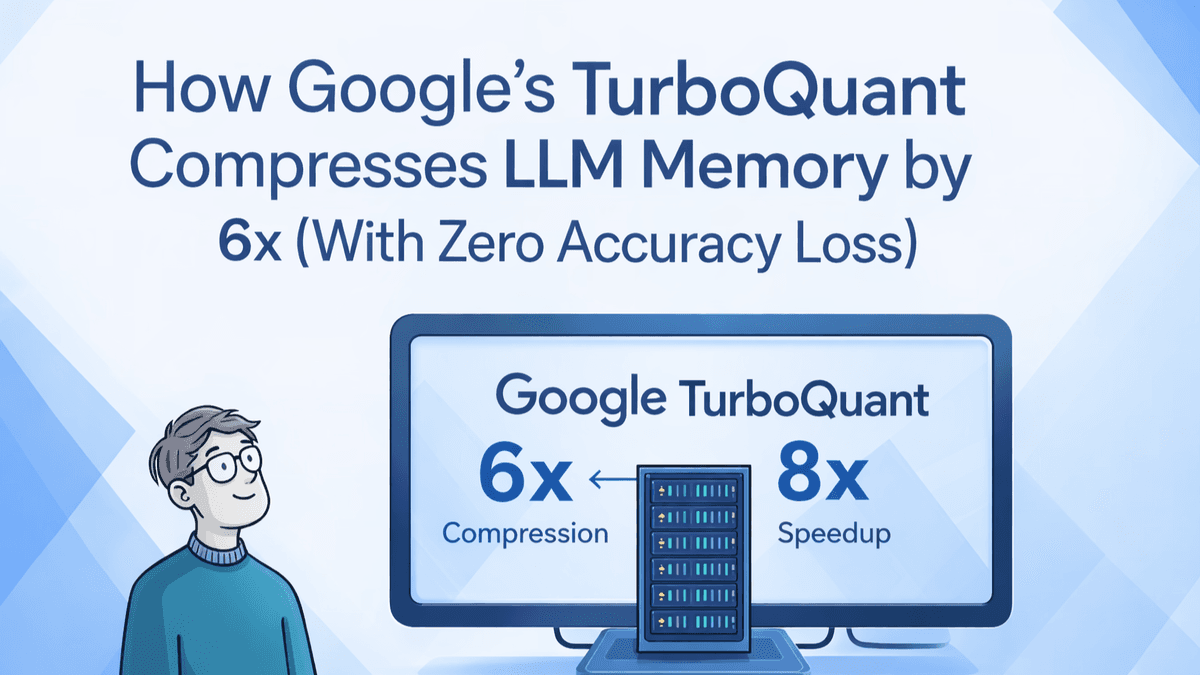
How Google's TurboQuant Compresses LLM Memory by 6x (With Zero Accuracy Loss)
March 26, 2026

Evaluating LLM Responses with Judges Library
March 13, 2025
OpenLLMetry: Mastering Observability in LLM Applications
March 10, 2025
TextGrad: Optimizing AI-Generated Text with Gradient-Based Techniques
March 06, 2025
Agenta: The Ultimate Open-Source LLMOps Platform for AI Development
March 04, 2025
Mastering LLM Evaluation with PromptBench
February 28, 2025
GPTCache: Supercharge Generative AI
February 17, 2025
Supercharge LLM Inference with vLLM
February 14, 2025
Langfuse: Open Source LLM Engineering Platform
January 13, 2025
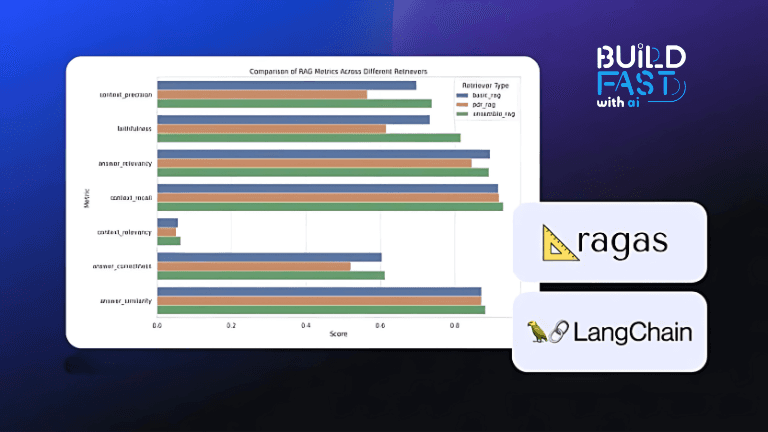
Ragas: Evaluation Framework for RAG Systems
January 13, 2025
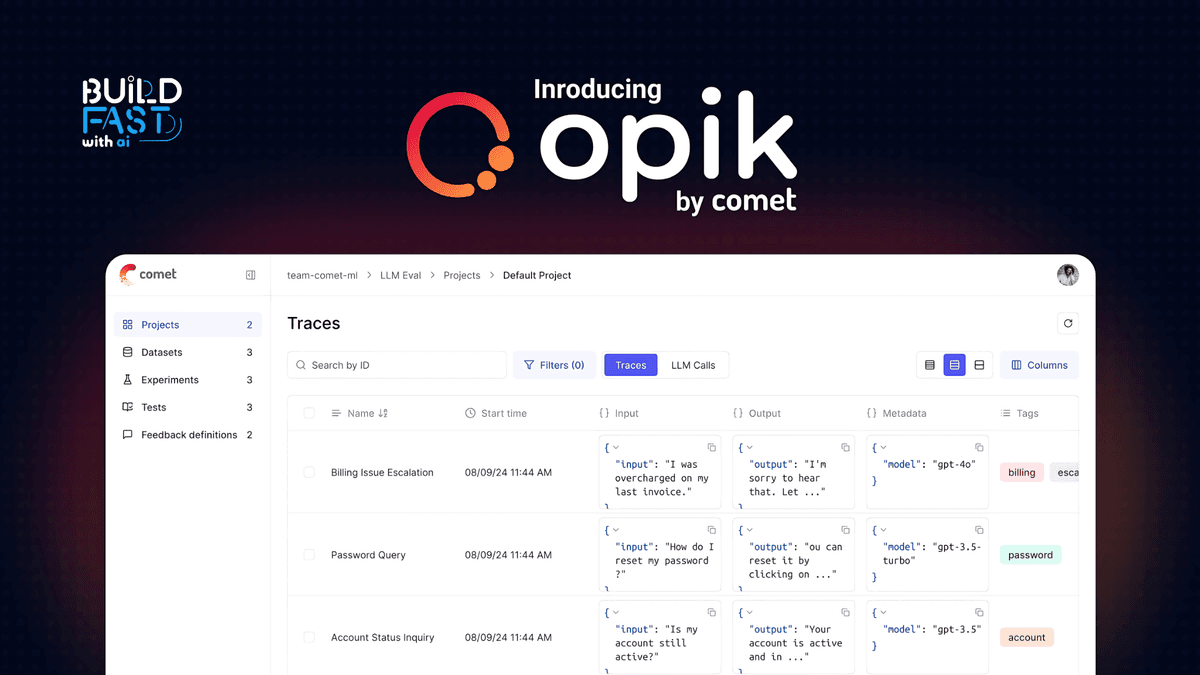
Opik: LLM Evaluation and Monitoring
January 13, 2025

Giskard Evaluation & Testing Framework for AI Systems
January 09, 2025

MLflow: A Machine Learning Lifecycle Platform
January 07, 2025
What Is LLMOps?
LLMOps — Large Language Model Operations — is the discipline of deploying, monitoring, evaluating, and continuously improving LLM-powered applications in production. It is to AI applications what DevOps is to software engineering: a set of practices, tools, and cultural norms that bridge the gap between building a model or application in development and running it reliably, cost-effectively, and safely at scale.
Traditional software monitoring tracks metrics like latency, uptime, and error rates. LLMOps adds an entirely new dimension: the quality of the model's outputs. An LLM application can return a 200 OK response while simultaneously hallucinating a fact, misunderstanding a user's intent, or leaking information it should not have. LLMOps is how you catch and fix those failures systematically.
The LLMOps Lifecycle
A mature LLMOps practice covers four stages. Development and experimentation involves prompt engineering, model selection, and pipeline design. Evaluation before deployment uses automated test suites and human review to establish quality baselines before any code ships to production. Production monitoring tracks real user interactions for quality regressions, latency spikes, cost anomalies, and safety issues in real time. Continuous improvement closes the loop by using production failures and user feedback to improve prompts, retrieval configurations, and fine-tuning datasets.
Essential LLMOps Tools in 2026
LangSmith (by LangChain) is the most complete observability platform for LLM applications. It provides end-to-end tracing of every chain and agent run, a dataset management system for building evaluation test suites, and an automated evaluation framework that scores outputs on correctness, faithfulness, and custom criteria. Langfuse is the leading open-source alternative — self-hostable, privacy-first, and deeply integrated with all major frameworks. Arize AI and Weights & Biases are popular in enterprise environments where teams need model performance monitoring alongside traditional ML metrics.
RAG Evaluation: The Hardest Problem in LLMOps
Evaluating a RAG system is particularly challenging because failure can occur at two stages: retrieval (did you find the right documents?) and generation (did the model use those documents correctly?). RAGAS is the de facto standard evaluation framework for RAG systems, providing automated metrics for context precision, context recall, faithfulness, and answer relevancy — all measurable without manual labeling using an LLM as an evaluator. DeepEval extends this with a broader suite of metrics including hallucination detection, toxicity, bias, and custom goal-based metrics.
Key Metrics Every LLM Application Should Track
Beyond standard latency and error rate monitoring, LLM applications should track: hallucination rate (what percentage of responses contain factually incorrect claims?), retrieval precision and recall (for RAG systems), token cost per query (to catch prompt bloat before your bill explodes), human evaluation agreement rate (how often do automated scores align with human judgment?), and user feedback signals (thumbs up/down, regeneration rate, session abandonment) as proxy measures of output quality.
Getting LLMOps right is what separates teams that successfully scale AI applications from those that get stuck firefighting production incidents. The resources in this collection will help you build the evaluation, monitoring, and continuous improvement infrastructure your LLM application needs — from running your first automated eval to building a fully instrumented production pipeline.
Frequently Asked Questions
What is LLMOps and why do I need it?
LLMOps is the practice of deploying, monitoring, evaluating, and improving LLM applications in production. You need it because LLM applications can fail silently — producing plausible-sounding but incorrect or harmful responses — without triggering traditional error monitoring. LLMOps gives you the tools to catch and fix those quality failures systematically.
How do I evaluate a RAG system?
Use a framework like RAGAS or DeepEval. RAGAS measures four core metrics: context precision (are retrieved chunks relevant?), context recall (did you retrieve all relevant chunks?), faithfulness (does the answer stick to the retrieved context?), and answer relevancy (does the answer address the user's question?). Build a curated test set of question-answer-context triples and run evaluations before and after any changes.
What is the difference between LangSmith and Langfuse?
LangSmith is LangChain's proprietary observability and evaluation platform — deeply integrated with the LangChain ecosystem, excellent for teams already using LangChain. Langfuse is the open-source, self-hostable alternative with first-class integrations for most major frameworks. If data privacy and self-hosting are priorities, Langfuse is the better fit.
How do I detect hallucinations in my LLM application?
Use a faithfulness metric from RAGAS or DeepEval that checks whether every claim in the LLM's response is grounded in the provided context. For RAG applications, this is measurable without human labeling. For non-RAG use cases, you can use an LLM-as-judge approach where a separate model evaluates the factual accuracy of responses against a ground truth knowledge base.
How do I reduce the cost of running my LLM application in production?
Track token cost per query and identify the top 10% of queries consuming the most tokens — these usually contain bloated system prompts or excessive context. Use prompt compression techniques, implement semantic caching (returning cached responses for semantically similar queries), and consider routing simple queries to smaller, cheaper models using a classifier or LLM router.
What is an LLM evaluation dataset and how do I build one?
An evaluation dataset is a curated set of test cases — inputs paired with expected outputs or grading criteria — used to measure your application's quality before and after changes. Start by collecting real user queries from production logs (with PII removed), write expected answers for a representative sample, then use an LLM to generate additional synthetic test cases that cover edge cases and known failure modes.
Recommended
View all%25203%2520(2).png&w=96&q=75)
AI Agent Frameworks
52 articles
AI Applications & Use Cases
57 articles
AI Automation & No-Code
18 articles
AI Careers, Salary & Resume
13 articles
AI Coding Tools
46 articlesWaitlist Open
Agentic AI Launchpad
Will you be among the 1% who build AI Agents, or the 99% who just use them? Master AI app development.
- 6 Weeks Live Mentorship
- Build & Deploy 5+ Apps
- No Coding Required

Subscribe to updates
Get the latest insights directly in your inbox.