Back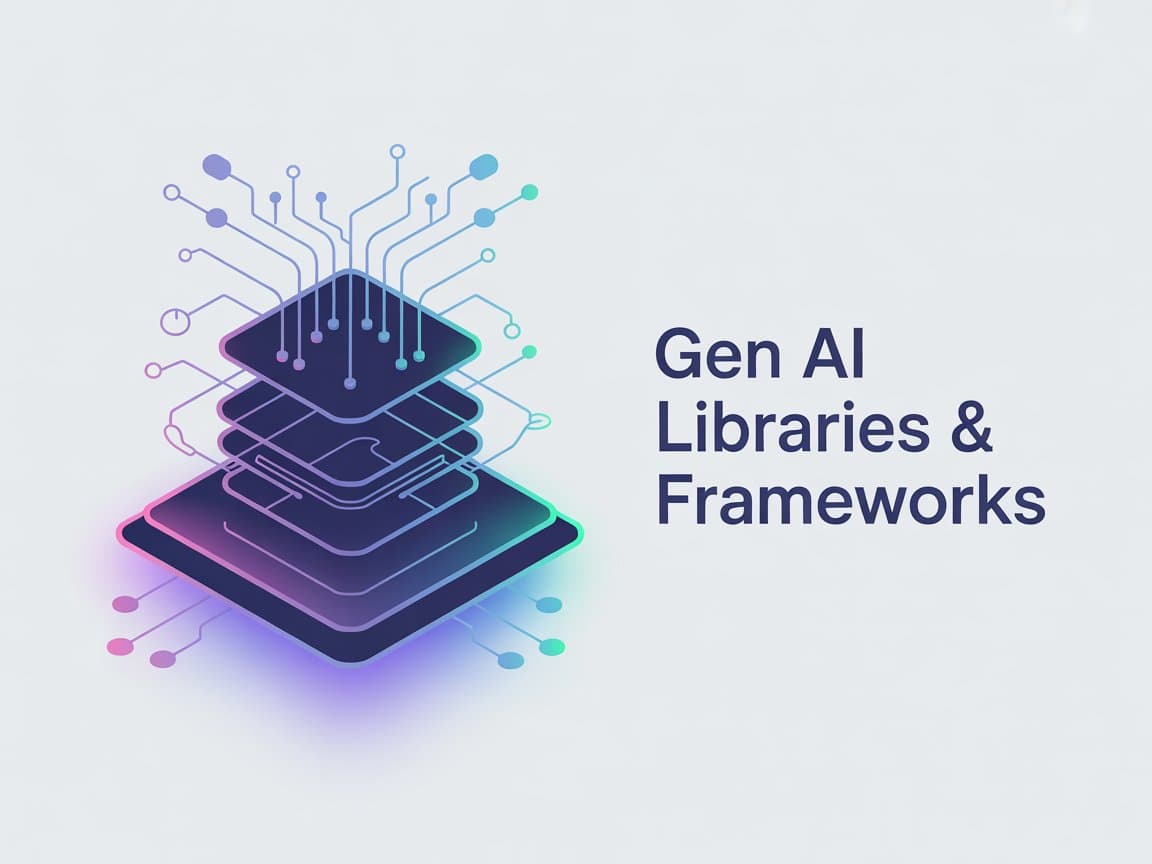
Collection34 articles
Gen AI Libraries & Frameworks
Master the fundamental libraries and frameworks that form the building blocks of modern applications.
Curated Articles & Updates


Grok for Excel: How to Install It (2026 Guide)
July 21, 2026
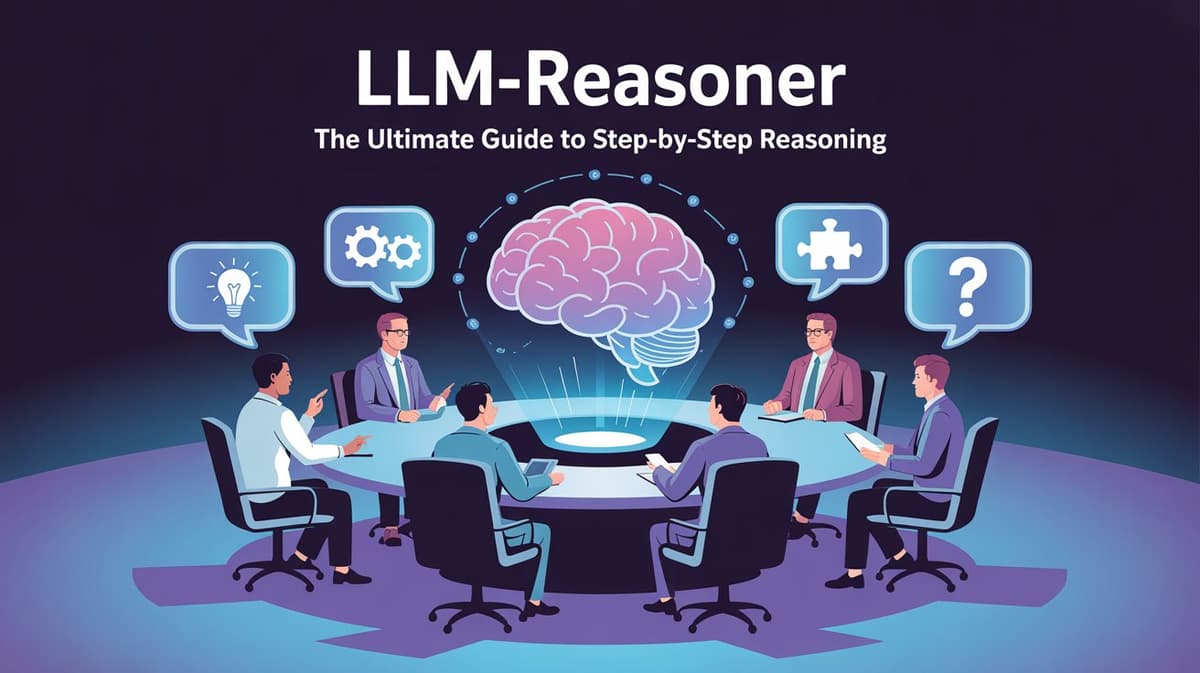
LLM-Reasoner: The Ultimate Guide to Step-by-Step Reasoning
March 12, 2025
Mastering NLP with Promptify
February 26, 2025
LMQL: The Game-Changing AI Query Language
February 24, 2025
Mastering AI Automation with LLMWare: A Deep Dive
February 19, 2025
Supercharge LLM Inference with vLLM
February 14, 2025
Embedchain: Building AI-Powered Chatbots
February 03, 2025
Mastering Hugging Face Transformers🚀
January 31, 2025
How Gensim Makes Topic Modeling Easy for Any Dataset
January 28, 2025
Mastering AI Orchestration with Semantic Kernel: A Hands-On Guide
January 24, 2025
Tiktoken: High-Performance Tokenizer for OpenAI Models
January 23, 2025
DeepPavlov: Advanced Conversational AI Framework
January 23, 2025
FLAML: The Secret Weapon for Effortless ML & AI Mastery!
January 15, 2025
Guidance: Structured LLM Generation
January 10, 2025
Unsloth: Fine-tune Models 2-5x Faster with 80% Less Memory
January 10, 2025
Fireworks AI: Building Advanced Generative Applications
January 04, 2025
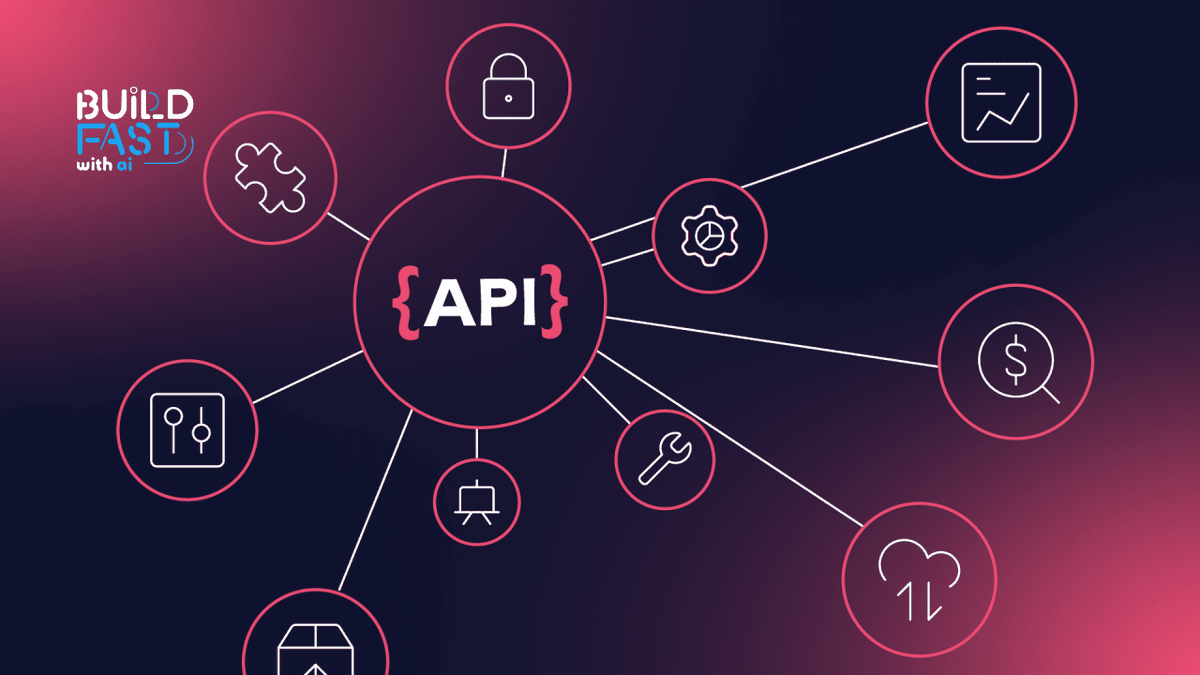
Building with LLMs: A Practical Guide to API Integration
January 04, 2025
Open Interpreter: Local Code Execution with LLMs
January 01, 2025
Guardrails with LangChain: A Comprehensive Guide
December 30, 2024
LangChain Basics: Building Intelligent Workflows
December 29, 2024
Portkey AI: Unified Generative AI Platform
December 26, 2024
The Foundation of Modern AI Development: Gen AI Libraries
Generative AI libraries and frameworks are the foundational layer of the modern AI stack. They are the tools that abstract away the complexity of working directly with LLM APIs, embedding models, prompt pipelines, and multimodal data so you can move faster from idea to working application. Whether you are building a conversational chatbot, a document processing pipeline, a code generation tool, or a fully autonomous agent, the right library is what turns a weekend prototype into a production-ready system.
In 2026, the ecosystem has matured significantly. The early chaos of dozens of competing micro-libraries has consolidated around a handful of dominant frameworks that offer comprehensive, well-documented, battle-tested tooling for the full AI application lifecycle.
Core Categories of Gen AI Libraries
The generative AI library ecosystem breaks down into several distinct but overlapping categories. Orchestration frameworks like LangChain and LlamaIndex handle the plumbing of connecting LLMs to data sources, tools, memory, and output parsers. Model access and inference libraries like the official Anthropic SDK, OpenAI Python SDK, and Hugging Face Transformers give you direct, type-safe access to model APIs. Prompt engineering toolkits like DSPy and Guidance let you programmatically construct, optimize, and compile prompts rather than writing them by hand. Multimodal processing libraries handle the ingestion and transformation of images, audio, PDFs, and structured data before they reach the model.
The Libraries Every AI Developer Should Know
LangChain remains the most widely used orchestration framework in 2026, with an enormous ecosystem of integrations covering virtually every LLM provider, vector store, and tool. Its Expression Language (LCEL) makes it easy to compose complex pipelines with streaming, tracing, and fallback logic. LlamaIndex is the go-to framework specifically for building data-intensive AI applications — its data ingestion, chunking, indexing, and query engine abstractions make it significantly easier to build RAG systems over large, heterogeneous document collections than doing so manually.
Hugging Face Transformers is the backbone of open-source AI. It gives you access to thousands of pre-trained models for text generation, classification, embedding, image recognition, and more, all with a unified API. For teams that want to run models locally or fine-tune on proprietary data, Transformers combined with PEFT (Parameter-Efficient Fine-Tuning) and Accelerate is the standard stack. DSPy represents a new paradigm: instead of writing prompts, you write programs with typed signatures and let the framework optimize the prompts and few-shot examples automatically. Instructor is an essential companion for any application that needs structured, schema-validated output from LLMs — it wraps any OpenAI-compatible API and guarantees the response conforms to a Pydantic model.
How to Pick the Right Library for Your Stack
If you are building a RAG-heavy application (document QA, knowledge bases, enterprise search), start with LlamaIndex. If you are building agent workflows, custom chains, or need maximum integration breadth, LangChain is the better fit. If your application needs to work with open-source or self-hosted models, Hugging Face Transformers is non-negotiable. For any production application, pair your orchestration framework with the official SDK for your primary LLM provider (Anthropic, OpenAI, Cohere) to get the fastest, most feature-complete access to new model capabilities as they ship.
The curated resources in this collection cover all of these libraries in depth, with tutorials ranging from first API call to advanced production patterns like streaming, structured output, tool use, and observability integration. Bookmark this collection as your reference for the current best practice at every layer of the gen AI stack.
Frequently Asked Questions
What is the difference between LangChain and LlamaIndex?
LangChain is a general-purpose orchestration framework for building LLM-powered applications — it covers agents, chains, memory, and a vast library of integrations. LlamaIndex is specialized for data-intensive applications, particularly RAG systems over large document collections. Many teams use both: LlamaIndex for data ingestion and retrieval, LangChain for the agent layer and tool integrations.
Do I need a framework, or can I just use the LLM API directly?
For simple, single-turn applications, calling the API directly is perfectly fine and keeps your code lean. As soon as you need streaming, multi-turn conversation history, tool calling, retries, structured output validation, or connection to external data sources, a framework like LangChain or LlamaIndex will save you significant time.
What is DSPy and when should I use it?
DSPy is a framework that lets you write AI programs using typed signatures instead of hand-written prompts. The framework then automatically optimizes the prompts and few-shot examples using your training data and a target metric. Use it when you find yourself spending more time tuning prompts than building features, or when you need reproducible, testable AI pipelines.
What is the Hugging Face Transformers library used for?
The Transformers library gives you access to thousands of open-source pre-trained models for text generation, classification, embedding, summarization, image recognition, and more. It is the standard toolkit for teams running models locally, fine-tuning on proprietary data, or building applications where sending data to a third-party API is not acceptable.
How do I get structured JSON output from an LLM?
Use the Instructor library, which wraps any OpenAI-compatible API and uses Pydantic models to define your output schema. Instructor automatically retries with validation error feedback if the model produces invalid output, making structured extraction reliable in production. Alternatively, most major LLM APIs now support native JSON mode or structured output.
Which generative AI framework is best for beginners?
Start with the official SDK for the LLM you are using (Anthropic SDK or OpenAI SDK) — they are well-documented and low-boilerplate. Once you are comfortable with the basics, move to LangChain or LlamaIndex for more complex applications. Both have excellent documentation, active communities, and extensive tutorials for developers at every level.
Recommended
View all%25203%2520(2).png&w=96&q=75)
AI Agent Frameworks
52 articles
AI Applications & Use Cases
57 articles
AI Automation & No-Code
18 articles
AI Careers, Salary & Resume
13 articles
AI Coding Tools
46 articlesWaitlist Open
Agentic AI Launchpad
Will you be among the 1% who build AI Agents, or the 99% who just use them? Master AI app development.
- 6 Weeks Live Mentorship
- Build & Deploy 5+ Apps
- No Coding Required
Subscribe to updates
Get the latest insights directly in your inbox.