Back
Collection22 articles
Data & Application Development
Extract, process, and transform raw data into intelligent applications that solve real problems.
Curated Articles & Updates


How to Use AI as a Data Analyst: 40 Python, SQL & ChatGPT Prompts
February 12, 2026
How to Build the World's Fastest AI Game Generator with Qwen + Cerebras
August 08, 2025
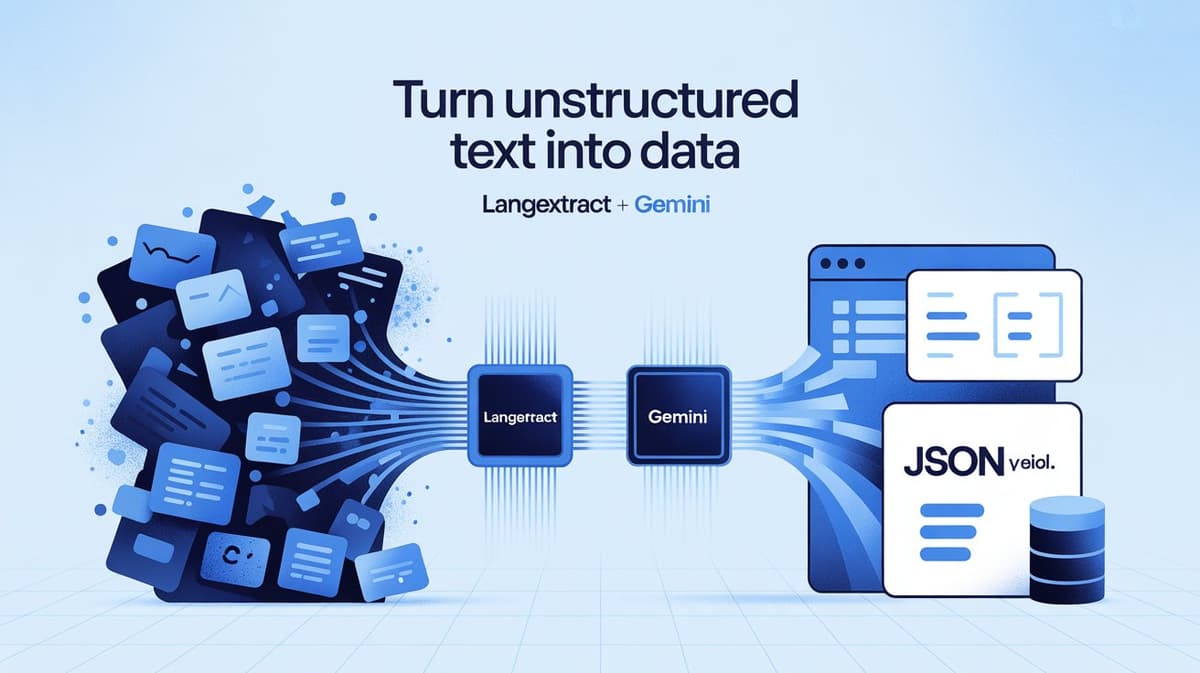
Extract Structured Data from Unstructured Text Using LangExtract + Gemini
August 06, 2025
What is Mistral OCR?
March 10, 2025
Unstructured: The Best Tool for Text Preprocessing
March 06, 2025
Analyzing the Stock Market with AI
March 03, 2025
Mastering AI Automation with LLMWare: A Deep Dive
February 19, 2025
Redis for Generative AI: Fast Data & Vector Search
February 14, 2025
Serverless PostgreSQL & AI: NeonDB with pgvector
February 14, 2025
FastAPI for AI Integration: Build and Deploy AI-Powered APIs
February 10, 2025
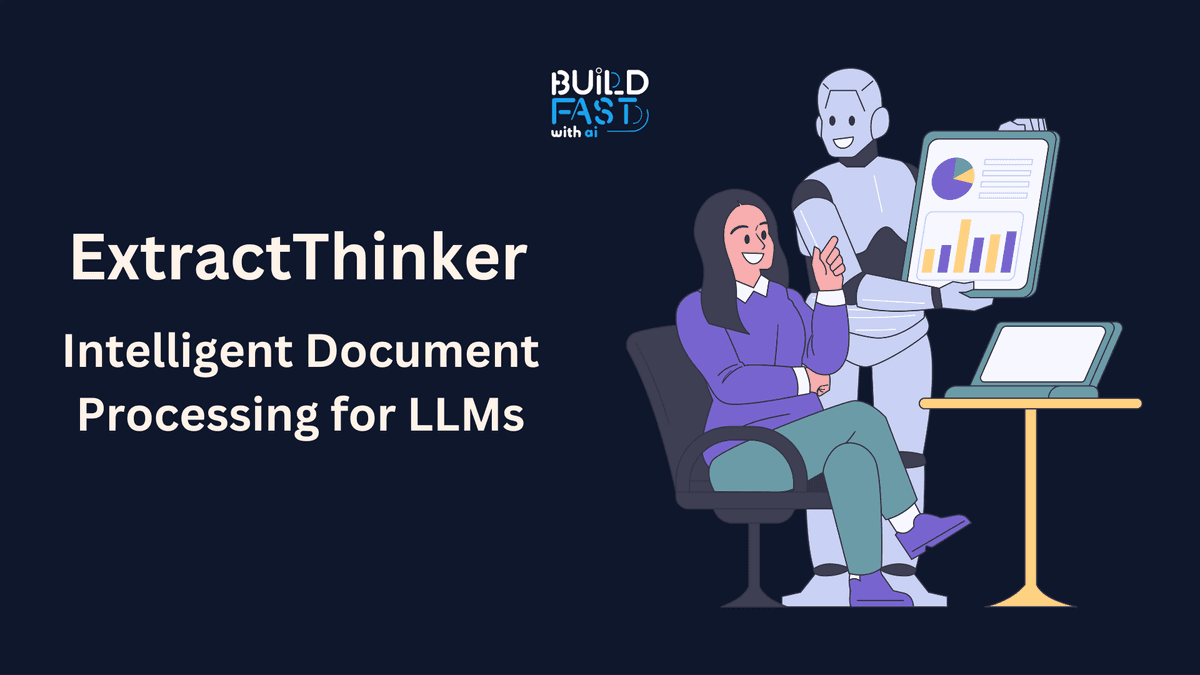
ExtractThinker vs. Manual Work: Why AI Wins Every Time!
January 30, 2025
Docling: From PDFs to AI-Powered Insights
January 24, 2025
Streamlit in Google Colab
January 23, 2025

Build Stunning AI Apps in Minutes with Gradio and Google Colab
January 23, 2025
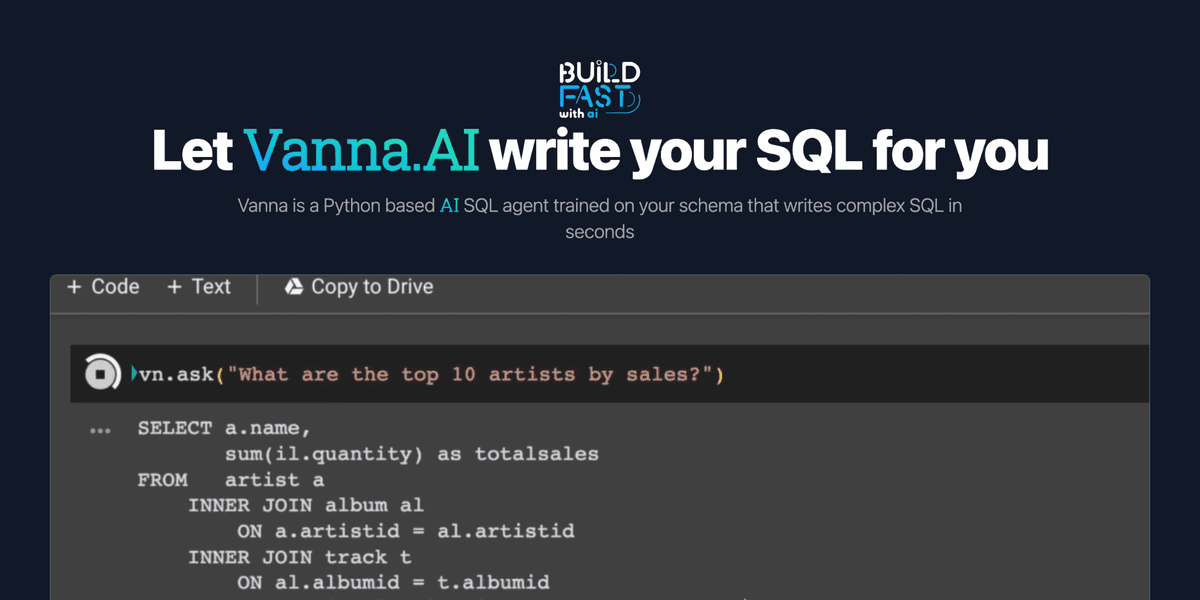
Vanna.AI: Turning Words into SQL Magic for Effortless Data Analysis
January 17, 2025
Llama Parse: Transform Unstructured Data with Ease
January 08, 2025

FireCrawl: Advanced Web Scraping and Data Extraction for AI Applications
December 25, 2024
E2B: Integrating Language Models with Python Execution for Advanced Analytics
December 18, 2024
Data Analysis with PandasAI: An Intelligent Way to Explore Data
December 11, 2024
Building Intelligent Applications on Top of Your Data
The most transformative AI applications in 2026 are not the ones built on top of generic foundation models — they are the ones that combine the reasoning power of LLMs with an organization's proprietary data. The challenge is getting that data into a form the model can work with: clean, structured, semantically enriched, and retrieved at exactly the right moment. That is what data and application development for AI is all about.
Whether you are extracting structured information from unstructured PDFs, building ETL pipelines that feed a vector database, creating a real-time data processing system that triggers AI-powered actions, or developing a full-stack application with AI embedded in its core workflows, this collection covers the tools, techniques, and patterns you need.
The AI-Powered Data Pipeline Stack
A modern AI data pipeline typically consists of four layers. Ingestion handles pulling data from its source — files, APIs, databases, web scraping, or real-time streams. Libraries like Unstructured.io and LlamaParse have made it dramatically easier to extract clean, markdown-formatted text from PDFs, Word documents, PowerPoints, and HTML pages. Processing and transformation involves chunking, cleaning, deduplication, metadata extraction, and enrichment — using both traditional data processing tools (pandas, Polars, DuckDB) and LLMs for tasks like entity extraction, classification, and summarization. Storage and indexing means persisting processed data in the right format for its downstream use: a vector database for semantic retrieval, a relational database for structured queries, an object store for raw files. Serving is making that data available to the AI application layer — via RAG pipelines, tool calls, or structured database queries from an LLM agent.
Key Tools for AI Application Development
FastAPI has become the standard framework for building AI application backends in Python, thanks to its async-first architecture, automatic OpenAPI documentation, and excellent support for streaming LLM responses via Server-Sent Events. Streamlit and Gradio remain the fastest way to build internal AI tools and demos — a working chatbot with a file upload UI can be live in under 50 lines of Python. For production-grade full-stack AI applications, Next.js paired with the Vercel AI SDK has become the front-end standard, offering built-in hooks for streaming chat, structured generation, and tool use.
DuckDB is the silent workhorse of the AI data stack — an in-process analytical database that can query Parquet files, JSON, CSV, and even remote S3 buckets at speeds that make pandas look slow, with zero infrastructure setup. Polars is replacing pandas for large-scale data processing thanks to its lazy evaluation engine and 10-50x performance advantage. Unstructured.io and Docling handle the hardest part of any AI data pipeline: turning messy, heterogeneous document formats into clean, structured text.
Patterns for Production AI Applications
Production AI applications in 2026 are built around a few proven patterns: background processing for long-running AI tasks (using queues like Celery or Inngest to avoid HTTP timeouts), streaming responses for better perceived performance in conversational interfaces, structured output for AI features that feed into downstream systems, and caching at both the semantic and exact-match level to control cost at scale. The resources in this collection walk through each of these patterns with real implementation examples you can adapt to your stack.
Frequently Asked Questions
How do I extract text from PDFs for an AI application?
Use Unstructured.io or Docling for production-grade PDF extraction — they handle tables, headers, columns, and embedded images far better than simple text extraction. LlamaParse is the best option for complex PDFs that need to be converted into clean markdown for downstream LLM processing. For simple, text-only PDFs, PyMuPDF (fitz) is lightweight and fast.
What is the best way to build an AI application backend in Python?
FastAPI is the standard choice for production AI backends. It is async-first (essential for non-blocking LLM API calls), supports Server-Sent Events for streaming responses, and automatically generates OpenAPI documentation. Pair it with Pydantic for request/response validation and SQLAlchemy or SQLModel for database access.
How do I handle long-running AI tasks without timing out?
Move long-running tasks (document processing, multi-step agent runs, batch LLM operations) to a background job queue. Celery with Redis, Inngest, or Modal are all excellent options. Return a job ID immediately to the client, then poll for status or use webhooks to notify the client when the job completes.
What is DuckDB and why is it useful for AI applications?
DuckDB is an in-process analytical database that runs inside your Python process with no server to manage. It can query Parquet, JSON, CSV, and S3 files directly with SQL at speeds 10-100x faster than pandas for analytical queries. It is ideal for pre-processing datasets before embedding, running analytical queries over AI-generated structured outputs, or building lightweight data APIs.
How do I build a full-stack AI application?
A common production stack in 2026: Next.js frontend with the Vercel AI SDK for streaming chat and structured generation, FastAPI backend handling LLM orchestration and business logic, a vector database for RAG retrieval, and PostgreSQL for application data. For internal tools and demos, Streamlit or Gradio can get you from zero to working app in hours.
How do I reduce AI API costs in a data processing pipeline?
Use smaller, cheaper models for classification and extraction tasks where a large model is overkill. Implement batch processing to use the Anthropic or OpenAI batch API (50% cheaper than synchronous calls). Cache results for repeated inputs using a semantic cache layer. And always profile your token usage per pipeline stage to find the biggest cost drivers before optimizing.
Recommended
View all%25203%2520(2).png&w=96&q=75)
AI Agent Frameworks
52 articles
AI Applications & Use Cases
57 articles
AI Automation & No-Code
18 articles
AI Careers, Salary & Resume
13 articles
AI Coding Tools
46 articlesWaitlist Open
Agentic AI Launchpad
Will you be among the 1% who build AI Agents, or the 99% who just use them? Master AI app development.
- 6 Weeks Live Mentorship
- Build & Deploy 5+ Apps
- No Coding Required

Subscribe to updates
Get the latest insights directly in your inbox.