



OpenClaw 2026.5.2: Codex, Grok 4.3 & What's New
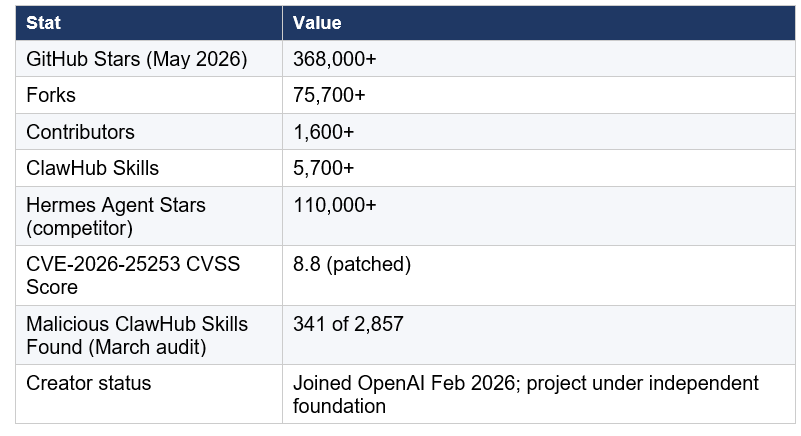
OpenClaw now has 368,000 GitHub stars. For context, that's more than React earned in its first decade.
Version 2026.5.2 landed on May 3rd, and if your feed was quiet about it, that's because this isn't the kind of release that makes headlines. No viral demo. No wild new capability. What it is: the kind of platform release that makes the difference between an agent you can actually trust to run overnight and one that fails silently at 2 AM. I run agents 24/7, and this release fixes a class of problems I care about deeply.
Here's everything that changed, what it means in plain English, and the two additions you shouldn't skip.
What Is OpenClaw 2026.5.2?
OpenClaw 2026.5.2 is a platform stability and plugin reliability release that shipped on May 3, 2026. It is not a single-feature drop. It strengthens plugin lifecycle management, trims gateway startup overhead, hardens Control UI and WebChat, and fixes real-world channel edge cases across a wide surface area.
OpenClaw itself is an open-source personal AI agent built by Austrian developer Peter Steinberger and now maintained by an independent foundation after Steinberger joined OpenAI in February 2026. You run it on your own hardware, connect it to an LLM of your choice (Claude, GPT, Gemini, or local models via Ollama), and talk to it through messaging apps you already use: WhatsApp, Telegram, Slack, Discord, iMessage, and more.
If you're entirely new to the project, the Build Your First AI Agent guide is the fastest on-ramp before coming back to this release breakdown.
What makes OpenClaw different from a chatbot isn't the model — it's that the agent runs continuously, remembers everything, and executes actions on your behalf without being prompted. It's the difference between a tool you use and an assistant that works.
OpenClaw 2026.5.3 Update: What Changed (May 5, 2026)
Moonshot AI shipped OpenClaw 2026.5.3 one day after the 2026.5.2 release. This is a targeted patch focused on plugin reliability, messaging stability, and daily workflow improvements. Here is every change that matters.
Plugin Install Improvements
Plugin installation is more reliable in 2026.5.3. The update adds proper npm package support, smarter fallback behavior when an install partially fails, and auto-repair logic that detects and fixes broken plugin states without manual intervention. If you have had plugins silently fail to load after an update, this patch addresses the root cause.
New /side Command
OpenClaw now has a /side command that works like the existing /btw command — it lets you send a quiet, context-aware aside to the agent without breaking the main conversation thread. Small addition, genuinely useful for developers who manage multiple concurrent agent sessions.
WhatsApp Newsletter and Channel Support
WhatsApp newsletter and channel outbound targets now work properly. This was partially addressed in 2026.5.2 but had edge cases in broadcast workflows. 2026.5.3 closes those gaps. If you run content distribution through WhatsApp, update before your next send.
Discord and Telegram Reliability Fixes
Both Discord and Telegram received stability patches. The fixes address message ordering under high concurrency, dropped replies in thread-bound sessions, and edge cases where the bot would acknowledge a message but fail to deliver the response.
Better Doctor Repair System
The openclaw doctor --fix command got smarter. It now handles a wider range of broken states including corrupted plugin records, stale session locks, and config drift between what the agent expects and what is actually on disk. Run openclaw doctor --fix after updating to let it clean up automatically.
Safer Web Fetch Routing
Web fetch calls now route through a safer validation layer before execution. This prevents a class of errors where malformed URLs or redirects to blocked destinations would crash the fetch tool mid-task rather than failing gracefully with a recoverable error.
Performance: Usage and Session Cache Improvements
Session startup is faster and usage tracking is leaner. The cache layer for active sessions now expires stale entries more aggressively, reducing memory footprint for users running OpenClaw on constrained hardware like Raspberry Pi or a low-spec VPS.
How to Update
npm install -g openclaw@latest
openclaw doctor --fix
That is it. The doctor command will handle config migration automatically.
The Two Headline Features: Codex and Grok 4.3
These are the two changes most developers will care about immediately.
OpenAI Codex Integration via ChatGPT Pro
Codex is now a first-class runtime in OpenClaw. Using a ChatGPT Pro subscription, you can configure OpenClaw to run Codex tasks natively with agentRuntime.id: "codex". The configuration uses openai/gpt-* model references and routes through Codex's native harness rather than the standard OpenAI API path.
The practical headline: the /goal command. You send OpenClaw a high-level objective, and it executes autonomously across multiple steps until the task is done — writing code, running tests, opening PRs, iterating on errors. Long autonomous tasks that used to require babysitting now just run.
The docs clarify an important distinction: openai/gpt-* with agentRuntime.id: "codex" gives you the native Codex runtime (uses your ChatGPT Pro sub). The alternative openai-codex/* route uses PI OAuth instead. Use the first path unless you specifically need PI OAuth.
I think this is the most underrated addition in the release. The /goal command is what makes OpenClaw feel less like an agent and more like a junior developer who works while you sleep. One developer I follow used it to clear 10,000 emails, review pitch decks, and orchestrate Codex workers across a Discord-driven agent fleet, all in a single session. That category of workflow gets significantly easier with this release.
Grok 4.3 Is Now the Default xAI Model
xAI's Grok 4.3 is now bundled into the model catalog as the default chat model for xAI-backed OpenClaw setups. Zero configuration needed — if you were using an xAI provider, you're already on it after updating.
Web search also gets smarter with this change. OpenClaw now passes Gemini freshness and date filters through search grounding, adds DuckDuckGo to the keyless setup path, and gives Grok web search structured timeout errors rather than silent tool-call failures. That last fix matters more than it sounds: silent failures are how agents go off the rails at 3 AM.
Plugin Reliability: The Change That Actually Matters Most
OpenClaw is in the middle of a plugin externalization and npm-first cutover. That's the kind of infrastructure transition that becomes quietly painful if install records, package payloads, and metadata drift apart from disk reality. 2026.5.2 puts serious repair machinery around that transition.
What changed concretely:
- External plugin installation now covers stale configured installs, missing package payloads, and beta-channel fallback
- ClawPack digest metadata persists on ClawHub plugin install and update records, so registry refreshes and download verification can reuse stored artifacts
- Plugin list JSON now includes dependency install state, so you can see what's actually installed vs what's recorded
- Doctor repair paths now handle plugin records that point at missing disk payloads
In plain English: OpenClaw now knows what's installed, where it came from, whether the package is actually present on disk, and what to do when recorded state and reality disagree. For anyone building on top of OpenClaw as a platform, see the AI agent frameworks overview to understand how OpenClaw fits into the broader agent tooling ecosystem.
There's a contrarian point worth making here: if you're a developer choosing between OpenClaw and Hermes Agent right now, plugin ecosystem maturity is where Hermes genuinely lags. OpenClaw's ClawHub has 5,700+ community skills. Hermes generates skills autonomously rather than downloading them, which avoids supply chain risk but means a thinner starting library. Neither approach is wrong. They're just different bets about what trust looks like.
Don't just use ChatGPT. Learn to build custom LLM agents, RAG pipelines, and full-stack Agentic AI apps in our intensive 6-week program.
Gateway Performance and Startup Speed
The gateway and agent hot paths are meaningfully leaner in 2026.5.2. The improvements span startup, session listing, task maintenance, prompt preparation, plugin loading, tool descriptor planning, filesystem guards, and large runtime config handling.
This is the kind of change that doesn't show up in demos. It shows up in your daily experience. Faster startup means less time waiting for the agent to be ready when you send a morning message. Leaner hot paths mean better throughput when the agent is handling multiple tasks. On a Raspberry Pi or a $5 VPS, this matters more than on a Mac mini.
If you're building modular agent architectures that plug into OpenClaw, the Atomic Agents framework guide covers the component patterns that compose cleanly with OpenClaw's architecture.
Two operator-facing additions round out this section: gateway restart now gets force and wait options, and openclaw proxy validate is a new first-class command that lets you verify effective proxy configuration, reachability, and allow/deny destination behavior before deploying. If your OpenClaw setup runs behind a forward proxy, validate before tightening network rules.
Messaging Fixes: Discord, Slack, Telegram, WhatsApp
Channel reliability is where real users feel mistakes. This release addresses a broad set of edge cases across the major messaging integrations.
Slack gets a directory improvement: openclaw directory peers/groups list --channel slack now prefers token-backed live readers instead of cached fallbacks. WhatsApp gains explicit Newsletter support with @newsletter outbound targets, a long-requested feature from users running broadcast workflows. Discord sees fixes around queued-run timeout replies through the shared channel lifecycle queue, preserving message ordering.
Thread bindings are also cleaned up: split subagent/ACP thread-spawn toggles are replaced with a unified threadBindings.spawnSessions configuration, defaulting thread-bound spawns on. The openclaw doctor --fix command migrates legacy keys automatically.
WhatsApp Newsletter support is bigger than it sounds for anyone running content distribution or community update workflows. Before this release, you had to work around the limitation with custom routing. Now it's built in.
TTS, Voice, and Web Search Improvements
Text-to-speech gets extra_body passthrough for OpenAI-compatible TTS endpoints. If you're running a custom speech server that needs fields like lang in the /audio/speech request, you can now pass them without patching the provider. OpenAI-compatible realtime paths also get fixes, as do OpenRouter and DeepSeek replay behavior for follow-up tool-call turns.
Voice call routing is cleaner, and media path fixes span music, file handling, and provider compatibility across Brave, SearXNG, and Firecrawl. LM Studio reasoning metadata is now handled correctly.
Web search gains the most meaningful set of improvements: abort signals route correctly into Gemini provider fetches, managed agent web_search calls late-bind to the current runtime config snapshot, and missing-key errors now point to web_fetch or browser as fallbacks instead of silently failing. For developers building research or automation pipelines, the Building Smart AI Agents guide shows how agent reasoning loops integrate with these tool-call patterns.
OpenClaw 2026 Context: What You Need to Know
If you're new to OpenClaw, the 2026 backdrop matters.
The big structural shift in April 2026: Anthropic removed OpenClaw from standard Claude subscriptions, moving users to a pay-as-you-go model. Agent-based systems consume far more compute than chat usage, and providers are adjusting pricing to reflect that. OpenAI's position has been different — rather than limiting OpenClaw, it hired Steinberger and supports the project's continued development.
Security deserves an honest note. OpenClaw has had a rough run on CVEs in 2026. The February CVE was patched quickly, but the design concentrates risk in ways that matter at scale. The ClawHub marketplace operates like early npm — useful, community-driven, and not fully vetted. If you're running sensitive workflows, treat skill installation with the same skepticism you'd apply to npm packages in production.
The competitor worth watching is Hermes Agent from Nous Research. It takes the opposite architectural bet: a learning-first agent that generates its own skills from experience, bypassing supply chain risk entirely. Read the generative AI libraries and frameworks comparison to understand where OpenClaw fits in the broader tooling landscape.
The only comprehensive program designed to take you from basic prompting to building interactive Artifacts, custom integrations, and deploying production-ready code with Claude Code.
Frequently Asked Questions
What is OpenClaw 2026.5.2?
OpenClaw 2026.5.2 is a platform stability release that shipped on May 3, 2026. It adds Grok 4.3 as the default xAI model, integrates OpenAI Codex via ChatGPT Pro subscriptions (enabling the /goal command for long autonomous tasks), hardens plugin installation and repair, and improves gateway performance, messaging reliability, TTS, and web search across the stack.
What is Grok 4.3 in OpenClaw?
Grok 4.3 is xAI's latest language model, now bundled as the default chat model for OpenClaw's xAI provider integration. In 2026.5.2, it requires zero configuration change — existing xAI-backed setups default to it after updating. The release also adds structured timeout errors for Grok web search and passes date/freshness filters through correctly.
What does the /goal command do in OpenClaw?
The /goal command enables long autonomous task execution via OpenAI Codex. You describe a high-level objective, and OpenClaw executes it across multiple steps — writing code, running tests, iterating on errors, opening PRs — without requiring step-by-step human input. It requires a ChatGPT Pro subscription and the Codex plugin configured with agentRuntime.id: "codex".
How do I update OpenClaw to 2026.5.2?
Run npm install -g openclaw@latest (or pnpm add -g openclaw@latest), then openclaw onboard --install-daemon to update the gateway daemon. After updating, run openclaw doctor --fix to migrate any legacy config keys, particularly if you had thread-spawn configurations or stale Codex model entries from previous releases.
How do I fix OpenClaw plugin installation errors?
In 2026.5.2, run openclaw doctor --fix first. The release significantly improved plugin repair paths: it now handles stale configured installs, missing package payloads, and records that point at missing disk payloads. If a plugin shows as installed but isn't functioning, check the plugin list JSON for dependency install state and use the --force flag with openclaw plugins install to replace existing plugin targets.
Is OpenClaw safe to use in 2026?
OpenClaw carries real security considerations. CVE-2026-25253 (CVSS 8.8) affected unpatched instances in early 2026 — update to 2026.1.29 or later immediately if you haven't. A March 2026 audit found 341 malicious skills across ClawHub. Treat skill installation like npm in production: review permissions, avoid skills requesting write access outside /workspace, and don't run OpenClaw on machines with sensitive data unless you understand the attack surface.
OpenClaw vs Hermes Agent 2026: which should I use?
Choose OpenClaw if you need multi-channel integrations (Telegram + Slack + Discord + WhatsApp), multi-agent orchestration, deterministic cron scheduling, or access to 5,700+ community skills. Choose Hermes Agent (Nous Research, 110,000+ GitHub stars) if you want an agent that improves over time on your specific workflows, better default sandboxing, and no supply chain risk from a community skill marketplace. Many experienced users now run both: OpenClaw for orchestration, Hermes for execution on repetitive task loops.
Does OpenClaw work with Claude API after April 2026?
Yes, but the economics changed. In April 2026, Anthropic removed OpenClaw from standard Claude subscriptions and shifted to pay-as-you-go API access, citing the unusually high compute demand of agent-based systems. You can still use Claude models with OpenClaw, but you need an API key rather than relying on an existing Claude subscription. OpenAI's models via ChatGPT Pro remain another option, particularly for Codex workflows.
Recommended Blogs
If this release sparked your interest in building with agents, these posts go deeper on the stack:
- Build Your First AI Agent and Automation — step-by-step intro to agents for developers
- Building Smart AI Agents — ReAct pattern, LangGraph, and agent reasoning loops
- Best AI Agent Frameworks in 2026 — LangGraph, CrewAI, AutoGen, and where OpenClaw fits
- Atomic Agents: Modular AI for Scalable Applications — component patterns for production agents
- Best Generative AI Libraries & Frameworks — the full 2026 ecosystem map
References
- OpenClaw GitHub — v2026.5.2 Release Notes
- OpenClaw Playbook Blog — OpenClaw 2026.5.2: Plugin Doctor Repair, Leaner Hot Paths, and Calmer Channels
- OpenClaw GitHub Repository — Main Project
- OpenClaw Official Docs — Getting Started and Configuration
- Releasebot — OpenClaw 2026.5.2 Changelog
- Wikipedia — OpenClaw (History, Context, Security)
- The New Stack — OpenClaw vs Hermes Agent Comparison (April 2026)
- Palo Alto Networks — OpenClaw Security Risk Analysis

