



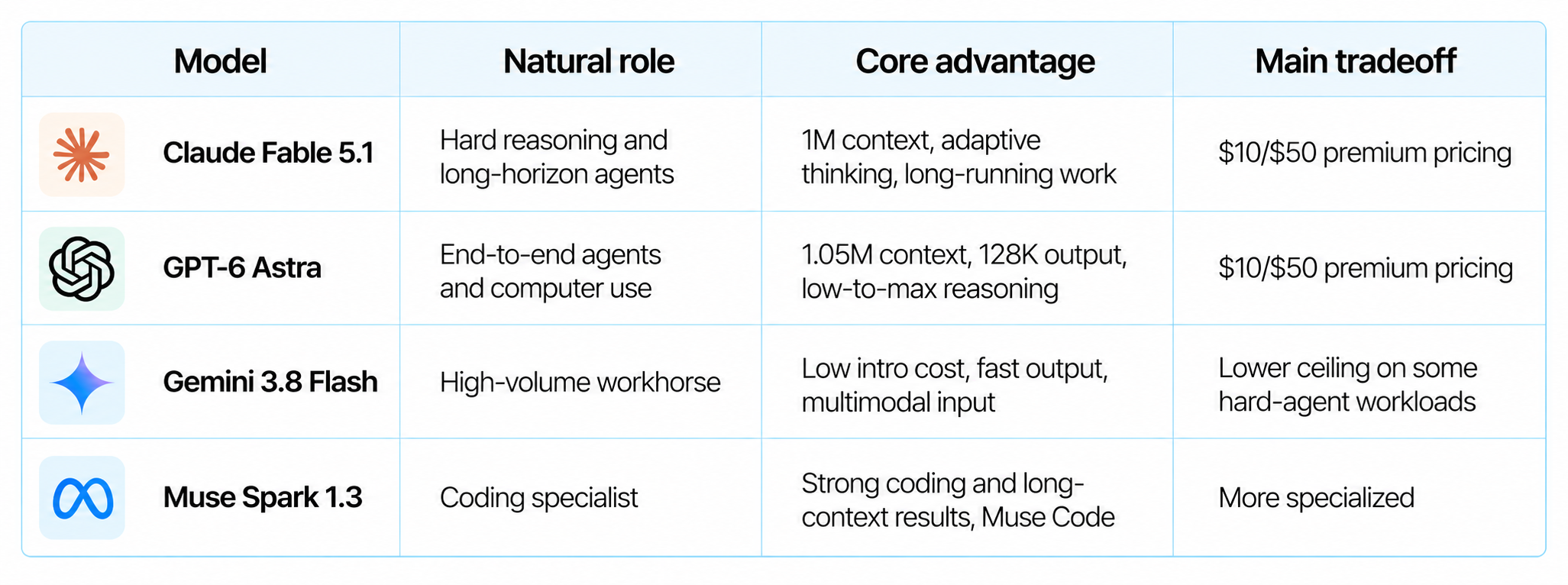
AI model routing has become a practical production pattern because the strongest models are no longer interchangeable. Claude Fable 5.1, GPT-6 Astra, Gemini 3.8 Flash and Meta Muse Spark 1.3 all target demanding work, but they occupy different points on capability, cost, speed, context and agent behavior.
The mistake is to treat routing as a simple model ranking. A better system asks which model has the best chance of finishing this specific task at an acceptable cost and within the required latency. That turns an AI stack from one-model-for-everything into a model portfolio.
The differences are large enough to make that portfolio useful. Fable 5.1 is priced at $10 per million input tokens and $50 per million output tokens, with a 1M context and adaptive thinking. GPT-6 Astra has a 1.05M context, 128K maximum output and reasoning levels from low to max at the same $10/$50 token rates. Gemini 3.8 Flash starts at $0.75 per million input and $3.75 per million output tokens through the end of 2026 and is positioned as a high-volume workhorse. Muse Spark 1.3 is focused heavily on coding and agentic workflows.
QUICK ANSWER
Use Gemini 3.8 Flash for high-volume coding, multimodal work and routine agent tasks where cost and throughput matter. Use Muse Spark 1.3 when the workflow is strongly centered on software engineering, repositories and coding-agent loops. Use Claude Fable 5.1 for the hardest long-horizon reasoning and research tasks. Use GPT-6 Astra when the task requires deep end-to-end execution, computer use or complex professional workflows.
The best router starts with the cheapest model that has a strong measured chance of succeeding. If the task is simple or easy to verify, use an efficient model. If the cost of failure is high, route directly to a premium model. If verification fails, escalate instead of repeatedly calling the same endpoint.
For coding agents, current benchmark results show why more than one model makes sense. Gemini 3.8 Flash scores 73.7% on DeepSWE v1.1 and 89.4% on Terminal-Bench 2.1. Muse Spark 1.3 reaches 75.4% on DeepSWE v1.1 and 88.8% on Terminal-Bench 2.1. Fable 5.1 scores 55.8% on Terminal-Bench 4.0, while Astra has a strong computer-use and end-to-end positioning.
1. What Is AI Model Routing?
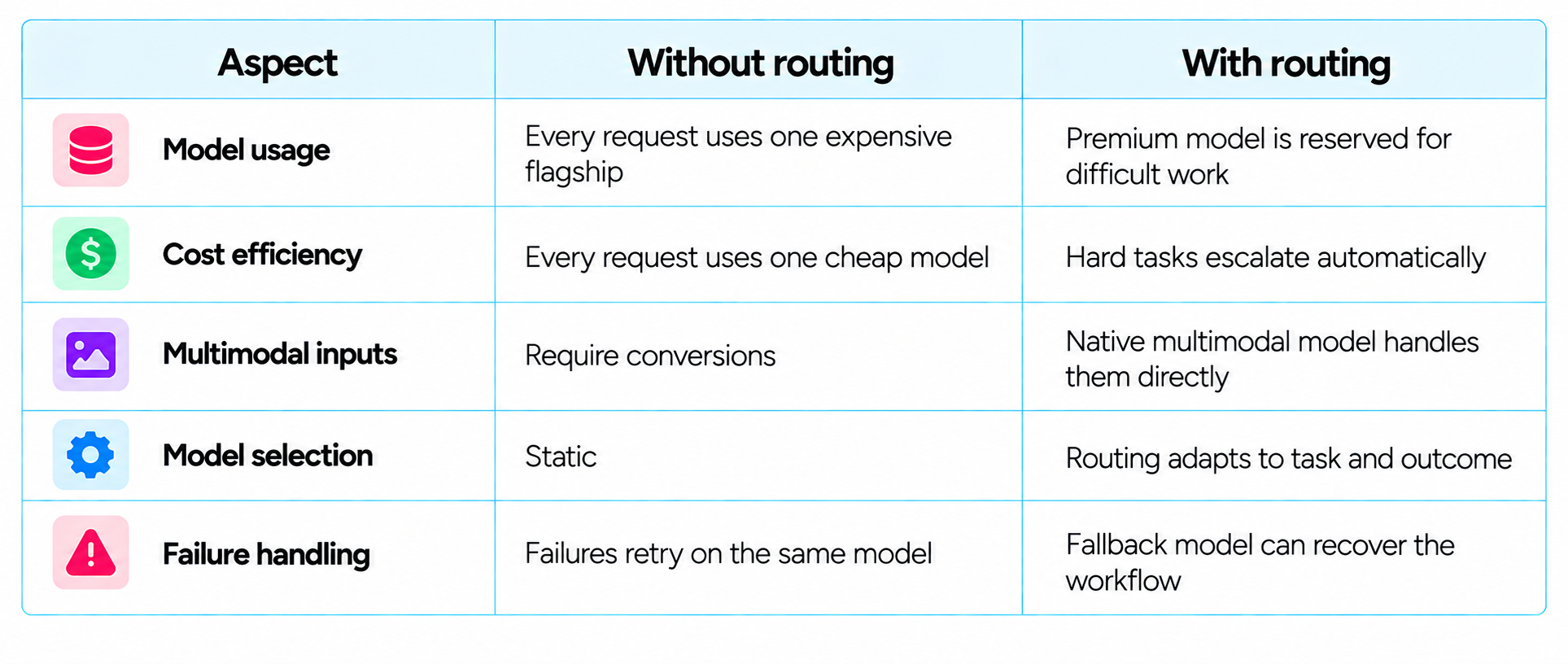
AI model routing is the layer between an application and its model providers. Instead of every request going to one fixed LLM, the router evaluates the task and selects an appropriate model.
The router can be a rules engine, a lightweight classifier, a learned policy or a combination. Typical signals include task type, difficulty, modality, context size, tool requirements, expected output length, latency target, privacy requirements and consequence of failure.
The key business metric is usually cost per successful task. Token price matters, but retries, human review, tool failures and escalation can completely change the real economics.
2. Why Model Routing Matters in 2026
The frontier has become specialized. A model can be excellent at long-horizon software engineering but weaker at computer use. Another can be excellent at computer interaction but too expensive for routine traffic. A third can handle image, video and audio inputs natively at a much lower cost.
3. The Four Models and Their Natural Roles
4. When to Use Claude Fable 5.1
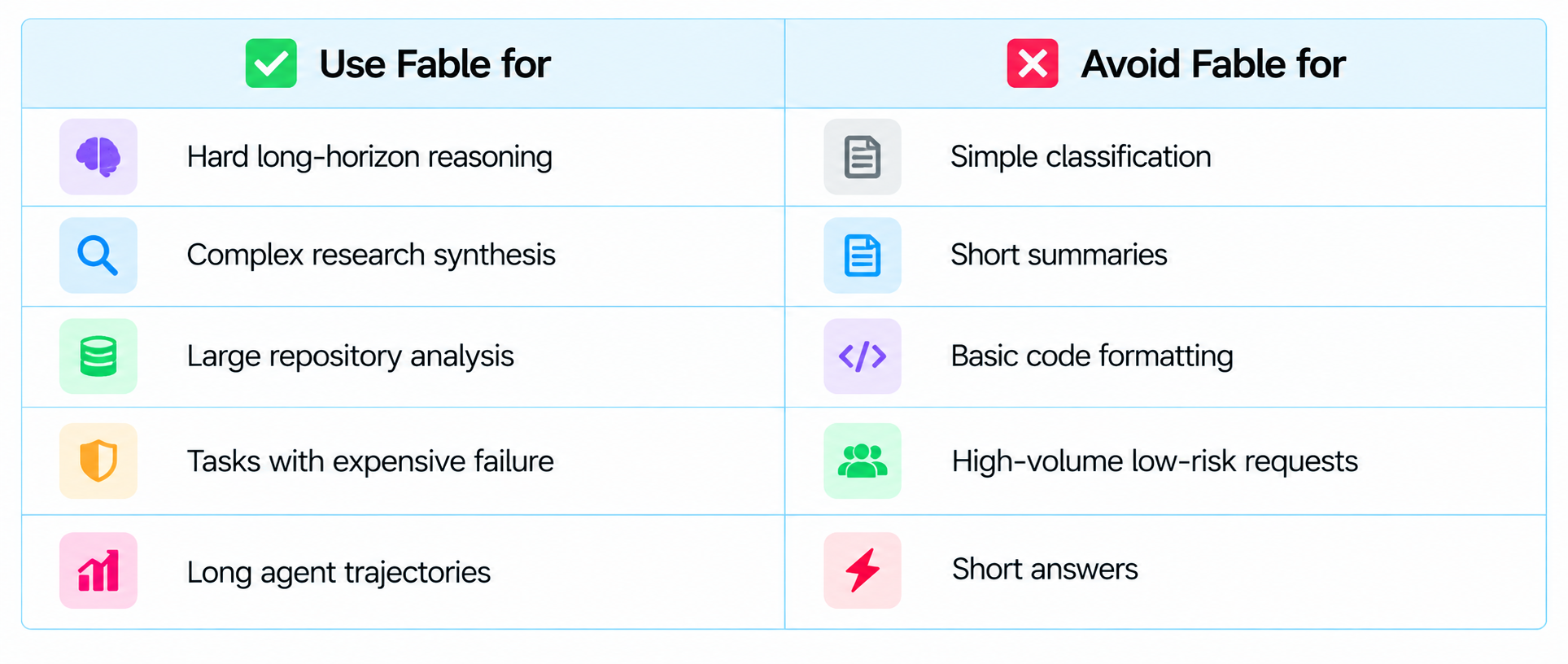
Fable 5.1 is the premium route when the task needs sustained reasoning, large context and long-horizon agent behavior. Anthropic lists a 1M-token context, 128K maximum output and adaptive thinking that is always on. Pricing is $10 per million input tokens and $50 per million output tokens, while cache reads cost $0.25 per million.
Anthropic's published benchmark table includes 52.6% on Terminal-Bench-Science 0.1, 55.8% on Terminal-Bench 4.0, 1853 Elo on GDPval-AA v2, 77.9% on a partial OSWorld 2.0 result and 73.4% on CursorBench 3.2.0.
Route to Fable when the task is expensive to fail, difficult to verify or likely to require many connected reasoning steps. Good examples are complex codebase migrations, demanding research synthesis, architecture decisions and long autonomous agent trajectories.
5. When to Use GPT-6 Astra
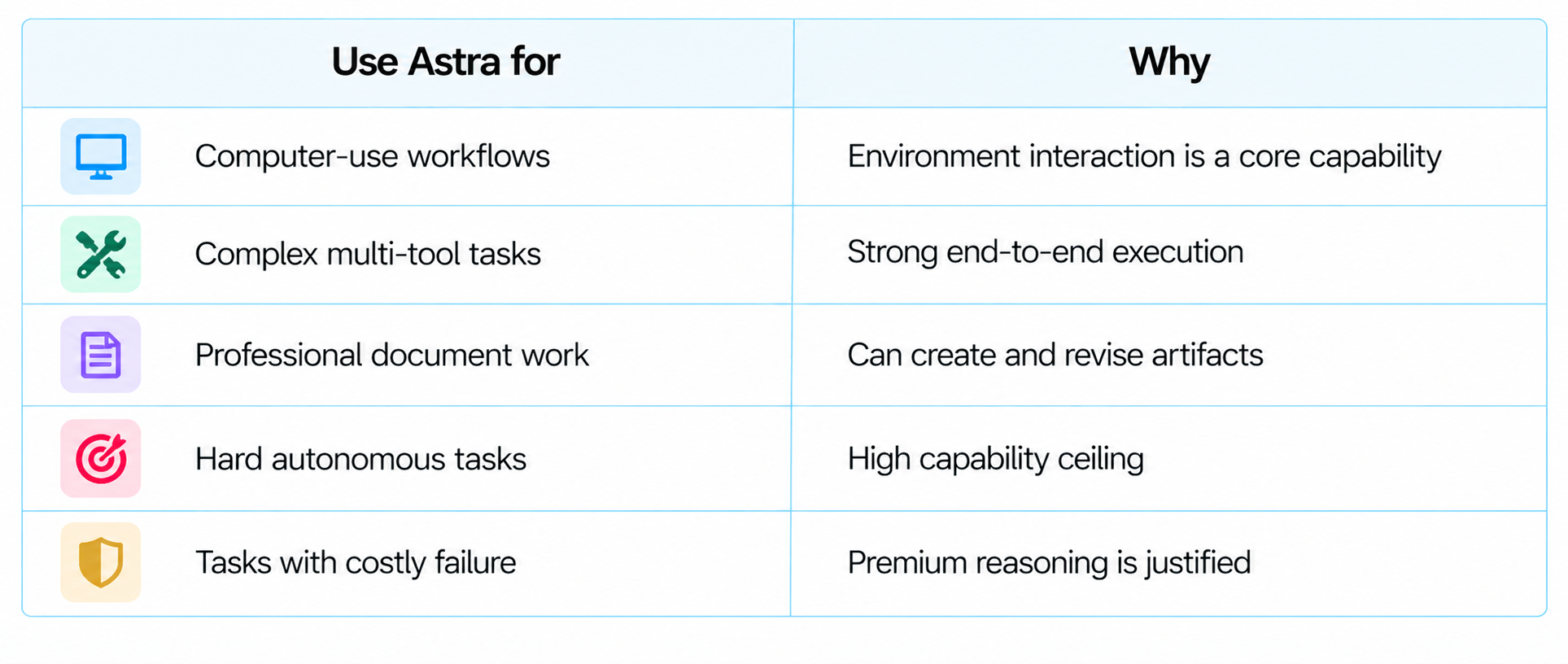
GPT-6 Astra is designed for the hardest end-to-end work. OpenAI lists complex reasoning, coding, computer use, research and document creation as primary uses, with reasoning effort controls from low through max. The model has a 1.05M context window and 128K maximum output.
Astra becomes particularly useful when the model must operate inside an environment. ARC Prize's verified results show 62.7% on ARC-AGI-3 with its Standard harness and 99.9% with its Provider Adapter harness at high reasoning. The large difference demonstrates that computer-use results depend on the complete harness, not only the model.
Route to Astra for computer-use workflows, complex desktop tasks, mixed browser-plus-file-plus-code actions and end-to-end work where the model needs to adapt to an environment.
6. When to Use Gemini 3.8 Flash
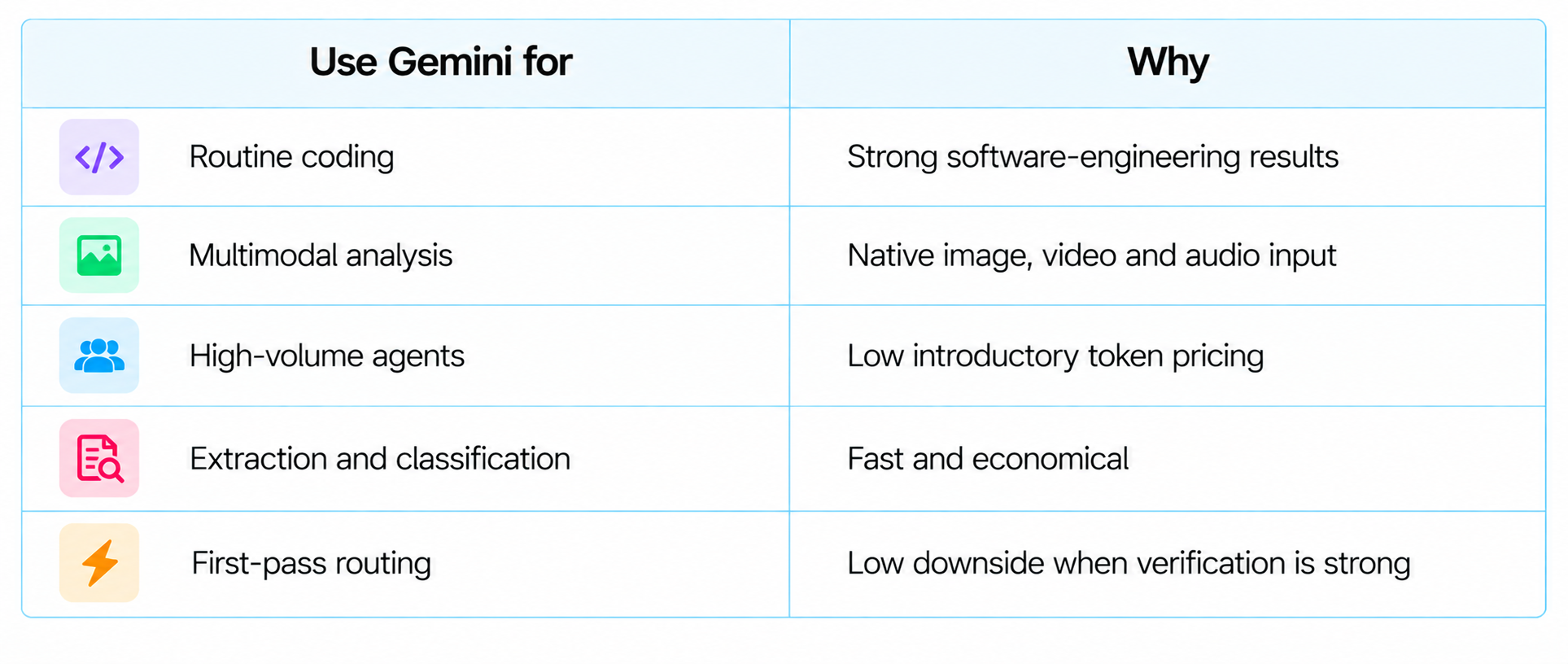
Gemini 3.8 Flash is the economic workhorse of this comparison. Google introduced it at $0.75 per million input tokens and $3.75 per million output tokens through the end of 2026, with a 1M-token context, 64K maximum output and low, medium and high thinking.
Google's performance table lists 73.7% on DeepSWE v1.1, 89.4% on Terminal-Bench 2.1, 61.4% on Vals Finance Agent v2 and 10.0% on Harvey's Legal Agent Benchmark. Artificial Analysis measures about 305 output tokens per second in the current high configuration.
That combination makes Gemini attractive as the first model in many routers. It can handle serious software engineering and agent work without carrying premium-model pricing across every request.
7. When to Use Meta Muse Spark 1.3
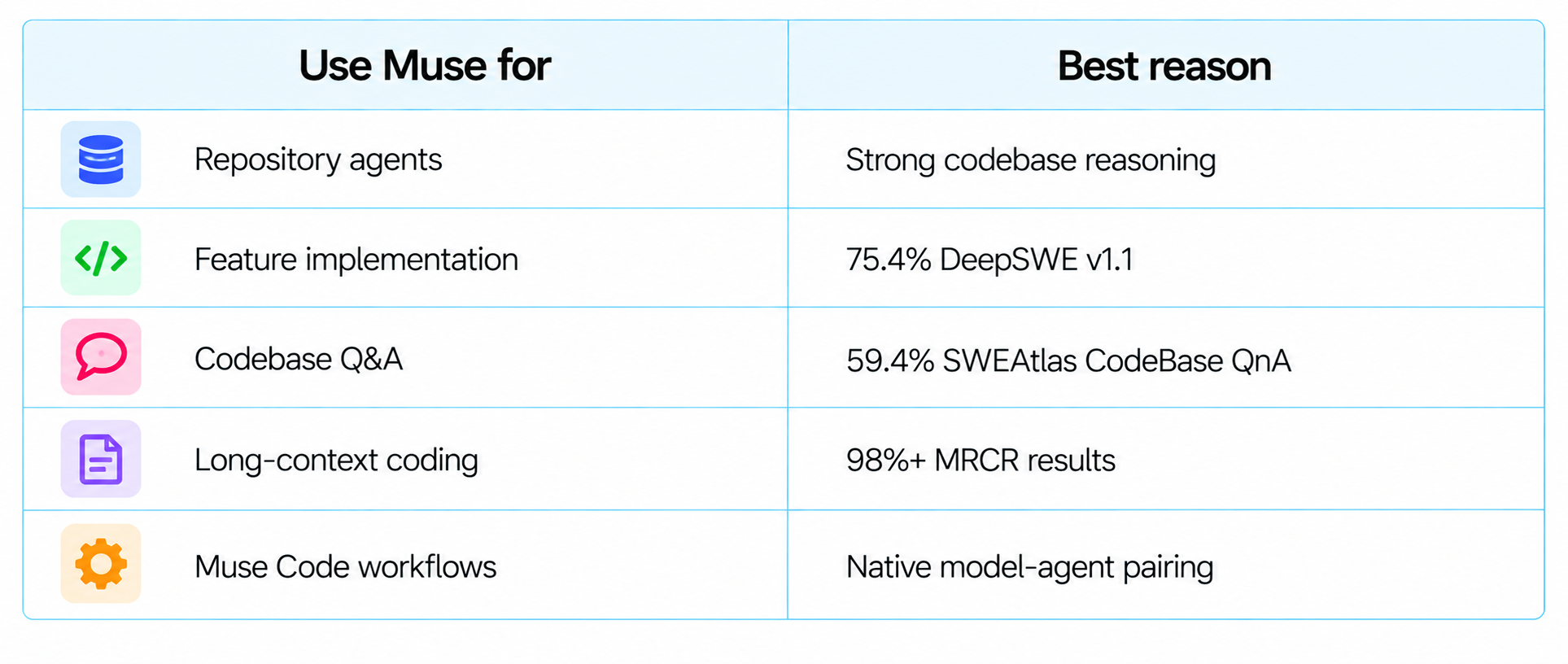
Muse Spark 1.3 is the specialist route for software-engineering-heavy systems. Meta's published evaluation shows 75.4% on DeepSWE v1.1, 88.8% on Terminal-Bench 2.1 and 59.4% on SWEAtlas CodeBase QnA. It also scores 98.5% on MRCR at 256K-512K and 98.1% at 512K-1M.
Those results make Muse especially interesting for repository agents and large-codebase tasks. Meta also delivers Muse Spark 1.3 through Muse Code, so the practical system includes a coding-agent environment around the model.
Route to Muse when the task is fundamentally about code and the Meta tool environment fits your application.
8. One Task Can Use Multiple Models
The strongest routing systems do not always use one model for every stage. A single coding task can benefit from fast workers for easy steps and stronger models for difficult decisions.
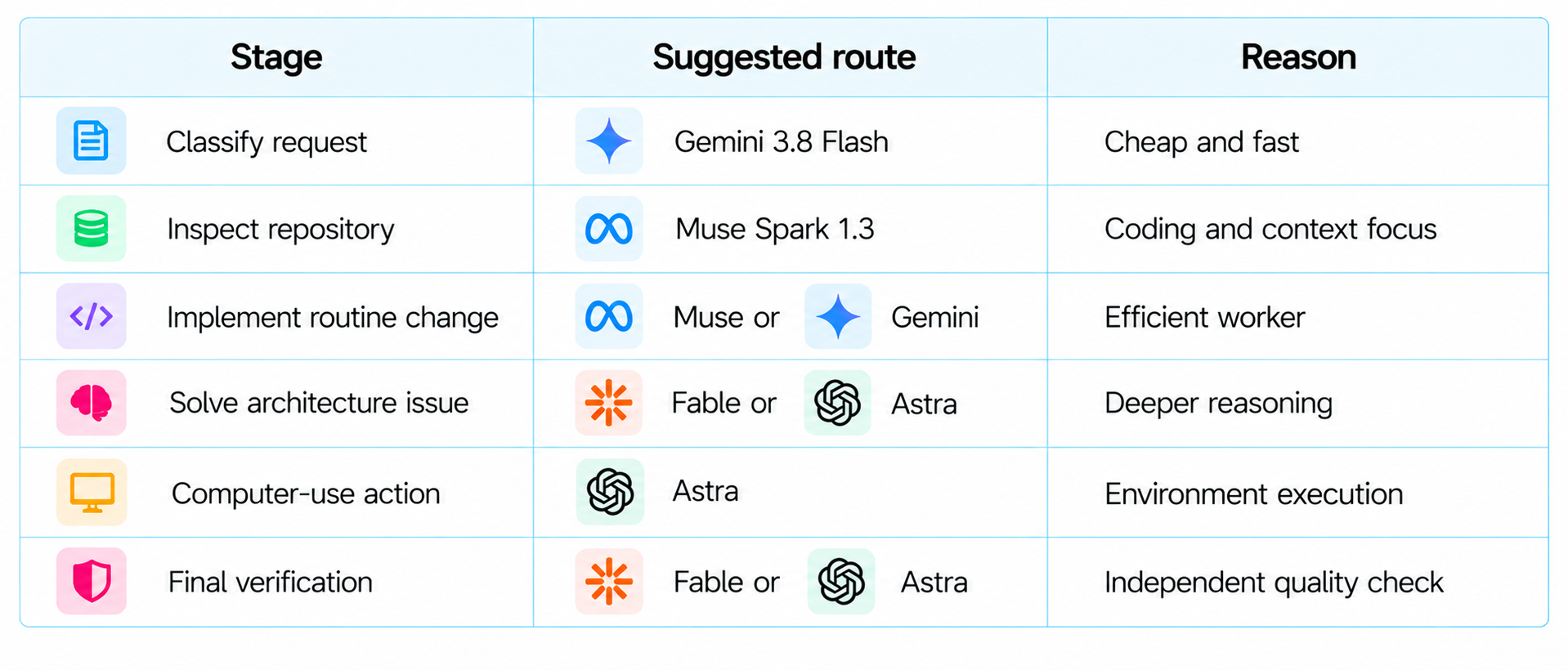
This design is similar to a team of specialists. The router assigns the least expensive capable model to each stage, then escalates when the evidence says the current model is not enough.
9. Route by Task Difficulty
A practical router can divide incoming requests into four difficulty tiers.
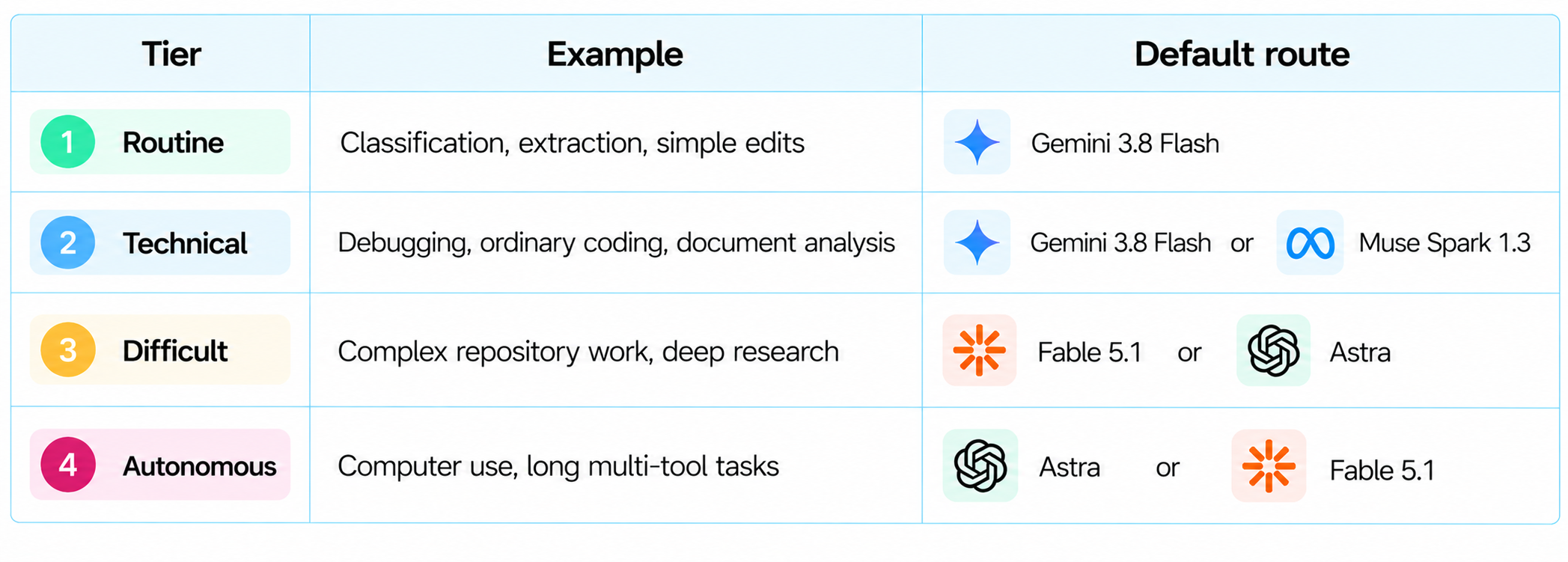
The router should also use confidence. When it cannot tell whether a request is simple or difficult, the safer path is to move upward when the consequence of failure is high.
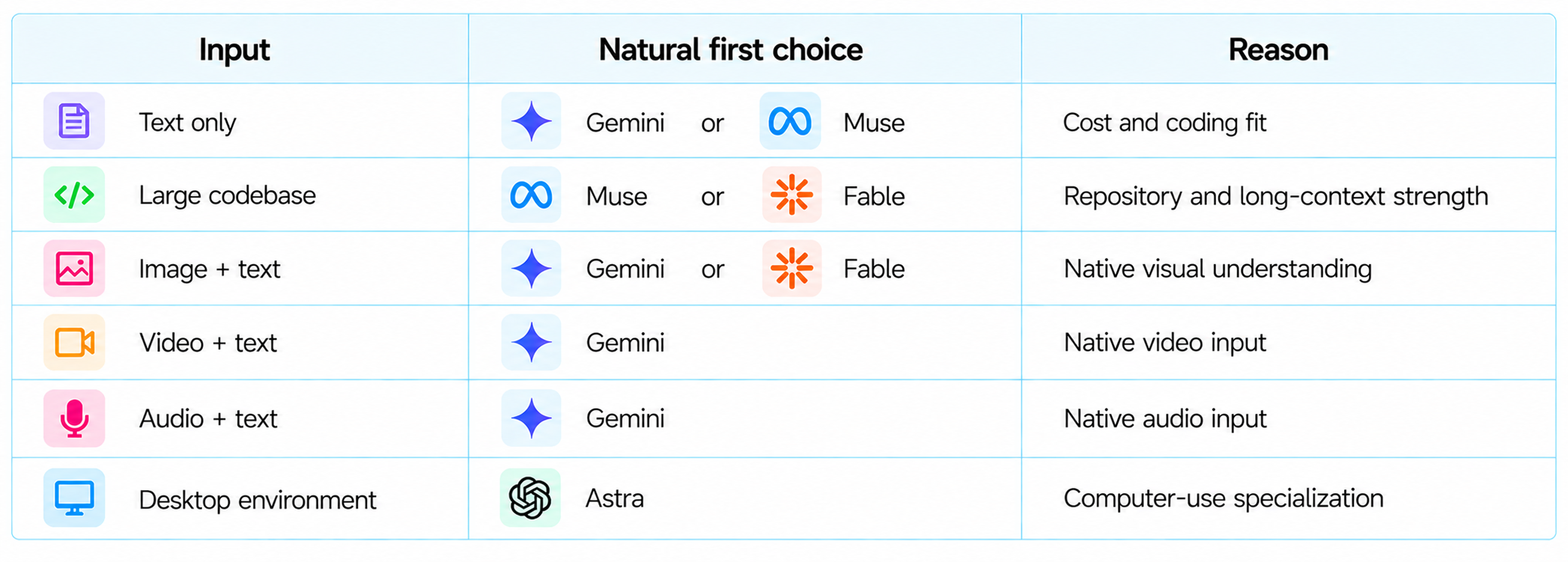
10. Route by Modality
The input itself can determine the best model. Gemini 3.8 Flash accepts text, image, video and audio, so it is a natural first choice for multimodal traffic. Fable accepts text and images, while Astra and Muse are better differentiated by their agent and coding roles.
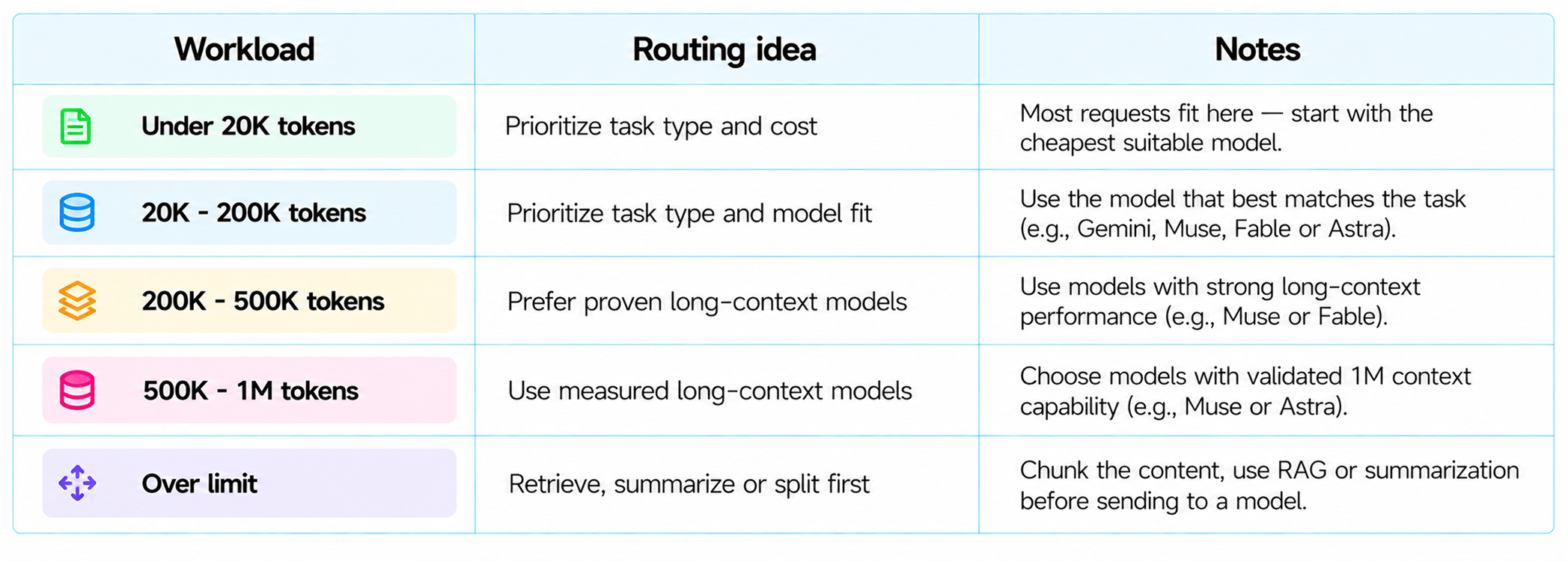
11. Route by Context Size
Context size is another routing signal. A tiny request should not automatically pay for a large reasoning model, while a million-token repository should not be squeezed into an unsuitable window.
12. Route by Cost Per Successful Task
The final economic metric should include retries and escalation. A cheap first attempt is not useful if it creates more downstream work.
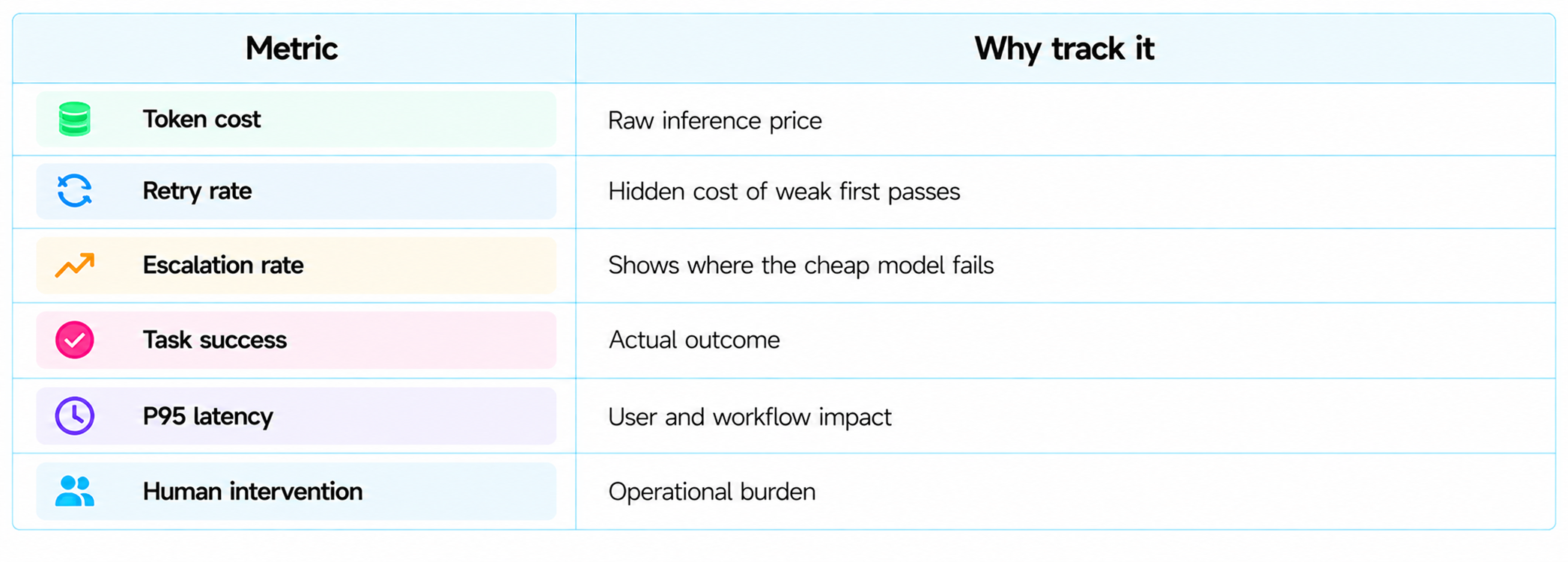
The large price difference between Gemini Flash and Fable or Astra makes this especially important. The lower-cost model should receive as much traffic as its measured success rate justifies, not more.
13. The Two-Stage AI Model Router
Start with a lightweight classifier that returns structured metadata. A useful routing schema includes task_type, difficulty, modality, context_size, tool_requirement, consequence_level and expected_output.
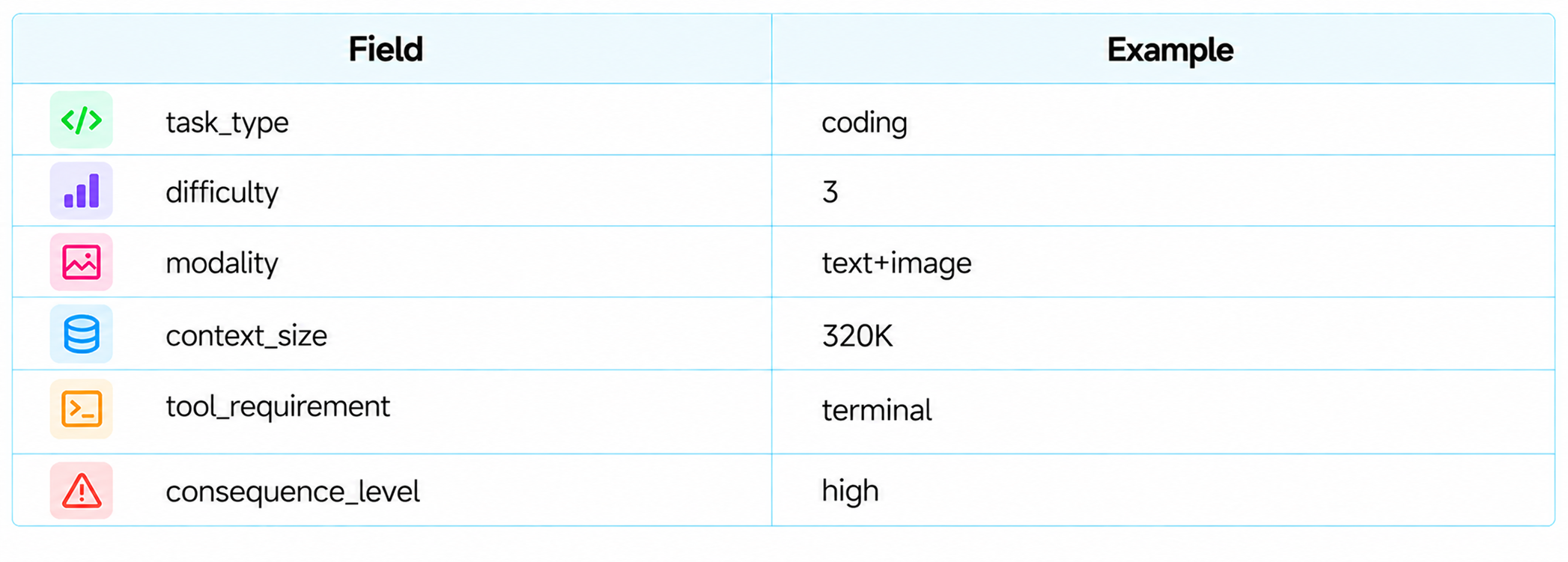
The policy layer then maps those fields to a model. A high-consequence terminal task can go directly to Astra, while a simple code transformation can go to Gemini.
This approach is easy to inspect, test and change. It also produces the labeled traffic data you need before introducing a learned routing model.
14. The Self-Improving Router
Once enough traffic accumulates, store the routing decision and result. Record selected model, task category, input size, output size, latency, token cost, verification result, retries and escalation reason.
You can then learn patterns such as Gemini succeeding on most extraction tasks, Muse dominating repository edits, Fable paying for itself on difficult research, and Astra being essential for computer-use flows.
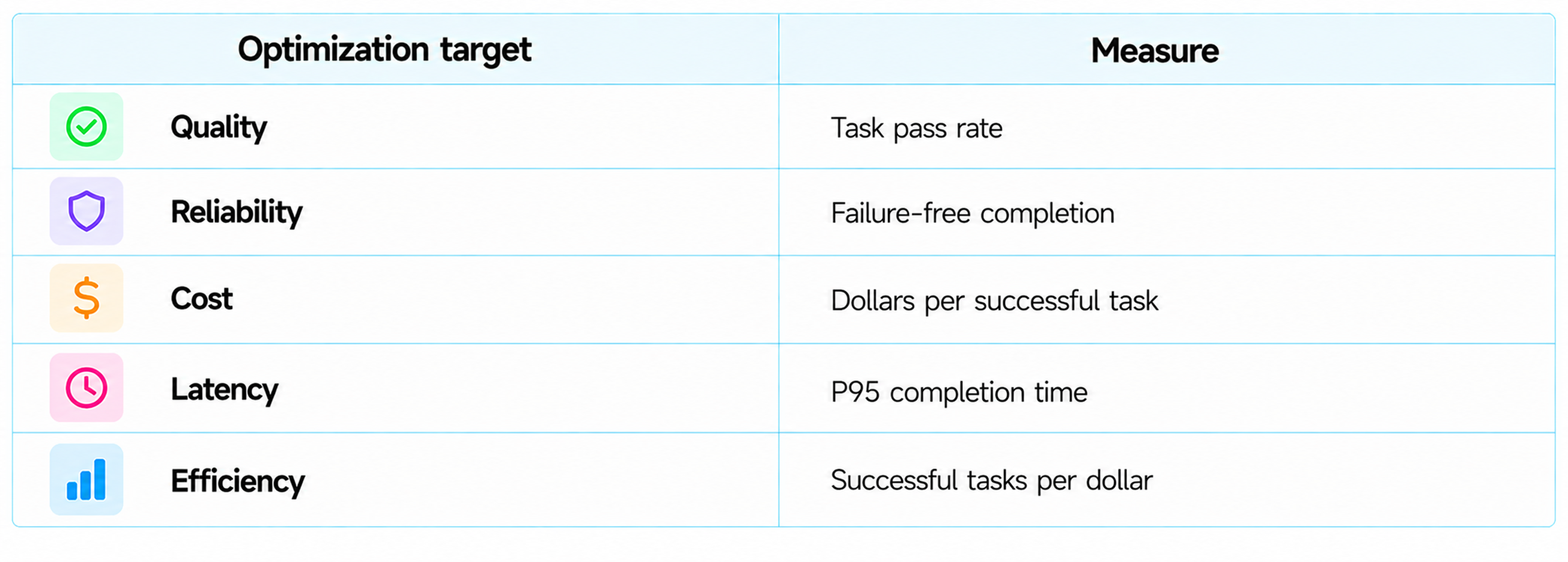
Do not optimize only for average cost. A router that saves money while increasing critical failures is worse than the baseline.
15. Model Routing for AI Coding Agents
Coding agents are one of the strongest use cases for routing because a software task naturally contains different stages.
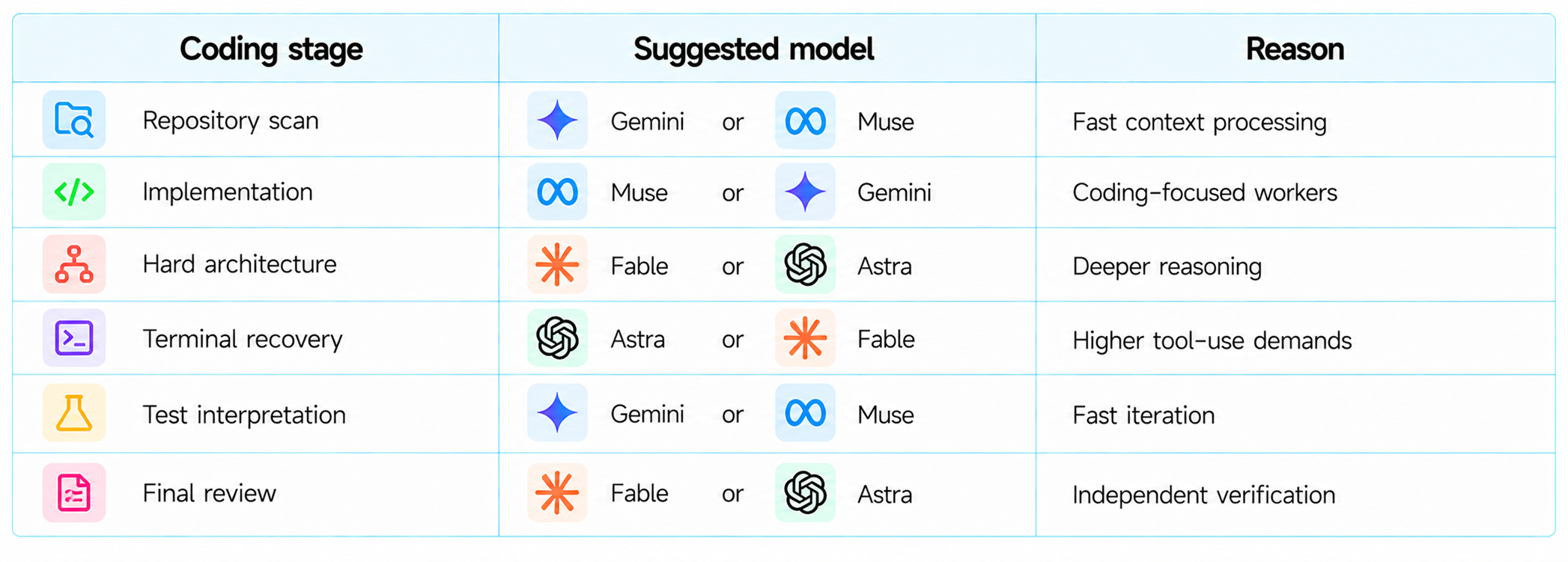
For more detail, read Model Routing for AI Coding Agents.
16. Model Routing Mistakes to Avoid
- Choosing models by global leaderboard rank instead of task type.
- Comparing only token prices and ignoring retries.
- Sending every hard task to the most expensive model.
- Sending every task to the cheapest model.
- Changing routing rules without a regression suite.
- Failing to record escalation reasons.
- Routing sensitive data without reviewing the provider's data policy.
- Treating routing as a substitute for validation and guardrails.
17. Practical Routing Matrix
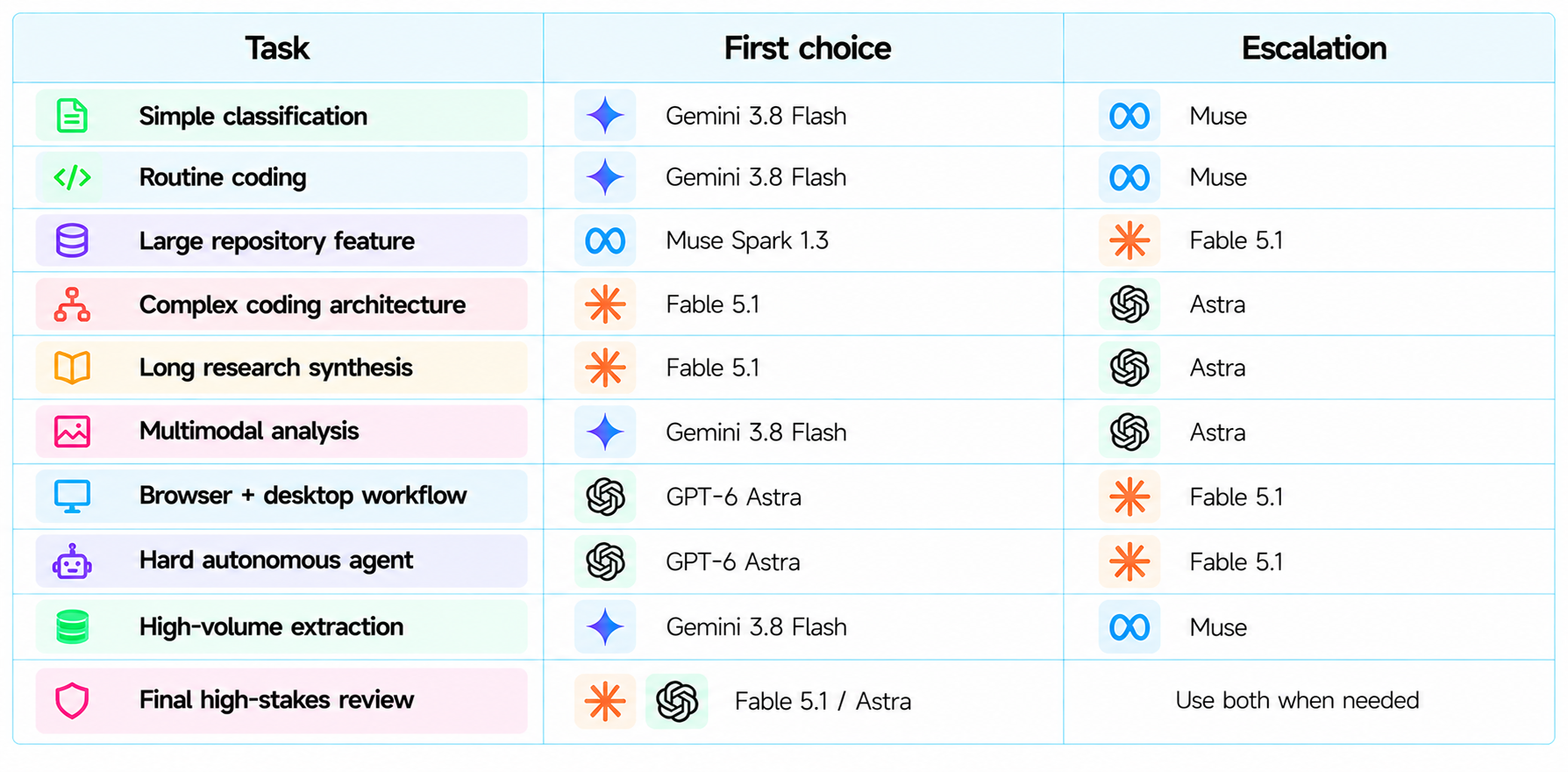
18. How to Build the Routing Policy
Start explicit. A deterministic routing table is easier to debug than a learned policy and is enough for an initial deployment.
- Define the major task categories in your real traffic.
- Assign a default model to each category.
- Define an objective verification condition.
- Add an escalation model and retry limit.
- Log every task outcome and cost.
- Review the policy regularly and change only with a regression test.
Good verification conditions are concrete: tests pass, a schema validates, required citations are present, a requested file exists, or a business rule is satisfied.
19. How to Measure Routing ROI
Compare the routed system against your current single-model baseline using the same task set.
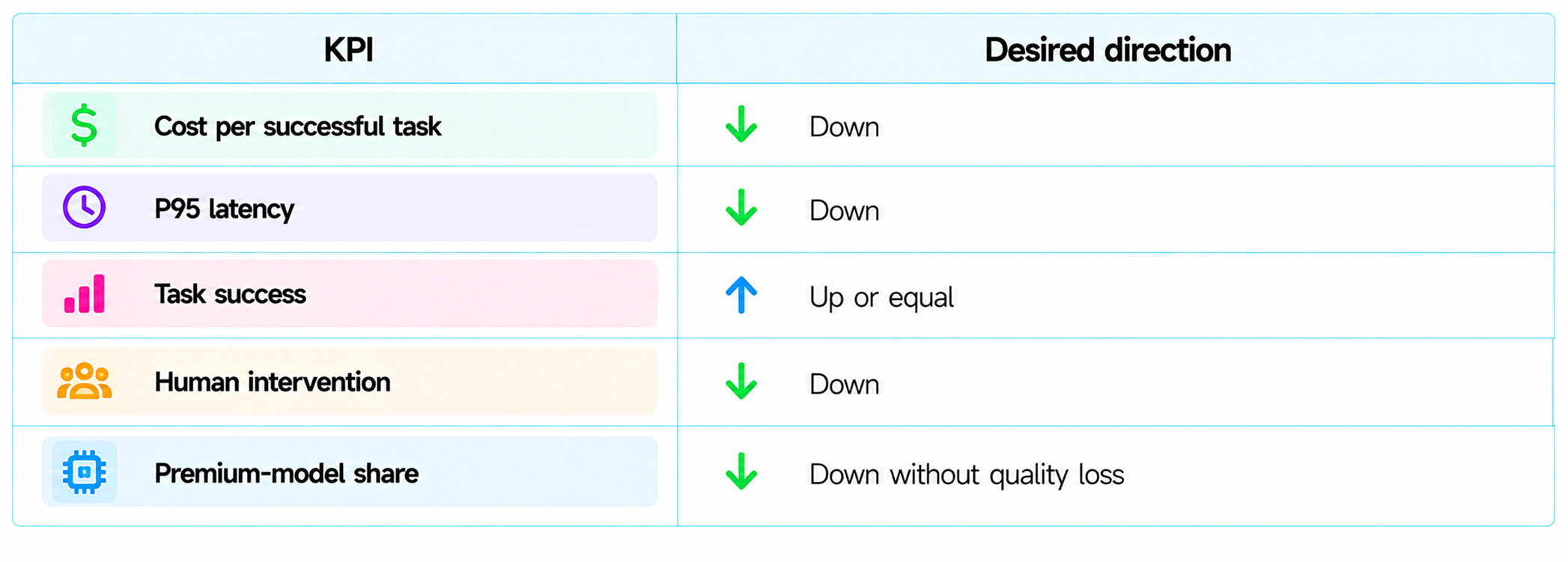
Include router infrastructure and classifier costs. The routing layer only creates real value when its savings and quality improvements outweigh its additional engineering and operations.
20. Is AI Model Routing Worth It in 2026?
For a small application with one narrow task, a single stable model can still be the better choice. Routing adds providers, fallback logic, monitoring and evaluation work.
For mixed workloads, the economics are much more compelling. The current Fable, Astra, Gemini and Muse lineup has large price and capability differences, so one-model-for-everything leaves useful performance on the table. Fable 5.1 and Astra cost premium rates, while Gemini 3.8 Flash is dramatically cheaper and Muse Spark 1.3 is highly specialized for coding.
The practical goal is not maximum model diversity. It is enough diversity to map your task distribution onto models that are measurably good at those tasks.
21. Final Verdict
AI model routing in 2026 is an optimization problem, not a leaderboard contest. The strongest architecture chooses a model for the job rather than choosing one model for the entire application.
Claude Fable 5.1 is the premium reasoning route for long-horizon work and difficult research. GPT-6 Astra is the specialist for deep end-to-end execution and computer use. Gemini 3.8 Flash is the high-volume workhorse, combining strong coding performance, native multimodal input and low introductory pricing. Muse Spark 1.3 is the coding specialist, with strong software-engineering and long-context results through its Meta-native stack.
A strong starting policy is Gemini for routine and multimodal traffic, Muse for repository-heavy coding, Fable for difficult reasoning and research, and Astra for complex computer-use or end-to-end autonomous work. Verification then decides whether to keep the result or escalate.
The best router is not the one that uses the cheapest model most often. It is the one that minimizes the total cost and latency of successfully completed work while keeping failure rates and human intervention within acceptable limits.
Frequently Asked Questions
What is AI model routing?
AI model routing automatically selects an AI model for each request based on task type, difficulty, modality, context, cost, latency and tool requirements.
Which model should handle routine AI tasks?
Gemini 3.8 Flash is a strong default because it combines fast output, broad input support and low introductory API pricing.
When should I use Muse Spark 1.3?
Use Muse Spark 1.3 for coding-agent and repository-centric work, especially when Muse Code fits your workflow.
When should I use Claude Fable 5.1?
Use Fable 5.1 for difficult reasoning, long-horizon agents, complex research and tasks where premium capability justifies the cost.
When should I use GPT-6 Astra?
Use Astra for computer use, complex multi-tool workflows, document creation and difficult end-to-end autonomous work.
Can one task use multiple models?
Yes. Different models can handle classification, implementation, difficult reasoning and final verification.
What is the most important routing metric?
Cost per successful task is often more useful than raw token price because retries and escalations change actual economics.
How does routing reduce AI costs?
It reserves expensive models for the smaller set of requests that actually need them and routes routine work to cheaper capable models.
How should I start building a router?
Start with task categories, a deterministic routing table, objective verification and a fallback model.
Is AI model routing worth it?
It is especially valuable for mixed and high-volume workloads such as coding agents, research systems and enterprise assistants.
Recommended Blogs
Gemini 3.8 Flash Review: Accuracy, Price & Is It Worth It? (2026)
Meta Muse Spark 1.3 Review: Coding, Price & Is It Worth It? (2026)
Claude Fable 5.1 Review: Benchmarks, Pricing, Features & Is It Worth It? (2026)
GPT-6 Astra Review: Benchmarks, Price & Is It Worth It? (2026)
Qwen 3.8 Max 0902 Review: Benchmarks, Price & Is It Worth It? (2026)
Mercury 2.5 AI Model Review: Speed, Price & Is It Worth It? (2026)
How to Secure AI Coding Agents: Permissions, Sandboxing, MCP & Secrets
Resources & Community
Join our community of 70,000+ AI enthusiasts and learn to build powerful AI applications. Whether you're a beginner or an experienced developer, Build Fast with AI helps you understand and implement AI in your projects.
Agentic AI Launchpad 2026
A structured 6-week cohort program that takes you from AI basics to building and deploying real-world agentic AI systems. Includes live sessions, expert mentorship, project reviews and a builder community network.
Ready to go from learning to building? Join the next cohort: Agentic AI Launchpad 2026
Free AI Resources
Access free tools, workshops and micro-learning to keep building.

