



Prompt engineering is about writing better instructions. Context engineering is about controlling the entire information environment an AI model uses to make a decision.
That environment can include the system prompt, the current user request, retrieved documents, conversation history, tool definitions, tool results, long-term memory, application state, permissions and data from external systems. In modern agentic applications, all of those pieces can change from one model call to the next.
This is why context engineering has become a serious AI engineering discipline. Anthropic defines it as curating and maintaining the optimal set of tokens available during inference, including information that arrives outside the prompt itself. Sourcegraph and Vercel describe the same shift from wording a single instruction to designing the pipeline that decides what reaches the model at each step.
The simplest way to think about it is: prompt engineering controls the instruction, while context engineering controls the information system around the instruction. That becomes critical when building AI agents, RAG systems and tool-using applications.
QUICK ANSWER
Context engineering is the practice of deliberately deciding what information an AI model should see, how that information should be structured, when it should be retrieved, what should be compressed or removed, which tools should be available, and what state should persist across steps.
It is broader than prompt engineering and broader than RAG. Prompt engineering handles instructions. RAG handles retrieval of external knowledge. Memory stores information for later use. Context engineering is the layer that decides how all of those inputs are assembled into the context the model receives.
For agents, the practical rule is simple: give the model the smallest useful context for the current decision, not the largest context your model can technically hold. Google Cloud, IBM, Sourcegraph and Vercel all emphasize the same core idea: context is a structured information environment, not just a long prompt.
1. What Is Context in an AI System?
Context is everything the model can use at inference time to produce its next output. The exact representation varies by model and platform, but the idea is larger than the text typed by a user.
A model can only reason over what reaches its active context. That means a production AI system can fail even when the underlying model is capable enough. The required information may simply never have been selected, formatted or retained correctly.
2. Context Engineering vs Prompt Engineering
Prompt engineering is the narrower discipline. It focuses on how instructions are written and organized, including role definitions, examples, constraints, output formats and wording.
Context engineering starts one level higher. It asks what the model should see in the first place, how those inputs should be assembled, how they change across turns and how old information should be removed or summarized.
IBM explicitly places prompt engineering inside the broader context-engineering problem, while Anthropic calls context engineering the natural progression of prompt engineering as systems become more agentic.
3. Why Context Engineering Matters for AI Agents
A normal chatbot can often solve a request in one turn. An agent may take dozens of steps. Every step creates potential new context, which means the application has to decide what information should survive into the next inference call.
Imagine a coding agent fixing a failing checkout test. It reads an issue, searches the repository, opens configuration files, inspects logs, runs tests and edits code. By the tenth step, the model may have seen dozens of files and many tool results.
Sending everything forward is expensive and noisy. Deleting everything loses important state. The agent needs a system that retains the relevant findings, removes dead ends and presents the next model call with a coherent picture.
This is why Vercel's recent developer guide frames the problem as deciding what information reaches the context window at each step, while Anthropic emphasizes that context curation is iterative rather than a one-time prompt-writing task.
4. The Four Core Context-Engineering Operations
Different teams use different taxonomies, but a practical framework is to think in four operations: write, select, compress and isolate.
Write: Create Better State
Writing context means creating structured information that future model calls can reuse. This could be a task plan, a customer summary, a decision record, an unresolved-question list or a compact representation of what has already been tried.
The important distinction is between state and transcript. Saving every message creates a future retrieval problem. A good memory system saves facts, decisions and constraints that remain useful.
Select: Retrieve What Matters
Selection is the part most developers associate with RAG. The application searches a knowledge source, filters candidates, ranks them and inserts a small evidence set into the active context.
Good selection is not only about semantic similarity. A document can be related to the query but still be outdated, duplicated, unauthorized or too broad. Metadata, permissions, recency and source quality matter.
For the retrieval layer, see our RAG & Vector Databases collection. The important point is that retrieval is one part of the larger context pipeline.
Compress: Control Context Growth
Long-running agents eventually accumulate history. Compression turns old conversation turns, repetitive tool outputs and completed investigations into smaller summaries.
Good compression preserves decisions, constraints, identifiers, evidence, failed attempts and unresolved questions. A summary that deletes the critical exception may make the next agent appear efficient while actually making it less reliable.
Anthropic identifies compaction as one of the techniques used for long-horizon agent work, alongside structured memory and sub-agent architectures.
Isolate: Give Each Worker the Right Slice
Isolation matters in multi-agent systems. A researcher does not need the full coding environment. A reviewer does not need every intermediate exploration result. A database agent does not need unrelated customer conversations.
Focused contexts reduce distraction and can make failures easier to diagnose because each agent has a narrower responsibility.
5. Is RAG the Same as Context Engineering?
No. RAG is an important context-engineering technique, but it solves only the retrieval part of the problem.
A RAG system can find the relevant documents and still fail because the system prompt is contradictory, the conversation history is polluted, the tool output is too large, the wrong memory is injected or the retrieved evidence is presented without structure.
IBM makes this distinction explicitly: RAG adds information to the context window but does not by itself solve system-prompt design, message-history management or incorporation of tool outputs.
This is why adding more retrieved chunks is not a reliable fix for poor answers. More context can increase distraction and bring conflicting evidence into the model's input.
6. Context Windows Are a Budget, Not a Storage Bucket
A large context window gives an application more room. It does not remove the need for selection.
Every extra token can increase inference cost and latency, and irrelevant information can compete with the information that actually determines the correct decision. Sourcegraph's guide makes the same point for coding agents: a system can access an entire repository while still needing to expose only the relevant slice at the right step.
The right objective is therefore not maximum context length. It is maximum useful signal per token.
7. Context Rot and Context Overload
As a context grows, stale information can remain long after it stops being useful. The model may then repeat an old plan, trust an outdated state, call the wrong tool or spend tokens re-reading irrelevant material.
The symptoms are often subtle. The agent appears busy but does not make progress. It revisits files already ruled out, repeats a failed experiment, forgets a constraint or produces an answer that mixes two different versions of the task.
The fix is usually context management, not another paragraph in the prompt. Select better evidence, summarize stale state, separate active context from long-term memory and expose fewer tools.
8. Tools and MCP Are Part of Context Engineering
Tool definitions tell the model what actions are possible, so tools themselves occupy part of the model's decision environment. Tool results then become new context for the next step.
This gets more important with MCP because a single agent may have access to many servers and capabilities. Exposing every tool all the time makes the action space larger and the context noisier.
Our AI coding agent security guide covers the security implications. The context lesson is similar: expose only the tools the task needs, keep descriptions concise and return structured outputs.
A useful tool is valuable context. A badly scoped tool is context noise plus an enlarged attack surface.
9. Memory Is Context Engineering, Too
Memory systems decide what information is stored outside the current context and what gets brought back later. This is one of the most misunderstood parts of agent design.
The goal is not to remember everything. It is to remember the right things. A user's preferred output format may be durable. The full transcript of yesterday's brainstorming session usually is not.
10. A Production Context Pipeline
A production agent should assemble context dynamically rather than sending the same giant prompt on every turn.
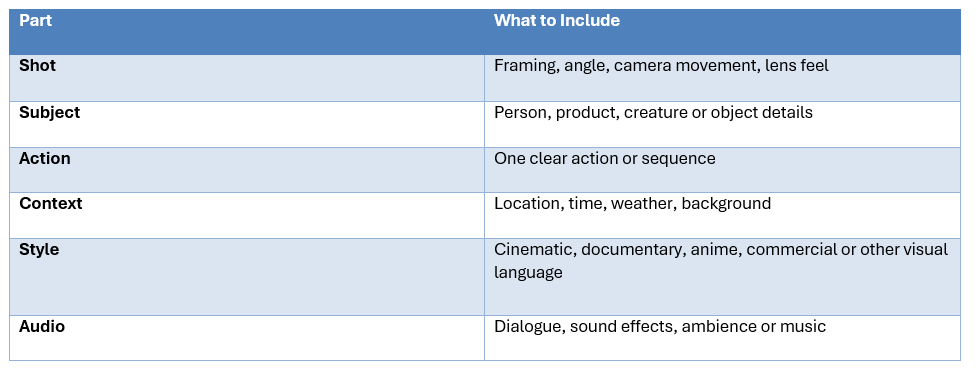
The pipeline repeats. After each action, the application decides what should enter the next context. Google Cloud describes context engineering as building a structured data environment around an AI worker, while Vercel describes it as shaping the information that reaches the model at each step.
11. Context Engineering for Coding Agents
Coding agents are one of the clearest examples because their environment is full of structured information: repositories, branches, files, issue trackers, tests, logs, dependency graphs and tool outputs.
A weak coding agent may start a bug fix by dumping the entire repository tree into context. A stronger design identifies the relevant service, retrieves the failing test and implementation files, loads the project's coding rules, and includes the latest test output.
After an unsuccessful attempt, the system should preserve the changed files, the exact error and what was already tried. It should not force the next model call to repeat all the original exploration.
This connects directly to our Model Routing for AI Coding Agents article. Routing works better when the router can see a compact description of what the agent knows and what has already failed.
12. Context Engineering for Multi-Agent Systems
Multi-agent systems multiply the context problem because information moves between specialized workers.
Do not send every agent the complete transcript. Pass structured handoffs containing only what the receiving agent needs. This reduces token usage and makes each role easier to control.
13. Context Engineering and Model Routing Work Together
Model routing decides which model should handle a task. Context engineering decides what that model should see.
A good router can start a task with a cheap model, then escalate after repeated test failures or a rise in complexity. To make that escalation useful, the new model needs a compact context that says what was tried, what failed, what files changed and what remains unresolved.
Without that handoff, escalation simply repeats the same exploration with a more expensive model. That defeats part of the purpose of routing.
14. Practical Context-Engineering Checklist
- Keep stable system instructions separate from dynamic task context.
- Retrieve fewer, higher-quality sources instead of maximizing top-k.
- Use metadata, permissions and recency during retrieval.
- Return structured tool outputs rather than giant raw payloads.
- Store durable memory separately from temporary conversation history.
- Summarize old context around decisions, constraints and unresolved questions.
- Expose only the tools required for the current task.
- Use focused context handoffs between sub-agents.
- Track token usage and latency by context component.
- Measure context quality alongside model quality.
15. How to Measure Context Engineering
Do not evaluate context engineering only by looking at the final answer. Measure the pipeline.
The goal is not to minimize tokens blindly. A slightly larger context that prevents a failed agent loop may be cheaper than an aggressively compressed context that causes three extra retries.
16. A Simple Before and After Example
Imagine an internal support agent receives the question: "Why did customer ACME lose access yesterday?" A weak implementation might send the entire CRM record, every support ticket, the full email history and a large account-policy document.
A context-engineered implementation would first identify the customer and date, retrieve the relevant access events and recent support tickets, load only the policy section governing account suspension and add a concise customer profile.
The second system gives the model a smaller evidence set with clearer provenance. The difference is not a cleverer prompt. The system has simply engineered better context.
17. What Context Engineering Is Not
It is not just writing longer prompts. It is not only RAG. It is not the same as memory, and it is not solved by buying a model with a larger context window.
Those are components or capabilities. Context engineering is the discipline that decides how those components interact and what information reaches the model at each decision point.
A stronger model with poor context can still fail because it receives outdated evidence or misses the right tool result. A weaker model with well-curated context can perform surprisingly well on bounded tasks. Context does not remove model capability limits, but it strongly influences how much of that capability the system can actually use.
Final Verdict: Context Is Becoming a Core AI Engineering Layer
The important shift in 2026 is from prompt writing to information architecture. Prompt engineering still matters, but once an AI system has retrieval, tools, memory and multi-step execution, the bigger engineering problem is deciding what the model should know right now.
The best systems can answer four questions on every model call: What does the model need to know? What can be ignored? Which tools should be available? What state should survive to the next step?
That is context engineering. It turns a context window from a pile of text into a deliberate operating environment.
For teams building agents in 2026, the practical recommendation is straightforward: treat context as a first-class system component. Retrieve deliberately, structure evidence, compress safely, isolate specialized workers, manage memory, scope tools, and measure context quality alongside model quality.
Frequently Asked Questions
What is context engineering in AI?
Context engineering is the practice of designing and managing everything an AI model sees during inference, including instructions, retrieved knowledge, conversation history, tools, memory, tool outputs and application state.
What is the difference between prompt engineering and context engineering?
Prompt engineering focuses on designing instructions. Context engineering is broader and controls the full information environment presented to the model on each step.
Is RAG part of context engineering?
Yes. RAG is an important retrieval technique inside context engineering, but context engineering also covers prompts, memory, tools, history, state, sequencing and compression.
Why does context engineering matter for AI agents?
Agents operate over multiple steps and accumulate information. Without deliberate context management, stale or irrelevant data can raise cost, distract the model and cause repeated or incorrect actions.
How do you reduce context overload?
Retrieve only relevant information, summarize stale history, structure tool outputs, isolate sub-agents and avoid exposing unnecessary tools or documents.
What is context rot?
Context rot is a gradual loss of effective performance as stale, repetitive or irrelevant information accumulates in the active context.
Is memory the same as context engineering?
No. Memory is one source of information. Context engineering decides what to store, retrieve, summarize and inject into the active context.
Does a larger context window eliminate context engineering?
No. More capacity reduces some limits, but it does not guarantee relevance. Larger contexts can still increase cost, latency and distraction if they contain unnecessary information.
Recommended Blogs
- How to Secure AI Coding Agents in 2026: Permissions, Sandboxing, MCP & Secrets
- Model Routing for AI Coding Agents: How to Cut Costs Without Losing Quality
- Gemini 3.7 Flash Is Changing AI Coding Economics: Speed vs Intelligence vs Cost
- Gemini 3.7 Flash vs Claude Sonnet 5 vs GPT-5.6
Resources and Community
Join our community of 70,000+ AI enthusiasts and learn to build powerful AI applications. Whether you are a beginner or an experienced builder, Build Fast with AI helps you understand and implement AI in your projects.
- Website - buildfastwithai.com
- LinkedIn - Build Fast with AI
- Instagram - @buildfastwithai
- Founder Twitter - @satvikps
- Twitter - @BuildFastWithAI
Agentic AI Launchpad 2026
A structured 6-week cohort program that takes you from AI basics to building and deploying real-world agentic AI systems. Includes live sessions, expert mentorship, project reviews, and a builder community network.
Ready to go from learning to building? Join the next cohort: Agentic AI Launchpad 2026
Free AI Resources
Access free tools, workshops, and micro-learning to keep building:

