



Meta Muse Spark 1.3 Review: Can Meta Finally Turn Muse Into a Serious Coding Workhorse?
Meta Muse Spark 1.3 is the latest release in Meta's Muse Spark family, arriving as Meta pushes harder into coding, autonomous agents and personal AI. The model is not positioned simply as a general chatbot. Its role is to handle the repeated reasoning, planning and tool-use steps that make modern coding agents useful.
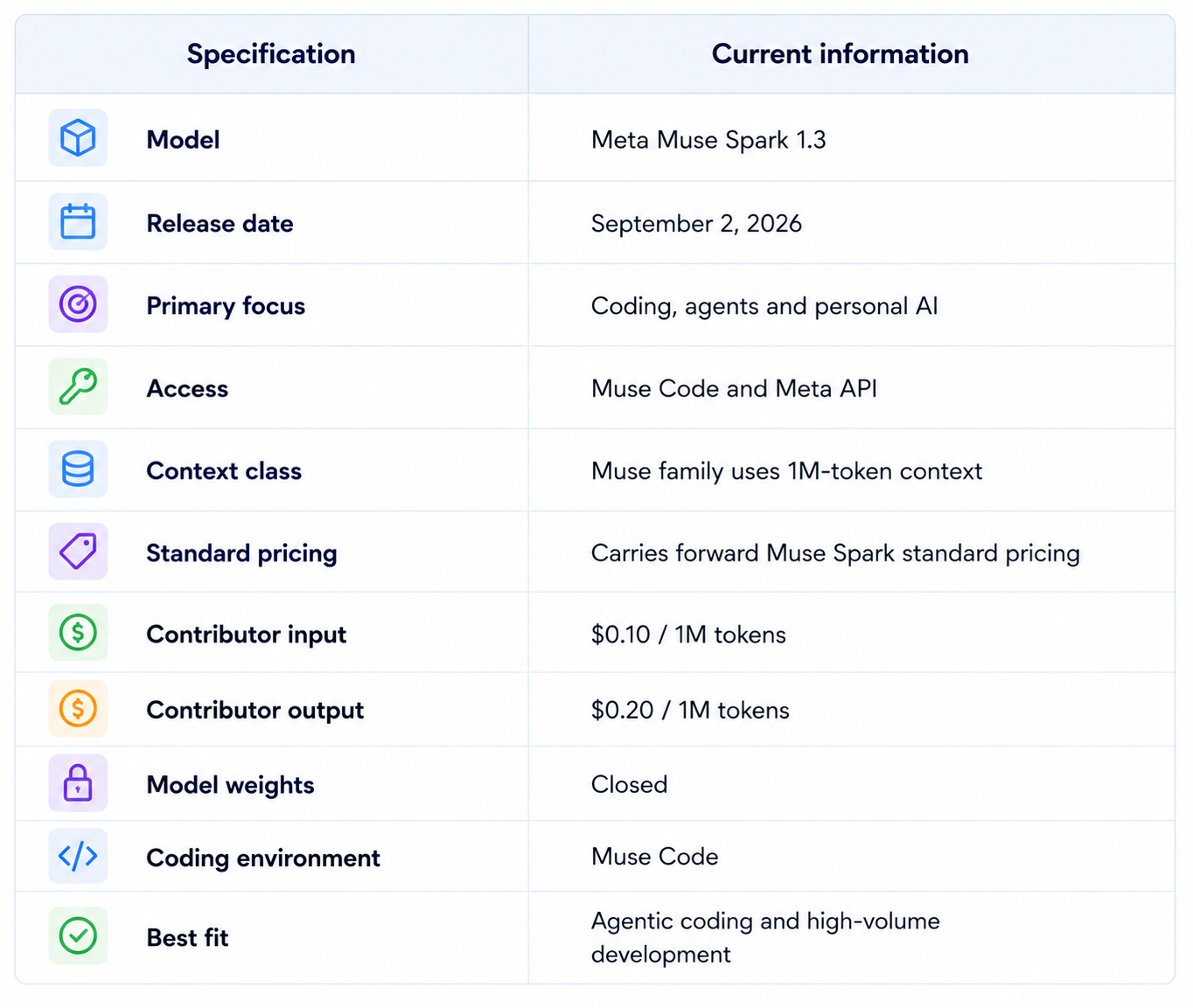
Meta released Muse Spark 1.3 on September 2, 2026, and the model is available through Muse Code and Meta's API. Meta AI chief Alexandr Wang has described the Muse work as part of the company's broader effort toward personal AI agents, making this release important both as a model update and as part of Meta's agent platform strategy.
The previous Muse Spark 1.2 release already established a strong baseline. Artificial Analysis tracking gave Muse Spark 1.2 a 56.8 Intelligence Index score in xhigh, a 72.2 Coding Index score, 90.4% on GPQA Diamond, 45.5% on Humanity's Last Exam and 80.15% on Terminal-Bench v2.1. The 1.3 story is therefore about pushing an already capable model further into real software execution rather than starting from scratch.
QUICK ANSWER
Muse Spark 1.3 is Meta's newest coding and agent-focused model, released on September 2, 2026 and made available through Muse Code and Meta's API. The release continues the direction established by Muse Spark 1.2, where Meta concentrated training and the model-agent stack around software development.
Current provider listings show a contributor tier priced at $0.10 per million input tokens and $0.20 per million output tokens. OpenCode also lists Muse Spark 1.3 Contributor at those rates, while the standard Muse Spark pricing used for the previous generation was $1.25 per million input and $4.25 per million output tokens. The contributor tier allows prompts and completions to be used to improve future Meta models, so the price difference comes with an explicit data-use tradeoff.
The strongest public benchmark context comes from Muse Spark 1.2, which scored 72.2 on the Artificial Analysis Coding Index, 80.15% on Terminal-Bench v2.1 and 83.33% on AA-LCR in the tracked August snapshot. Those results show that Meta's model family was already competitive in coding and agentic tasks before 1.3.
My verdict: 8.9/10 overall. Muse Spark 1.3 is especially interesting for developers who want a Meta-native coding stack, low-cost contributor access for suitable projects, and a model built around agentic software work.
1. What Is Meta Muse Spark 1.3?
Muse Spark 1.3 is the newest iteration of Meta's Muse Spark series. Axios reports that Meta's latest release is focused on improving coding and agentic capabilities and is available through Muse Code and Meta's API.
The release follows a rapid Muse sequence. Muse Spark 1.1 arrived in July, Muse Spark 1.2 followed in August, and the 1.3 update landed in September. That cadence shows Meta is treating Muse as an actively developed foundation for its agent strategy rather than a one-off model experiment.
The model should also be understood together with Muse Code. Meta's previous release was explicitly co-trained with its coding agent so that the model and harness worked well together. That makes the surrounding agent runtime part of the practical product, not just the language model itself.
2. Muse Spark 1.3 at a Glance
3. What Changed From Muse Spark 1.2?
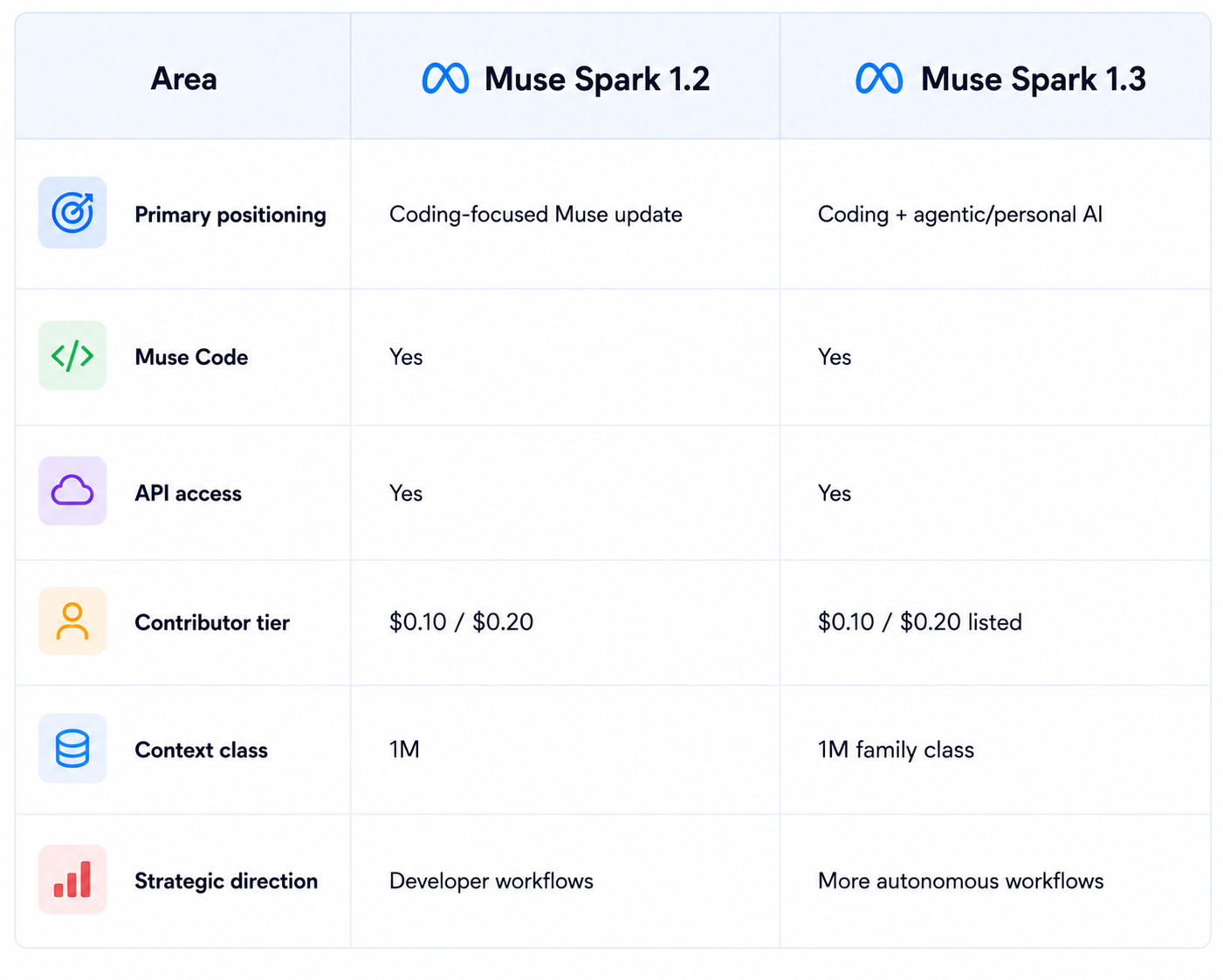
Muse Spark 1.2 was already a coding-focused update. Meta expanded training compute on coding tasks, increased training-environment diversity and co-trained Muse Spark 1.2 with Muse Code. The purpose was to make the model more effective at code generation, complex debugging, codebase understanding and end-to-end developer workflows.
Muse Spark 1.3 continues that direction, but Meta's positioning now places more emphasis on autonomous agents and personal AI. The practical difference is a shift from asking, 'Can the model write good code?' to asking, 'Can the model complete useful software tasks with minimal intervention?'
4. Muse Code: The Other Half of the Story
A model review can miss the most important part of Muse if it looks only at the API. Muse Code is the environment designed to turn Muse Spark into a coding agent that can operate across a real development task.
Meta's earlier Muse Code release was built alongside Muse Spark 1.2, with co-training intended to make the model perform well with the agent environment. That approach is significant because the hardest part of AI coding is rarely the ability to write one function. It is maintaining state while inspecting files, editing code, running tools and responding to failures.
For that reason, Muse Spark 1.3 should be judged by end-to-end developer workflows. The quality of a coding agent depends on the model, tool selection, execution loop, recovery behavior and harness working together.
5. Muse Spark Benchmark Baseline
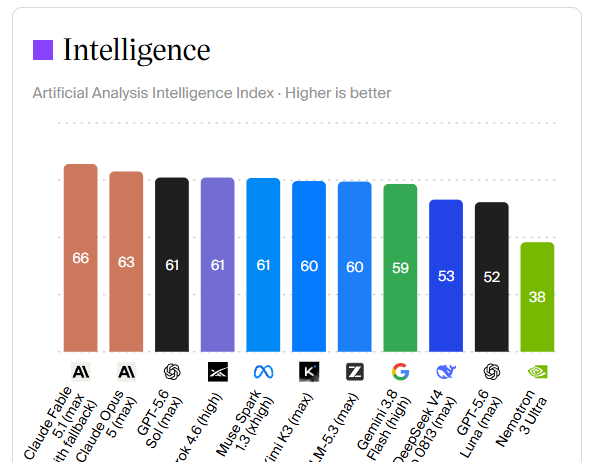
The strongest benchmark record available for direct comparison is Muse Spark 1.2. The August Artificial Analysis snapshot gives the model a 56.8 Intelligence Index score, 72.2 Coding Index score, 90.4% GPQA Diamond result, 45.5% Humanity's Last Exam result, 80.15% Terminal-Bench v2.1 and 83.33% AA-LCR.
Source: OfficeChai -Meta’s Muse Spark Review
These figures give 1.3 a useful starting point. Meta is improving a model family that already performs well on coding, long context and agentic evaluation. The right 1.3 review therefore focuses on what the new release is designed to improve rather than inventing fresh scores that are not in the available benchmark records.
6. Coding Performance
Coding is where Muse Spark has the clearest identity. Meta's 1.2 release specifically targeted code generation, debugging, codebase understanding and developer workflows, and Muse Code was trained alongside the model.
The 72.2 Coding Index score for Muse Spark 1.2 gives the family a solid public baseline. That result is important because coding agents increasingly need to work beyond isolated code completions. A useful agent needs to understand architecture, edit multiple files, run commands, inspect failures and keep changes consistent.
Muse Spark 1.3 is therefore most compelling for tasks such as repository maintenance, bug fixing, feature implementation, test generation and other workflows where an agent has to perform several connected steps.
7. Agentic Performance
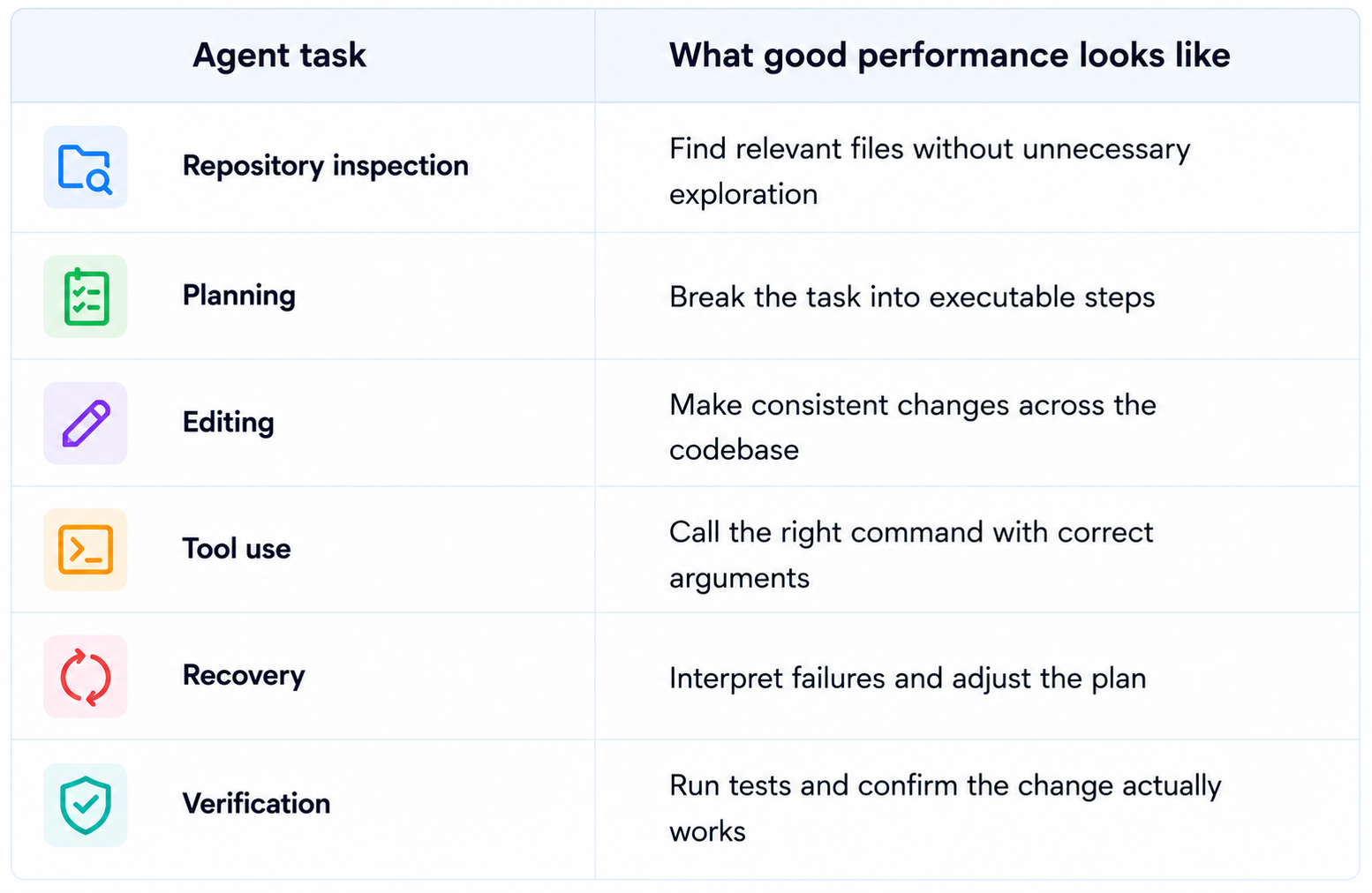
Muse Spark 1.2 recorded an 80.15% Terminal-Bench v2.1 result in the tracked Artificial Analysis snapshot. That is a strong signal that the family is designed for tool-oriented work rather than only conversational coding.
At the same time, agent quality is affected by the complete execution system. A model can understand a coding task and still waste time by selecting the wrong tool, repeating an action or failing to recover from an error. This is why Muse Code matters to 1.3: the model and its coding environment are intended to operate as one workflow.
8. Muse Spark 1.3 Pricing
The standard Muse Spark API tier has been listed at $1.25 per million input tokens and $4.25 per million output tokens. The contributor tier is listed at $0.10 per million input and $0.20 per million output, a dramatic reduction intended to encourage real-world experimentation and usage.
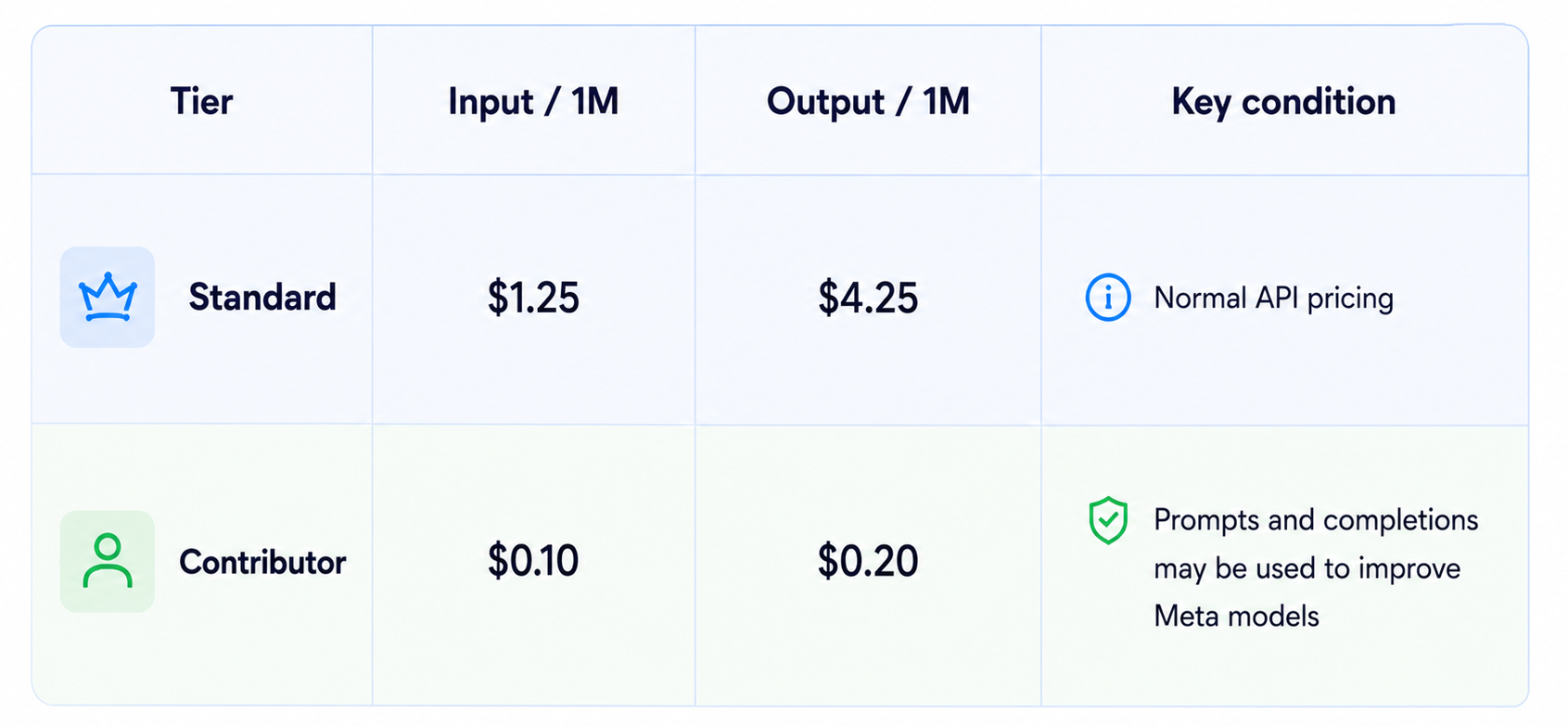
The contributor option is one of the most unusual parts of Meta's pricing strategy. At $0.20 per million output tokens, long coding-agent sessions can become extremely inexpensive. The tradeoff is important, though: contributors agree to data-use terms that allow Meta to use prompt and completion data for model improvement, subject to applicable geographic policies. Developers should not assume this is suitable for confidential client code or sensitive internal material.
9. Muse Spark 1.3 vs Muse Spark 1.2
The two versions are close enough in release date that the difference is better understood as an iteration in Meta's agent strategy than as a completely new model family.
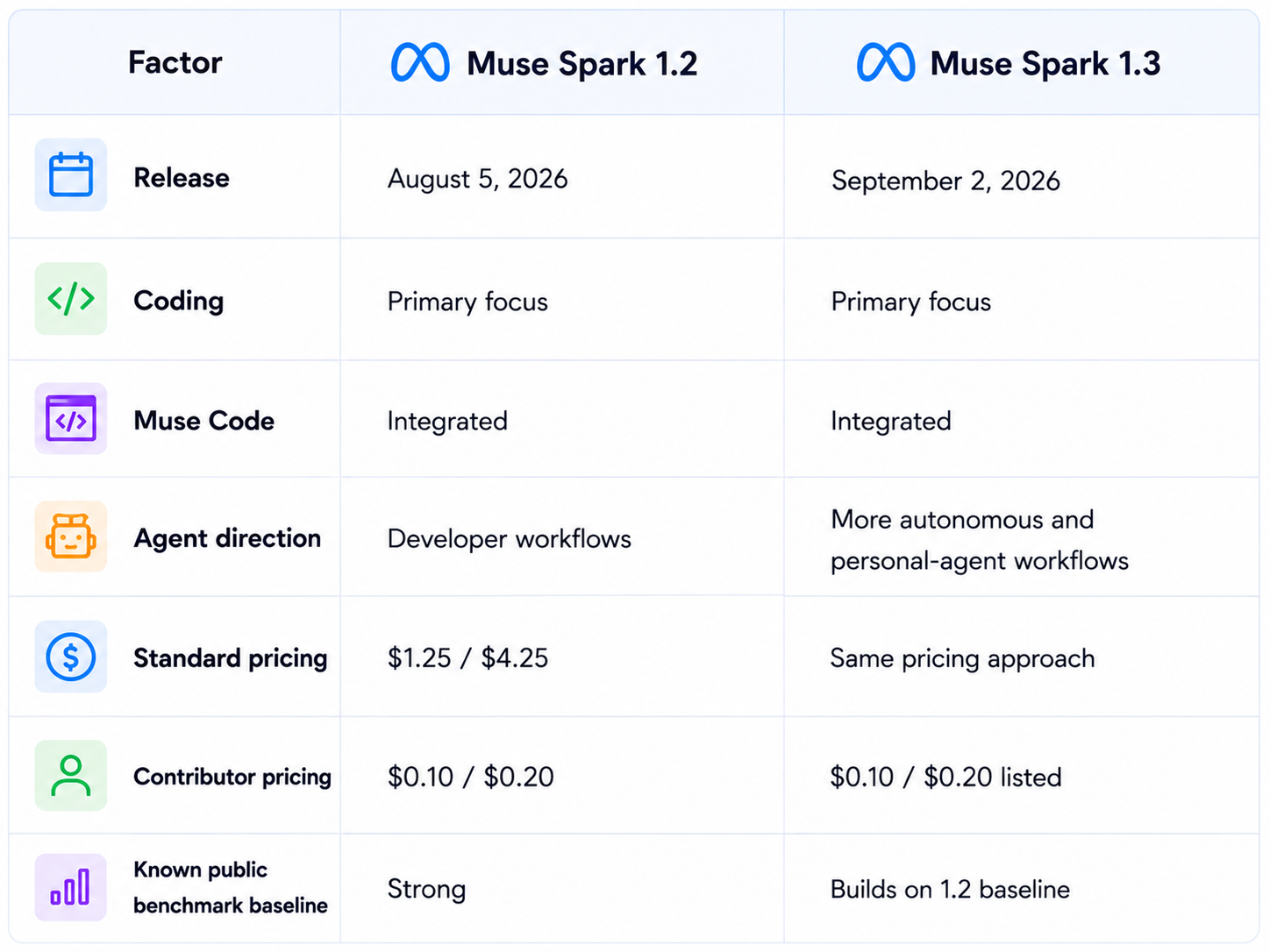
The practical upgrade to watch is completion quality. If 1.3 can handle more steps without human correction, then the release is more valuable than a small change in a static benchmark.
10. Muse Spark 1.3 vs Claude Opus 5
The comparison with Claude Opus 5 is useful because both models are designed for demanding software and agent tasks, but they occupy different positions in the market.
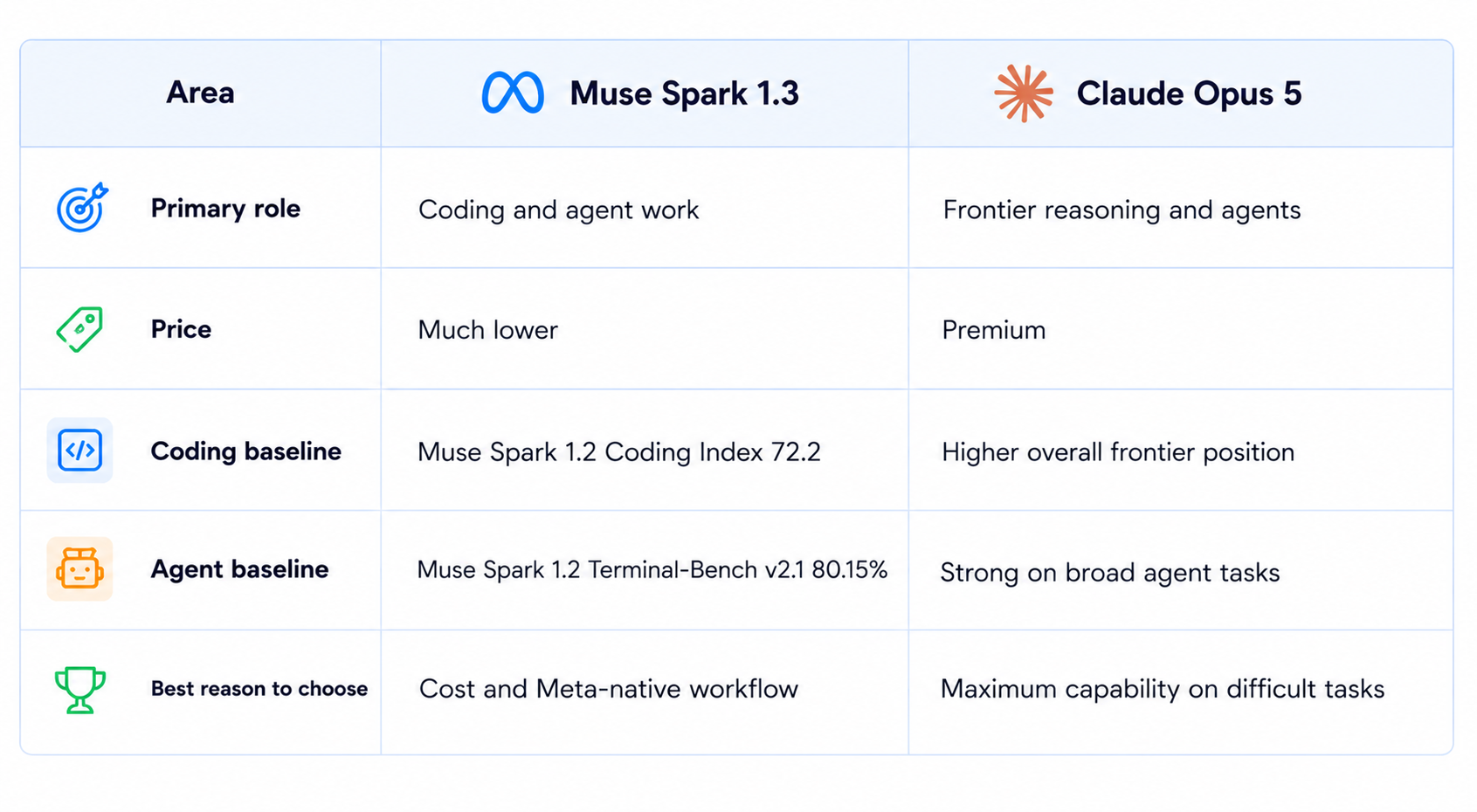
Muse Spark does not have to replace Opus 5 everywhere to be useful. Its strongest opportunity is as a capable worker model that handles routine and medium-complexity software tasks cheaply, while a premium model takes the hardest jobs.
11. Muse Spark 1.3 and Personal AI Agents
Meta's stated direction for Muse Spark 1.3 is broader than coding. Axios reports that Meta sees the release as part of its effort toward personal AI agents.
A personal agent needs more than conversation. It needs memory of the current task, the ability to choose actions, access to tools and a reliable loop for checking results. Coding is a useful proving ground because software tasks make each of those requirements measurable.
If Muse Spark 1.3 can generalize that workflow beyond code, the model becomes more important to Meta's larger product strategy. The same agent pattern can eventually be used for research, productivity, customer support and other tool-driven tasks.
12. Long Context
Muse Spark 1.2 is listed with a 1,048,576-token context window, and its AA-LCR score reached 83.33% in the tracked benchmark snapshot.
For coding, a large context window can keep more repository files, documentation, issues and test output available during an agent session. That can reduce the amount of manual context management required for larger projects.
Context length is most valuable when paired with reliable retrieval. Filling the entire window with irrelevant files does not automatically improve an agent. The model still needs to locate the right information and use it correctly.
13. Multimodal and General Reasoning
Muse Spark is not a code-only system. The previous generation's benchmark profile includes strong results on GPQA Diamond and Humanity's Last Exam, showing that the family also handles broader reasoning tasks.
That breadth matters for agents because modern development often crosses modalities. A developer may need to understand an image of a UI bug, a PDF specification, documentation and source code in the same task. A capable general model can reduce the number of specialized components required.
14. Data Use and Privacy
The contributor tier deserves its own section because its low price comes with a clear data-use condition. OpenCode's current documentation says the contributor tier allows Meta to use prompts and completion results to train future models, in exchange for substantially discounted token pricing, and that availability depends on Meta's geographic policies.
For experimentation, education and non-sensitive projects, the economics are attractive. For production systems containing private source code, client information, credentials or confidential research, the standard tier or another provider with appropriate data controls may be more suitable.
The important point is to treat price and data policy as one decision. The cheapest token is not necessarily the cheapest option if using that tier changes the data-handling requirements of your application.
15. Best Use Cases
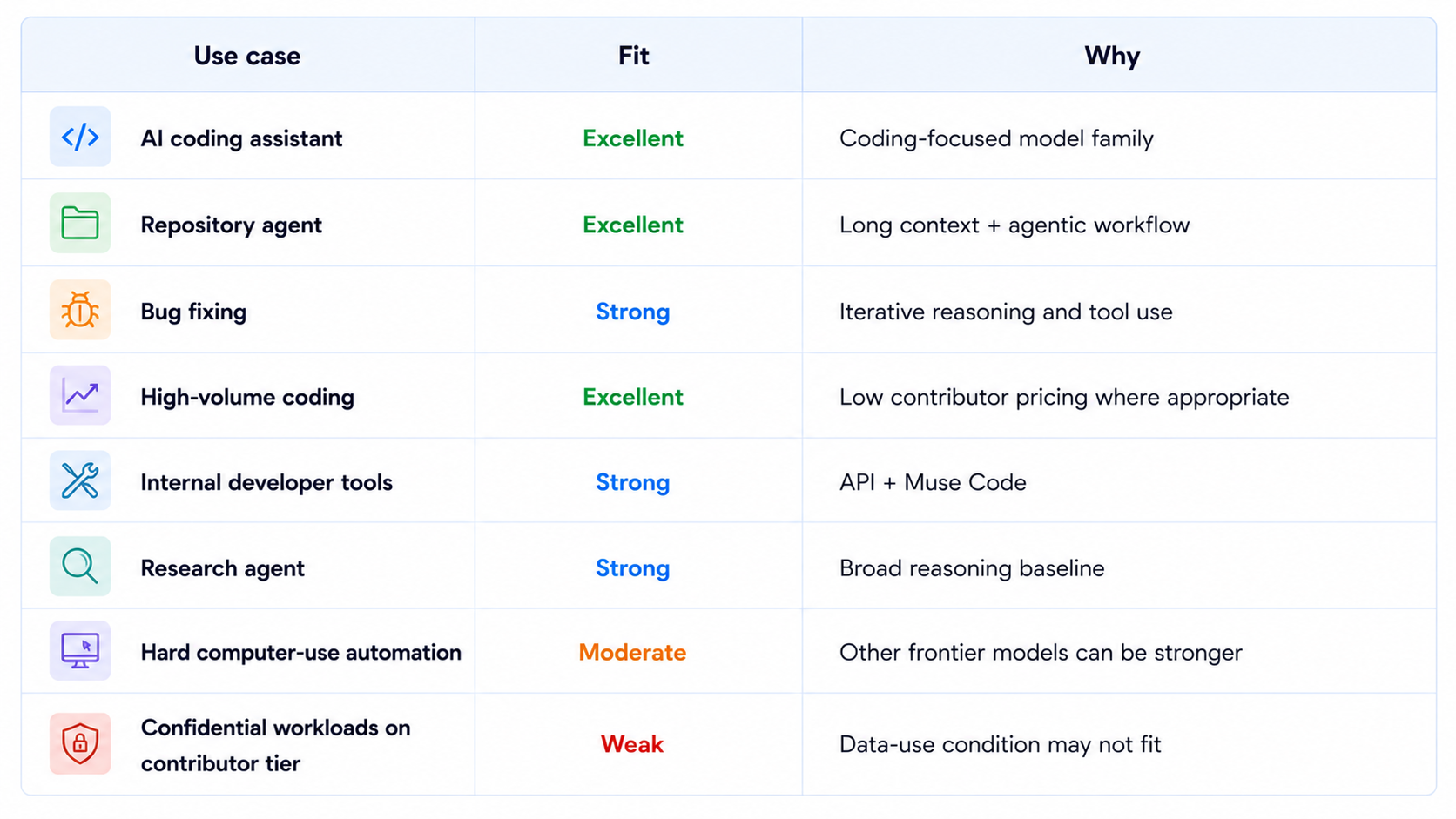
16. Limitations You Should Know
- Muse Spark 1.3 is a closed model, so it is not a local-deployment alternative to Meta's open-weight Muse Glimmer branch.
- Contributor pricing comes with data-use conditions that should be reviewed before sending private material.
- Most public benchmark measurements available for the family are associated with Muse Spark 1.2, so 1.3 should be judged through current API behavior and real task completion.
- Muse Spark does not lead every frontier benchmark, particularly when tasks require very broad computer-use or difficult autonomous execution.
- The final quality of a coding agent depends on Muse Code, tools and execution policy as well as the model.
17. Recommended Production Workflow
The most practical way to deploy Muse Spark 1.3 is as a worker model inside a controlled agent architecture.
- Use it for routine feature work, debugging and repository exploration.
- Pair it with Muse Code when you want Meta's integrated coding-agent workflow.
- Choose the contributor tier only for projects whose data policy allows it.
- Use a stronger frontier model when the task is unusually complex or requires advanced computer use.
- Run automated tests after every meaningful coding step.
- Measure completed tasks, retries, tool failures and cost per successful task.
For routing different models by task difficulty, read Model Routing for AI Coding Agents.
18. How to Evaluate Muse Spark 1.3 Yourself
Run the same real-world tasks through Muse Spark 1.3, Muse Spark 1.2 and your current production model. Keep the repository, tools and prompts consistent.
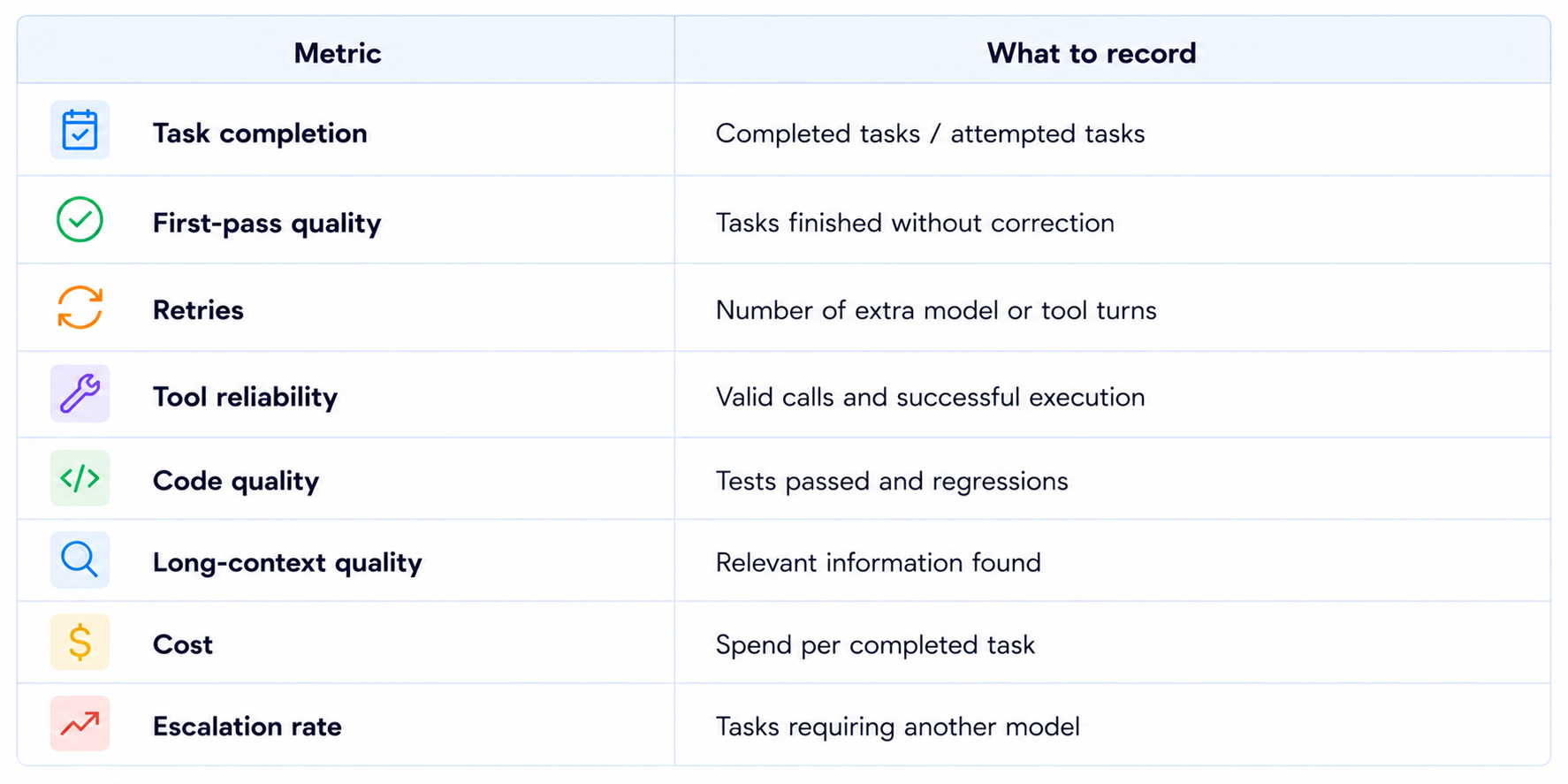
This makes the 1.3 upgrade measurable. The most useful improvement is not an abstract score. It is fewer correction loops and more completed software work per dollar.
19. Is Meta Muse Spark 1.3 Worth It?
Yes, especially for developers building coding agents or experimenting with Meta's agent stack. The combination of Muse Code, API availability, a 1M-class context and extremely low contributor pricing gives the model a clear reason to exist in production workflows.
The biggest question is performance at the task level. Muse Spark 1.2 had a strong benchmark profile, but the value of 1.3 will ultimately come from how much better it is at completing real multi-step work. That means successful implementation, debugging, tool usage and verification matter more than a single leaderboard position.
For teams handling sensitive information, the standard pricing tier deserves closer attention than the contributor offer. The contributor discount is significant, but the associated data-use terms change the suitability of that option for private work.
20. Final Verdict
Meta Muse Spark 1.3 is a meaningful release because Meta is treating the model as part of an agent system, not just another chatbot. The model is available through Muse Code and Meta's API, and its stated direction is coding, autonomous agents and personal AI.
The benchmark baseline from Muse Spark 1.2 is already respectable: 56.8 on the Artificial Analysis Intelligence Index, 72.2 on Coding Index, 80.15% on Terminal-Bench v2.1, 90.4% on GPQA Diamond, 45.5% on Humanity's Last Exam and 83.33% on AA-LCR.
The 1.3 opportunity is to turn that capability into a stronger end-to-end agent. If Meta can reduce correction cycles while keeping its aggressive pricing, Muse Spark becomes a compelling default worker model for software teams.
My rating: 9/10 for coding potential, 9.2/10 for price efficiency, 8.8/10 for agent workflows and 8.9/10 overall.
Bottom line: Meta Muse Spark 1.3 is worth testing for coding agents, repository work and high-volume automation. It is not a universal replacement for premium frontier models, but it can occupy a valuable middle layer where capable software execution needs to be repeated many times.
Frequently Asked Questions
What is Meta Muse Spark 1.3?
Meta Muse Spark 1.3 is the latest Muse Spark release, focused on coding, agentic workflows and personal AI, with access through Muse Code and Meta's API.
When was Muse Spark 1.3 released?
Meta released Muse Spark 1.3 on September 2, 2026, according to current launch reporting.
How much does Muse Spark 1.3 cost?
The contributor tier is listed at $0.10 per million input tokens and $0.20 per million output tokens. The standard Muse Spark pricing is $1.25 input and $4.25 output per million tokens.
What is Muse Code?
Muse Code is Meta's coding-agent environment built to work with Muse Spark on multi-step software development tasks.
What is the context window?
The Muse Spark family is in the 1M-token context class, with Muse Spark 1.2 listed at 1,048,576 tokens.
Is Muse Spark 1.3 better than Muse Spark 1.2?
The 1.3 release is positioned as the next step in coding and agentic capability. The strongest public benchmark baseline is 1.2, so the best way to measure the upgrade is on identical real-world tasks.
Is Muse Spark 1.3 better than Claude Opus 5?
Not across every workload. Muse Spark's value is its combination of coding capability, agent tooling and much lower pricing, while premium models remain stronger on many difficult frontier tasks.
What is the contributor tier?
It is a discounted access tier that allows Meta to use prompts and completion results to improve future models, subject to applicable geographic policies.
Is Muse Spark 1.3 worth it?
Yes for coding agents, repository work and cost-sensitive automation, especially when the contributor data-use terms are acceptable.
Recommended Blogs
Google Pics Review: Features, Price & Is It Worth It? (2026)
Claude Fable 5.1 Review: Benchmarks, Pricing, Features & Is It Worth It? (2026)
Gemini 3.8 Flash Review: Accuracy, Price & Is It Worth It? (2026)
Best AI Coding Agents 2026: Claude Code vs Codex vs Muse Code vs Cursor
Model Routing for AI Coding Agents: How to Cut Costs Without Losing Quality
Resources & Community
Join our community of 70,000+ AI enthusiasts and learn to build powerful AI applications. Whether you're a beginner or an experienced developer, Build Fast with AI helps you understand and implement AI in your projects.
Agentic AI Launchpad 2026
A structured 6-week cohort program that takes you from AI basics to building and deploying real-world agentic AI systems. Includes live sessions, expert mentorship, project reviews and a builder community network.
Ready to go from learning to building? Join the next cohort: Agentic AI Launchpad 2026
Free AI Resources
Access free tools, workshops and micro-learning to keep building.

