

Back
Collection26 articles
LLM Concepts & Theory
Plain-English explainers for every LLM concept that matters — attention, RLHF, MoE, KV cache, scaling laws, and more.
Curated Articles & Updates


What Is Context Engineering? Complete Guide (2026)
August 20, 2026

GLM-5.3 vs DeepSeek V4-Pro vs Kimi K3: Best Open Coding AI (2026)
August 17, 2026

How to Run Qwen3.8-Max Locally: 397GB Build & Hardware (2026)
August 15, 2026

Grok 4.6 Preview: Release Date, Specs & What to Expect
August 04, 2026

Best AI Models This Week: July 2026 Ranked
July 26, 2026

NVIDIA Cosmos 3 Edge: Complete Guide (2026)
July 21, 2026

New AI Models July 2026: 5 Launches Compared
July 20, 2026

Qwen3.8 Preview: 2.4T Params, Open Weights, Release
July 19, 2026

Thinking Machines Inkling Review: Tested (2026)
July 16, 2026

What Is Agentic AI? Complete Beginner's Guide (2026)
July 15, 2026

Muse Spark 1.1 Review: Benchmarks and Pricing
July 13, 2026

LongCat-2.0 Review: Meituan's Open-Source Coding Model Tested (2026)
July 11, 2026

Best AI Models of July 2026: Ranked by Use Case, Benchmarks & Price
July 02, 2026

GLM-5.2 vs Claude Opus 4.8 vs GPT-5.6 vs Kimi: Best Coding AI (2026)
June 30, 2026

Attention Mechanism in LLMs Explained (2026)
April 06, 2026

What Is Mixture of Experts (MoE)? How It Works (2026)
April 01, 2026
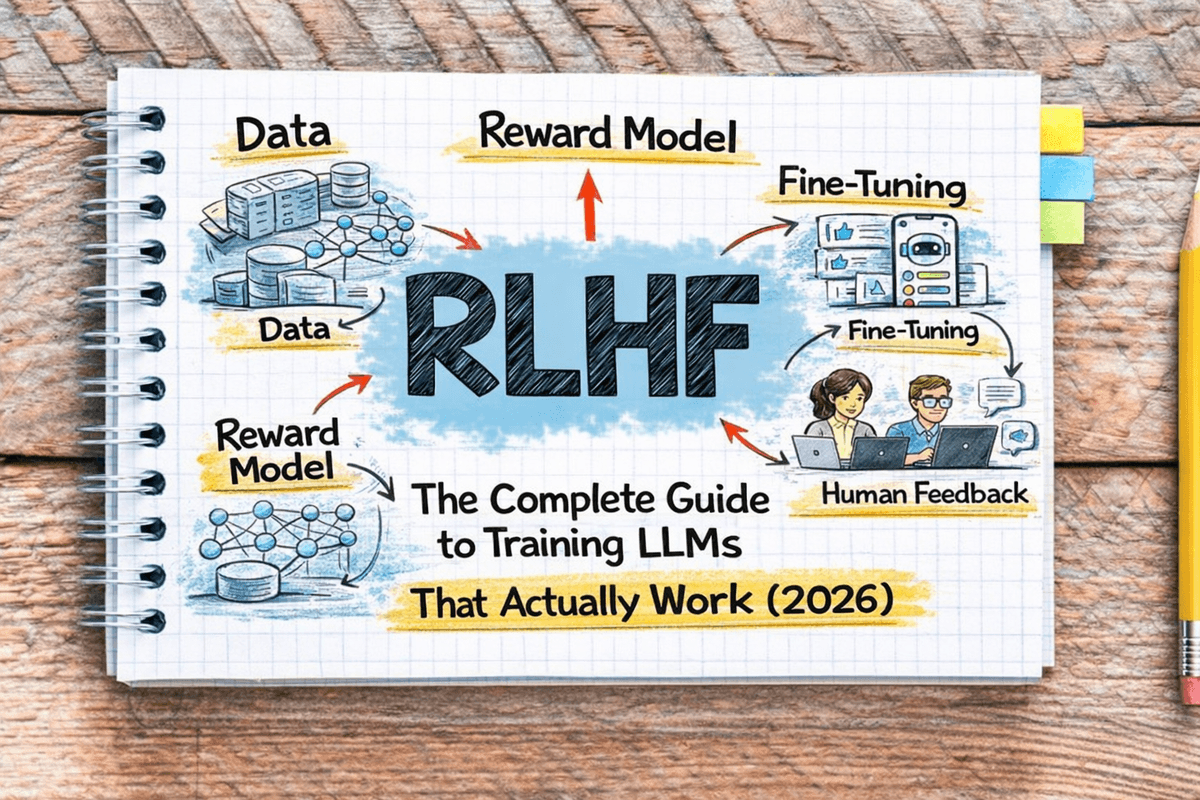
What Is RLHF? The Complete Guide to Training LLMs That Actually Work (2026)
March 28, 2026

LLM Scaling Laws Explained: Will Bigger AI Models Always Win? (2026)
March 27, 2026
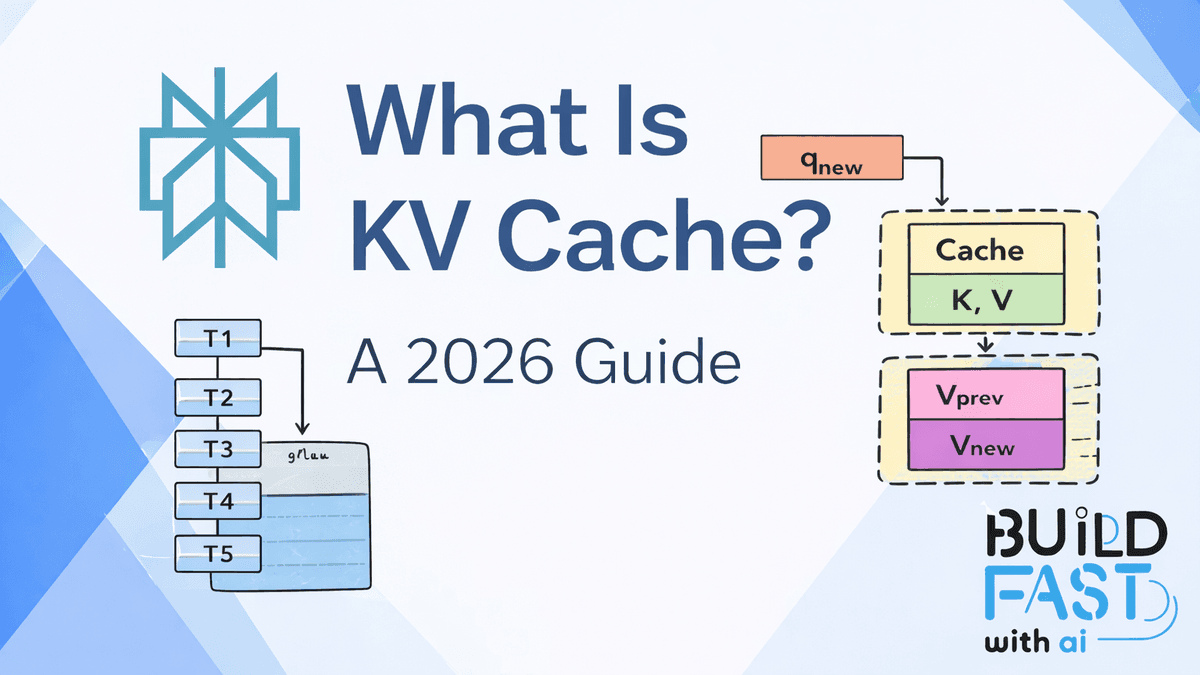
What Is KV Cache in LLMs? A 2026 Guide.
March 26, 2026
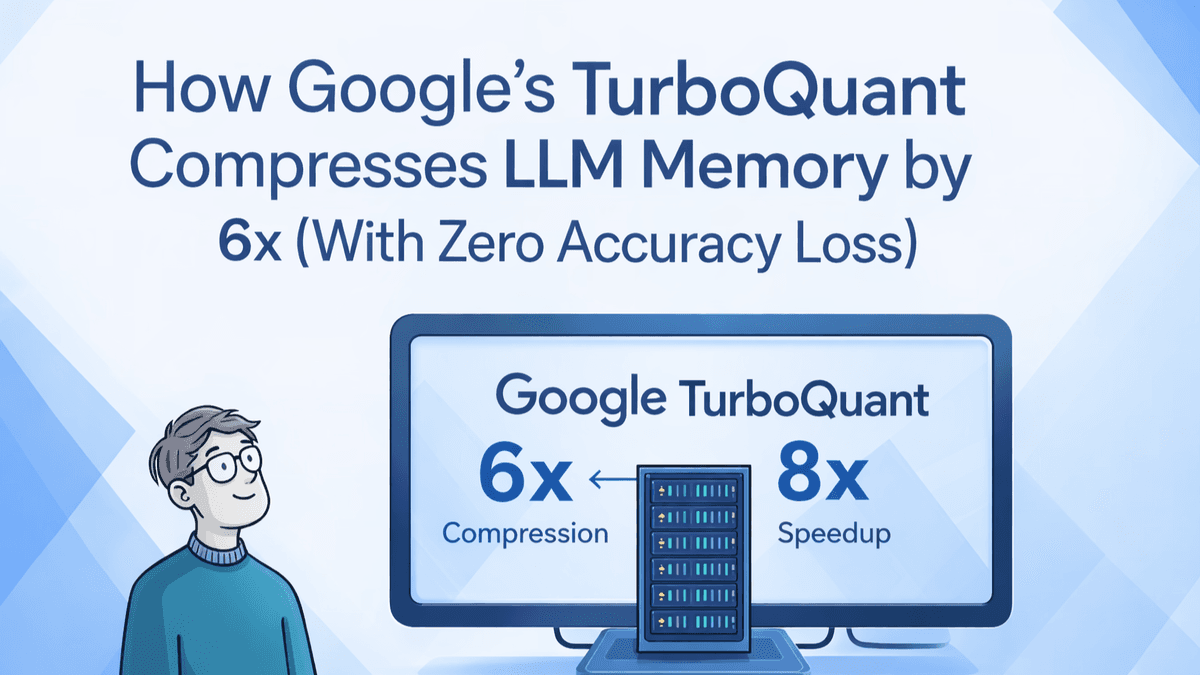
How Google's TurboQuant Compresses LLM Memory by 6x (With Zero Accuracy Loss)
March 26, 2026
LLM-Reasoner: The Ultimate Guide to Step-by-Step Reasoning
March 12, 2025
Understanding LLMs: Why It Matters for Practitioners
You do not need to understand how a car engine works to drive a car. But if you are building AI applications, debugging LLM failures, evaluating new models, or making architectural decisions about AI systems, understanding what is happening inside the model makes you dramatically more effective. This collection provides plain-English explainers for every major LLM concept — from the attention mechanism to scaling laws — written for practitioners who want genuine understanding without the full mathematical formalism of a research paper.
Core Architecture Concepts
The attention mechanism is the heart of every modern LLM. It allows the model to weight the relevance of different parts of the input when producing each output token — enabling it to understand long-range dependencies, resolve pronoun references, and focus on the relevant context for any given prediction. Transformer architecture stacks multiple attention layers with feed-forward networks to build increasingly abstract representations of text across layers. Mixture of Experts (MoE) is the architecture behind many frontier models in 2026: instead of activating the entire network for every token, MoE routes each token to a subset of specialized "expert" sub-networks, allowing much larger total parameter counts with manageable inference costs.
Training and Alignment Concepts
RLHF (Reinforcement Learning from Human Feedback) is the training technique that turns a raw language model into a helpful assistant — it uses human preference data to teach the model to produce outputs that humans prefer. Constitutional AI (CAI) is Anthropic's approach to alignment: instead of requiring human labels for every example, it uses a set of principles and AI-generated feedback to train safer, more helpful models. Scaling laws describe the predictable relationship between model size, training data, compute budget, and resulting model capability.
Inference-Time Concepts
The KV cache is a memory optimization that stores the key and value matrices from attention computations for previously processed tokens — eliminating redundant computation for long-context inference and dramatically reducing latency for multi-turn conversations. Speculative decoding uses a small draft model to predict multiple tokens ahead, then verifies them with the large model in parallel — achieving 2-4x speed improvements with no quality loss. Quantization reduces model precision from 32-bit to 8-bit or 4-bit representations, shrinking memory requirements by 4-8x with manageable quality trade-offs.
Frequently Asked Questions
What is the attention mechanism in LLMs and how does it work?
The attention mechanism allows an LLM to weight the importance of different input tokens when predicting each output token. When generating a word, the model looks back at the entire input and assigns attention scores to each token, focusing more on contextually relevant tokens. This is what lets LLMs understand long-range dependencies, resolve ambiguous references, and extract relevant information from long contexts.
What is RLHF and how does it make AI models more helpful?
RLHF (Reinforcement Learning from Human Feedback) is the training process that converts a raw language model into a helpful assistant. Human raters compare pairs of model outputs and indicate which is better. A reward model is trained on these preferences, and then the base model is fine-tuned using reinforcement learning to maximize the reward model's score — effectively learning to produce outputs humans prefer.
What is Mixture of Experts (MoE) and why do frontier models use it?
Mixture of Experts (MoE) is an architecture where the model consists of many specialized sub-networks ('experts') and a router that selects which experts process each input token. Instead of activating all parameters for every token, MoE activates only a small subset — allowing much larger total parameter counts with lower inference cost. Most frontier models in 2026 (Gemini 3.5, GPT-5.5, DeepSeek V4) use MoE architecture.
What is the KV cache and why does it matter for LLM performance?
The KV cache stores the key and value matrices computed during attention for previously processed tokens. Without it, the model would re-compute attention for all previous tokens on each new generation step. With the cache, it only computes attention for new tokens and looks up previous tokens' values from cache — dramatically reducing latency and compute cost for long contexts.
What are LLM scaling laws?
Scaling laws describe the empirically observed relationship between three variables — model parameters, training data (tokens), and compute budget — and the resulting model capability (measured by loss on a test set). They are surprisingly predictable: doubling compute (with optimal allocation between model size and data) reliably reduces loss by a predictable amount. Frontier labs use scaling laws to forecast model performance before training completes.
What is model quantization and why does it matter?
Quantization reduces the numerical precision used to represent model weights — from 32-bit floats (full precision) to 16-bit, 8-bit, or 4-bit integers. This reduces memory requirements by 2-8x with manageable quality trade-offs. 8-bit quantization has near-zero quality loss; 4-bit quantization (GGUF Q4 format) reduces quality slightly but fits much larger models on consumer hardware. Quantized models are the standard format for running open-source LLMs locally.
Recommended
View all%25203%2520(2).png&w=96&q=75)
AI Agent Frameworks
68 articles
AI Applications & Use Cases
77 articles
AI Automation & No-Code
24 articles
AI Careers, Salary & Resume
15 articles
AI Coding Tools
57 articlesWaitlist Open
Agentic AI Launchpad
Will you be among the 1% who build AI Agents, or the 99% who just use them? Master AI app development.
- 6 Weeks Live Mentorship
- Build & Deploy 5+ Apps
- No Coding Required

Subscribe to updates
Get the latest insights directly in your inbox.