



Replit's AI Model Routing Is Here: How Intelligent Routing Cuts Costs
Replit has made Intelligent Model Routing available to everyone, and the product is built around a simple idea: developers should not have to decide which AI model should handle every task. Replit automatically chooses the model it believes is best suited to the work while balancing quality, speed and cost. In its own testing, Replit says Intelligent Model Routing produced the same output quality at 65% lower average cost than the previous version of Max Mode.
That makes this a bigger product change than another model launch. The AI model market is now crowded with frontier models, efficient models and specialized systems. A coding project can contain trivial edits, documentation work, debugging, architecture decisions and long agent loops, and there is no reason those tasks should all use the same model. Replit is turning model selection into a layer of infrastructure rather than a repetitive developer decision.
The 65% figure also needs context. It is a Replit testing result against the previous Max Mode, not a universal promise that every Replit task will cost 65% less. The actual saving depends on how mixed your workload is, how often cheaper models can solve the task, and whether lower-cost choices create more retries or human corrections.
QUICK ANSWER
Replit Intelligent Model Routing automatically chooses an AI model for each task instead of forcing the user to select one. Replit says the system balances quality, speed and cost and delivered the same output quality at 65% lower average cost than the previous Max Mode in its testing. Users can still manually select models, while enterprise administrators can restrict routing to approved models.
The real advantage is not a cheaper model by itself. It is dynamic allocation. Easy tasks can use cheaper inference, while difficult coding or reasoning steps can escalate to more capable models. This makes routing especially interesting for coding agents, where one session may contain dozens of different tasks.
1. What Is Replit Intelligent Model Routing?
Intelligent Model Routing is Replit's automatic model-selection layer. Replit says it uses access to a broad set of models and its experience testing those models on real tasks to determine which models are best suited to different kinds of work. The router then applies that knowledge to each task.
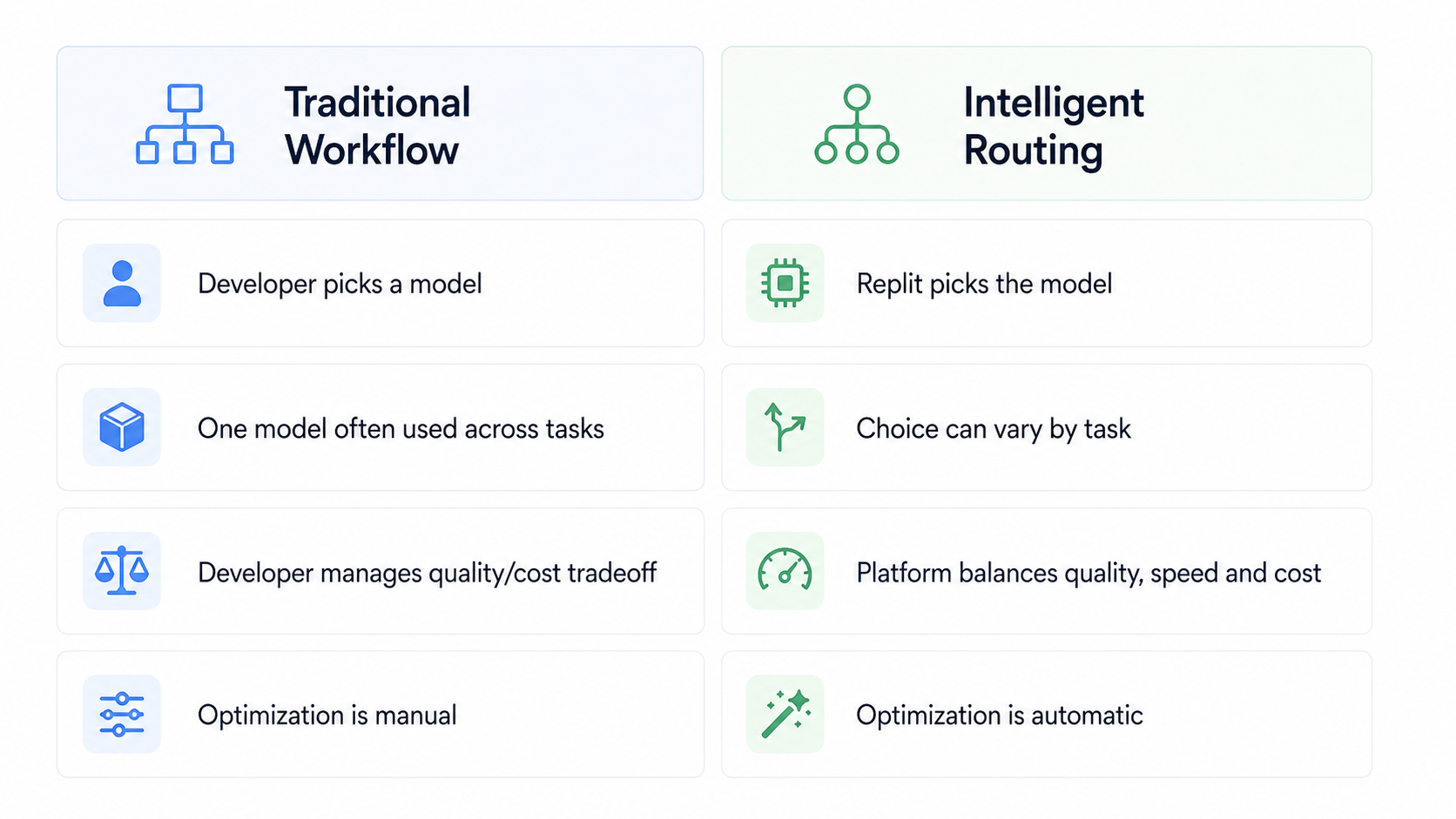
The crucial concept is that there is no universally best model. A model's value depends on the task. Routing tries to find the cheapest model that clears the required quality bar.
2. Why Model Routing Matters in 2026
AI model choice used to be relatively simple. A developer might choose one provider and build around it. That is becoming less realistic. Today, several models can be competitive on coding, reasoning or agent tasks, but their price, speed and failure modes differ.
The result is a new optimization problem. Sending every request to the strongest model can produce high quality but waste money. Sending everything to the cheapest model can reduce costs but increase failures. A router sits between those extremes.
Axios recently described routing as an emerging AI infrastructure trend because businesses increasingly want to match requests with efficient models instead of treating one frontier model as the only destination.
This is the same principle behind our Model Routing for AI Coding Agents.
3. How Replit's Router Works
Replit has not published the full routing algorithm, exact thresholds or complete model-selection matrix. What it does disclose is the operating principle: evaluate models on real tasks, learn where they perform well and match each task to a suitable model while balancing quality, speed and cost.
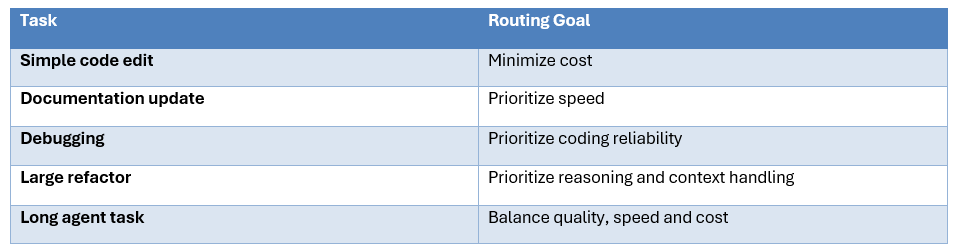
A useful way to understand the system is to imagine a task classifier followed by a model selector. A simple code edit might be routed to a lower-cost model. A difficult repository-wide refactor could be routed to a stronger coding model. A task that needs multiple tool calls might be assigned to a model with stronger agentic performance. This is a conceptual explanation, not a claim about Replit's private implementation.
4. The 65% Cost Reduction Claim
Replit says Intelligent Model Routing produced the same output quality at 65% lower average cost than the previous version of Max Mode in its testing. In a simplified example, if an equivalent workload previously consumed $100 of model usage, a 65% reduction would bring that model cost to about $35. The example is only arithmetic; it is not Replit's reported invoice.
The important qualification is 'average.' Some tasks may save much more, while tasks that consistently require the strongest model may save little. The baseline also matters: the comparison is with the previous Max Mode rather than with every possible AI coding setup.
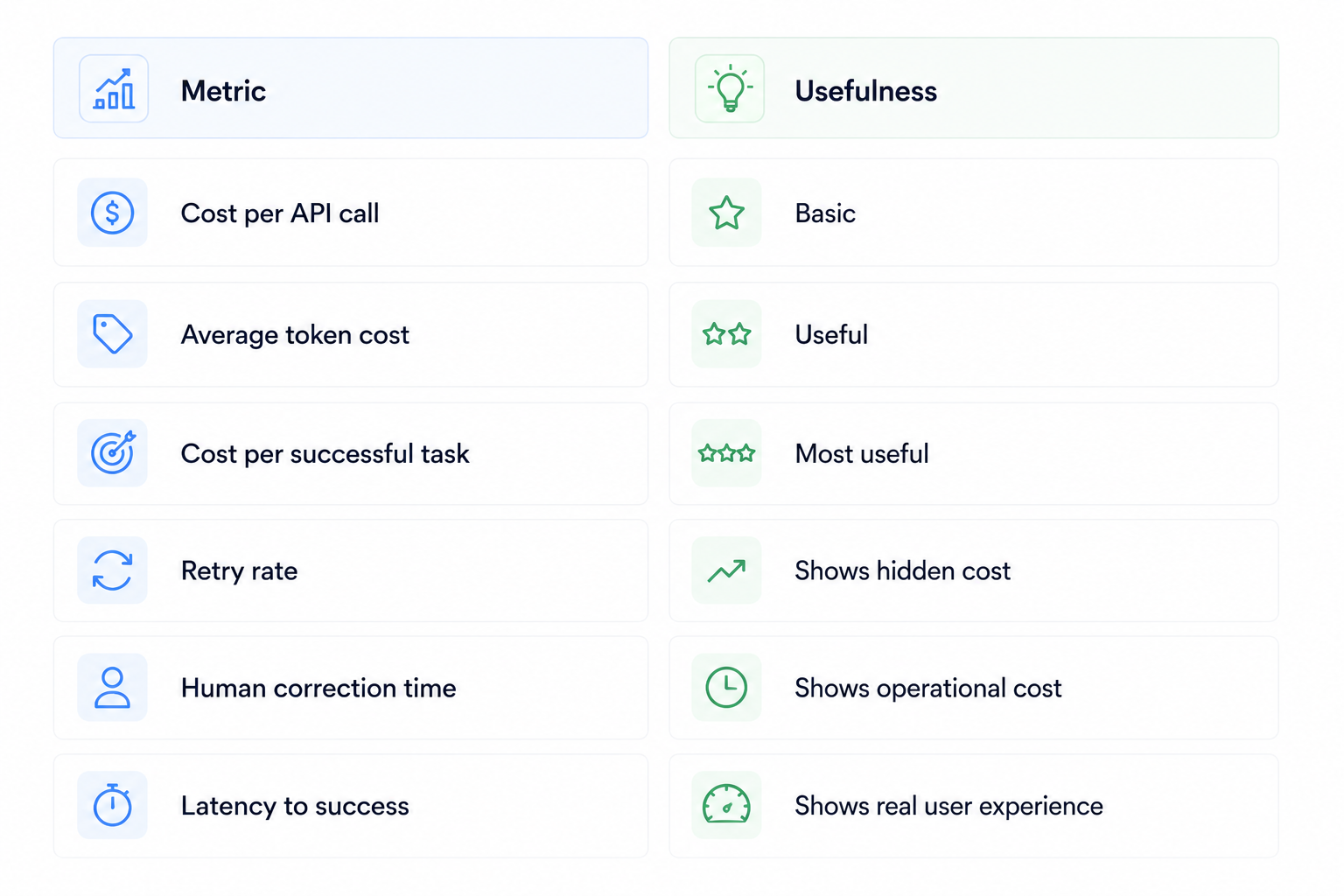
The better production metric is cost per successful task. Suppose a cheap model costs half as much but requires two additional retries on a difficult task. The raw per-call saving can disappear. Teams should measure total model spend, retry rate and human correction time together.
5. Why Coding Agents Benefit Most
Coding agents are a natural routing workload because one agent run contains tasks with different difficulty levels. Reading a file is not the same problem as diagnosing a race condition across five services. Writing a boilerplate test is not the same as redesigning an authentication flow.
A good router can therefore keep expensive inference concentrated on high-value decisions. Cheap models can handle repository navigation, summarization and simple changes, while stronger models handle complex debugging, architecture and difficult reasoning.
The risk is routing error. An underpowered model can make a change that looks plausible but breaks a later step. That is why routing needs evaluation at the task level, not just benchmarks for the individual models.
6. Free Mode + Intelligent Routing
Replit launched Free Mode earlier in August to let users brainstorm and create without token costs. Intelligent Model Routing extends that product strategy by handling escalation when more powerful execution is required. Replit says users start in Free Mode and receive a notification when work escalates to higher-powered modes that can incur usage costs. Users can override that behavior and remain in Free Mode.
This creates two separate controls. Free Mode is the user's preference for avoiding paid model usage. Intelligent Routing is the optimization layer used when higher-powered execution is allowed.
For beginners, this reduces model-management complexity. For experienced users, it creates a deliberate tradeoff between controlling spend and letting the platform optimize for task completion.
7. Can You Still Choose a Model?
Yes. Replit says Core and Pro users can still manually select models. Users can also choose to remain in Free Mode instead of allowing automatic escalation.
That manual escape hatch matters. Automatic routing cannot know every project-specific preference. You might know that a particular model handles your stack better, that a particular provider is approved for a project or that you need stable behavior for a regression investigation.
Automatic routing works best as the default, with manual control available when a developer has a reason to override it.
8. Enterprise Model Governance
Replit's enterprise routing model is more interesting than simple convenience. Administrators can define an approved model set for a workspace, and Intelligent Model Routing chooses among those approved models.
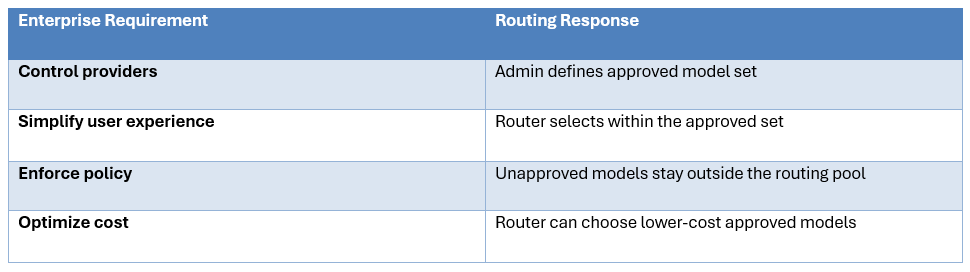
That gives organizations a compromise between central governance and local optimization. The company controls the boundary, while the platform handles task-level selection.
For related security issues around agents, read our How to Secure AI Coding Agents.
9. Routing Changes How You Think About AI Benchmarks
A traditional leaderboard asks which model scores highest. A routing system asks a different question: which model is good enough for this task at the lowest total cost?
That can make a lower-ranked model the better production choice. If two models both finish a documentation task successfully but one is cheaper and faster, the router should prefer it. A premium model only earns its higher cost when its extra capability changes the outcome.
This is why benchmark scores should be treated as inputs to routing rather than final answers. The benchmark tells you something about capability. The router decides how often that capability is worth paying for.
10. What the 65% Number Does Not Tell You
- The exact models participating in the routing pool.
- The routing signals and thresholds used to select them.
- The composition and size of Replit's testing workload.
- How savings vary between simple tasks and difficult agent loops.
- How often users override automatic routing.
- How the routing policy behaves when underlying models are updated.
- How much of the result comes from model selection versus other Max Mode changes.
Those gaps do not make the claim useless. They define its scope. Treat the 65% figure as a Replit-reported benchmark and test the system against your own workload before making it a budget assumption.
11. The New Problem: Routing Transparency
Automatic model selection solves one problem and creates another. When output changes, the developer needs to know why. Was the prompt different? Did the underlying model change? Did the router choose a different model? Did the model fail and retry?
A mature routing layer therefore needs observability. Developers should be able to identify the chosen model, task cost, latency, retry behavior and outcome for important jobs. Replit's announcement does not detail the full telemetry surface, so teams should check the current product documentation and account controls before depending on routing for critical workflows.
This matters even more for regulated or enterprise environments, where model identity can be a governance concern rather than just a technical detail.
12. Replit Routing vs Building Your Own
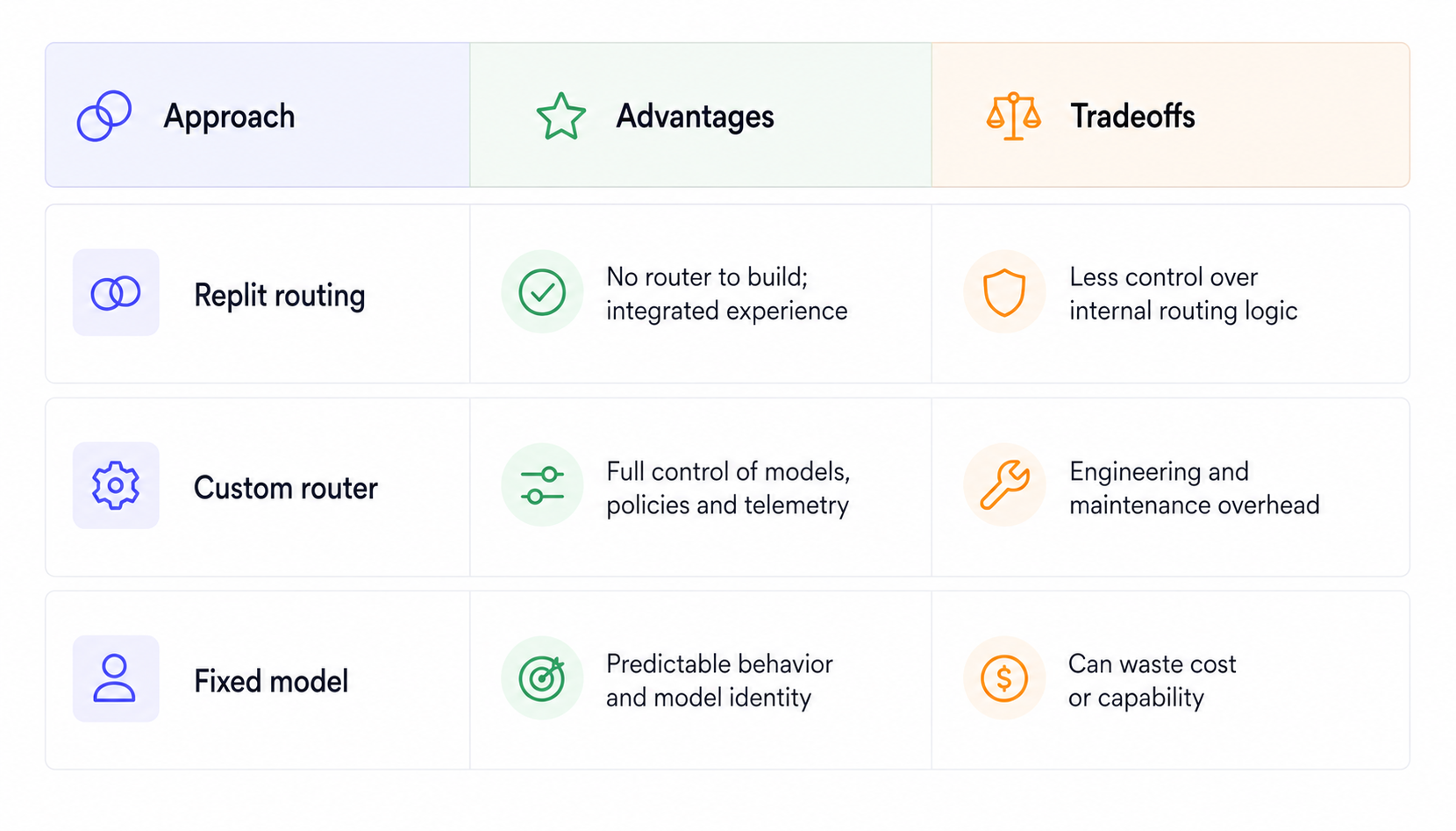
If your goal is simply to build inside Replit, native routing is the obvious low-effort option. If you operate your own multi-model AI platform, a custom router can make sense because provider policy, data residency, cost allocation and observability may be business requirements.
What is changing is the abstraction. Model selection itself is becoming a software layer.
13. How to Measure Whether It Works for You
- Build a representative evaluation set of real tasks.
- Record your fixed-model baseline for success, cost, latency and retries.
- Run the same tasks with routing enabled.
- Calculate cost per successful task, not only token spend.
- Track tasks that required human correction.
- Repeat the evaluation when the model pool or routing policy changes.
For a coding team, this could mean collecting real bug fixes, refactors, tests, documentation updates and feature requests from the last month. The resulting benchmark is more useful than a generic coding leaderboard because it measures what your team actually asks AI to do.
14. When Intelligent Routing Makes the Most Sense
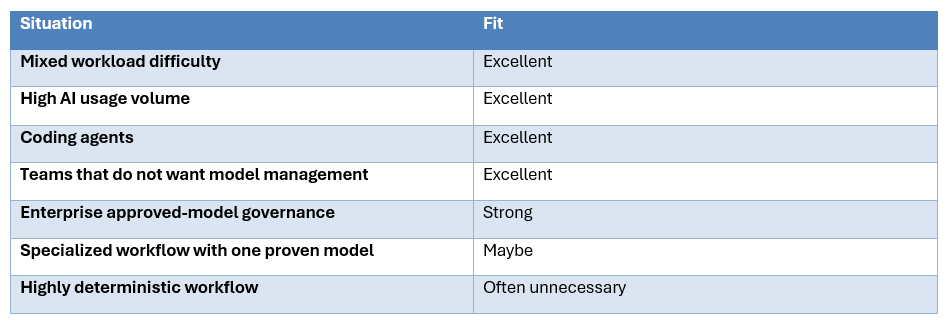
The more heterogeneous the workload, the more opportunity a router has to save money. If every task needs the same powerful model, there is less to optimize.
15. What This Means for AI Coding
Replit's move points toward an outcome-centric development environment. Instead of thinking 'Which model should I use?', the user increasingly thinks 'Complete this task.' The development platform becomes responsible for selecting the right model, connecting tools, managing context and deploying the result.
That can lower the expertise required to use multiple AI models effectively. It also shifts competitive pressure upward. If model selection becomes automatic, developers become less attached to a specific provider and more focused on the environment that gives them the best outcome.
For model vendors, that creates a new reality: being the best model on a benchmark may matter less than being the best model on the tasks a router chooses you for.
16. What Developers Should Do Now
- Try routing on real coding tasks rather than judging it only from the headline 65% figure.
- Keep fixed-model baselines for critical workflows.
- Measure cost per successful task and human correction time.
- Use manual model selection where you have strong task-specific evidence.
- For enterprise use, define approved models before enabling automatic routing.
- Maintain regression tests because both model quality and routing behavior can change.
17. Is Replit Intelligent Model Routing Worth It?
For most Replit users, it is worth testing. Replit is solving a real problem: model choice is becoming too frequent and too complicated for developers to manage manually. If its router can preserve the quality bar while using cheaper models for easier work, the benefit is both economic and cognitive.
But do not budget around the 65% claim without testing. Workloads dominated by difficult tasks may have little routing headroom, while mixed workloads may benefit substantially. Measure your own successful tasks and include retry and human-correction costs.
Enterprise users also have a reason to care because approved model sets can constrain the routing pool. That turns routing into a governance mechanism as well as a cost optimization tool.
18. Final Verdict
Replit Intelligent Model Routing is an important shift in AI coding because it treats model selection as infrastructure rather than a developer responsibility.
Replit reports the same output quality at 65% lower average cost than the previous Max Mode in its testing. That is significant, but it is a Replit test result, not a universal 65% saving.
The feature is especially well matched to coding agents because those workflows contain easy, medium and difficult steps inside the same session.
Free Mode, manual selection and enterprise approved-model controls make the system more flexible than a fully opaque auto-router.
The biggest question is transparency. As automatic routing becomes common, developers will need visibility into model choice, cost, latency and changes in behavior.
My verdict: the important innovation is not that Replit found one cheaper model. It is that Replit is trying to make the identity of the model irrelevant for most tasks and optimize for the outcome instead. That is a significant direction for AI development in 2026.
Frequently Asked Questions
What is Replit Intelligent Model Routing?
It is Replit's automatic model-selection system that chooses an AI model for each task while balancing quality, speed and cost.
How much does Replit say routing can save?
Replit says Intelligent Model Routing produced the same output quality at 65% lower average cost than the previous version of Max Mode in its testing.
Does Replit guarantee 65% savings for every user?
No. The 65% figure is an average from Replit's own testing against the previous Max Mode. Actual savings depend on the user's workload.
Can I still choose a model manually?
Yes. Replit says Core and Pro users can still manually select models.
Can users stay in Free Mode?
Yes. Replit says users can override automatic escalation and remain in Free Mode.
Can enterprises control the models used by routing?
Yes. Replit says enterprise administrators can define an approved model set for each workspace, and routing selects among those models.
Why can routing lower costs?
Because simple tasks may not need an expensive frontier model. A router can reserve higher-cost models for tasks where their extra capability is valuable.
Is model routing useful for coding agents?
Yes. Coding agents mix simple edits, tool calls, debugging and complex reasoning, so task-level model selection can reduce average cost.
Is Replit routing better than one fixed model?
Not always. Fixed models can be preferable for specialized or highly deterministic workloads. Routing has the most opportunity when task difficulty varies.
Is Replit Intelligent Model Routing worth trying?
Yes. Test it on representative tasks and compare success rate, cost per successful task, latency, retries and human correction time.
Recommended Blogs
- What Is an AI Agent? Beginner Guide With Examples (2026)
- Model Routing for AI Coding Agents: How to Cut Costs Without Losing Quality
- Pydantic AI: Build Type-Safe AI Agents (2026 Guide)
- How to Use LangGraph for Multi-Agent Systems (2026)
- How to Secure AI Coding Agents in 2026: Permissions, Sandboxing, MCP & Secrets
- GLM-5.3-Flash Review: Benchmarks, Price & Is It Worth It? (2026)
Resources & Community
Join our community of 70,000+ AI enthusiasts and learn to build powerful AI applications. Whether you're a beginner or an experienced developer, Build Fast with AI helps you understand and implement AI in your projects.
- Website - buildfastwithai.com
- LinkedIn - Build Fast with AI
- Instagram - @buildfastwithai
- Founder Twitter - @satvikps
- Twitter - @BuildFastWithAI
Agentic AI Launchpad 2026
A structured 6-week cohort program that takes you from AI basics to building and deploying real-world agentic AI systems. Includes live sessions, expert mentorship, project reviews and a builder community network.
Ready to go from learning to building? Join the next cohort: Agentic AI Launchpad 2026
Free AI Resources
Access free tools, workshops and micro-learning to keep building.
- AI Workshops - Free resources, upcoming events and past recordings
- Unrot - Learn AI in 5 minutes a day

