



India AI Summit 2026: 100M ChatGPT Users & What It Means
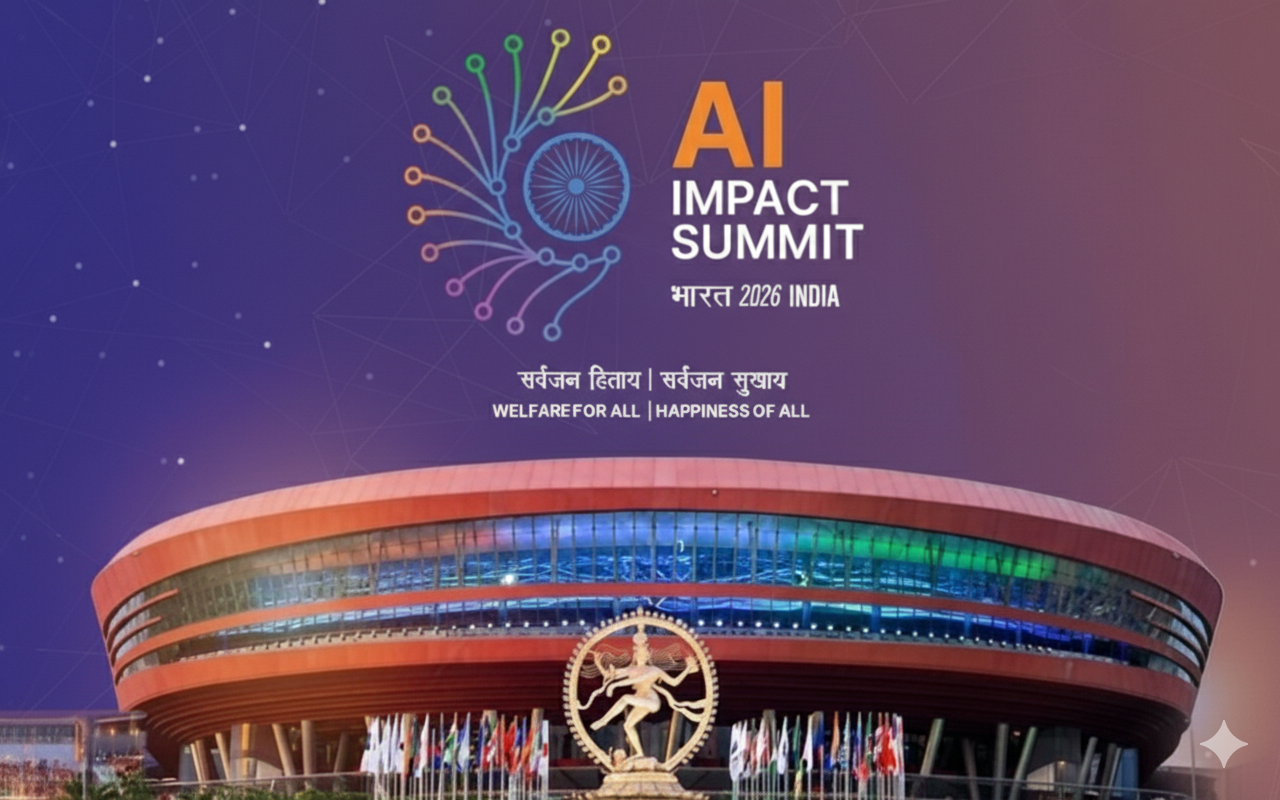
I woke up this morning to Sam Altman tweeting about India, Sundar Pichai landing in Delhi, and Dario Amodei — the CEO of Anthropic, a company that barely does public events — showing up at an AI summit in New Delhi.
All of them. Same city. Same week.
That doesn't happen by accident.
The India AI Impact Summit 2026 just kicked off, and I've been glued to the coverage since 8 AM. After reading through every announcement, every keynote preview, and every press release I could find — here's my honest breakdown of what's happening, what it means, and what most people are getting wrong about it.
Table of Contents
What Is This Summit, Actually?
The Guest List Is Insane
100 Million Indians Use ChatGPT Every Week (Yes, Really)
India's Playbook: Show Up Late, Scale Faster Than Everyone
Param2 and Sarvam AI: India Stops Waiting for Silicon Valley
Big Tech Is Fighting Over India Right Now
The Problems Nobody on Stage Will Talk About
My Take: Why This Summit Matters More Than Paris or Seoul
FAQs
What Is This Summit, Actually?
Forget the fancy branding for a second. Here's the simple version.
Every year since 2023, world governments have been hosting global AI summits. UK did Bletchley Park in 2023 (focused on AI safety). South Korea did Seoul in 2024. France did Paris in 2025. Now it's India's turn — and they're not being subtle about the scale.
The India AI Impact Summit runs five full days, February 16 to 20, at Bharat Mandapam in New Delhi. Over 3,250 speakers. More than 500 sessions. Delegates from 100+ countries. 300+ exhibition pavilions spread across 70,000 square metres.
I'll say it plainly: this is the largest AI gathering ever organized. Not just in India. Anywhere.
But here's what I find most interesting about the framing. Previous summits kept circling around "AI safety" and "AI governance" — important conversations, sure, but often abstract and disconnected from reality. India flipped the script. Their three pillars — they're calling them "Sutras" — are People, Planet, and Progress. The focus isn't "what could go wrong with AI." It's "how do we make AI actually work for a billion people who need it."
That shift in framing tells you everything about India's strategy.
The Guest List Is Insane
I've covered a lot of tech events. I don't think I've ever seen a guest list like this at a single summit.
Sam Altman — CEO, OpenAI. The man who just revealed India has 100 million weekly ChatGPT users (more on that below).
Sundar Pichai — CEO, Alphabet/Google. Running the company that's in an all-out war with OpenAI for Indian students and developers.
Dario Amodei — CEO, Anthropic. This one surprised me. Anthropic has been laser-focused on the US market. Showing up in Delhi signals a strategic expansion that nobody's really talking about yet.
Yann LeCun — Meta's Chief AI Scientist and a Turing Award winner. When LeCun shows up somewhere, the research community pays attention.
Emmanuel Macron — President of France, delivering the keynote on February 19. Having a G7 head of state keynoting an AI summit in India is... not a small deal.
Arthur Mensch — CEO, Mistral AI. The open-source AI darling of Europe, scouting for what's happening outside the US-China axis.
Alexandr Wang — CEO, Scale AI. The company that powers data labeling for half of Silicon Valley.
One notable absence though — Jensen Huang pulled out last minute citing "unforeseen circumstances." Given that Nvidia has been aggressively courting India as a counterweight to China (where US chip export restrictions are biting hard), his absence is conspicuous. I'd love to know the real reason.
100 Million Indians Use ChatGPT Every Week
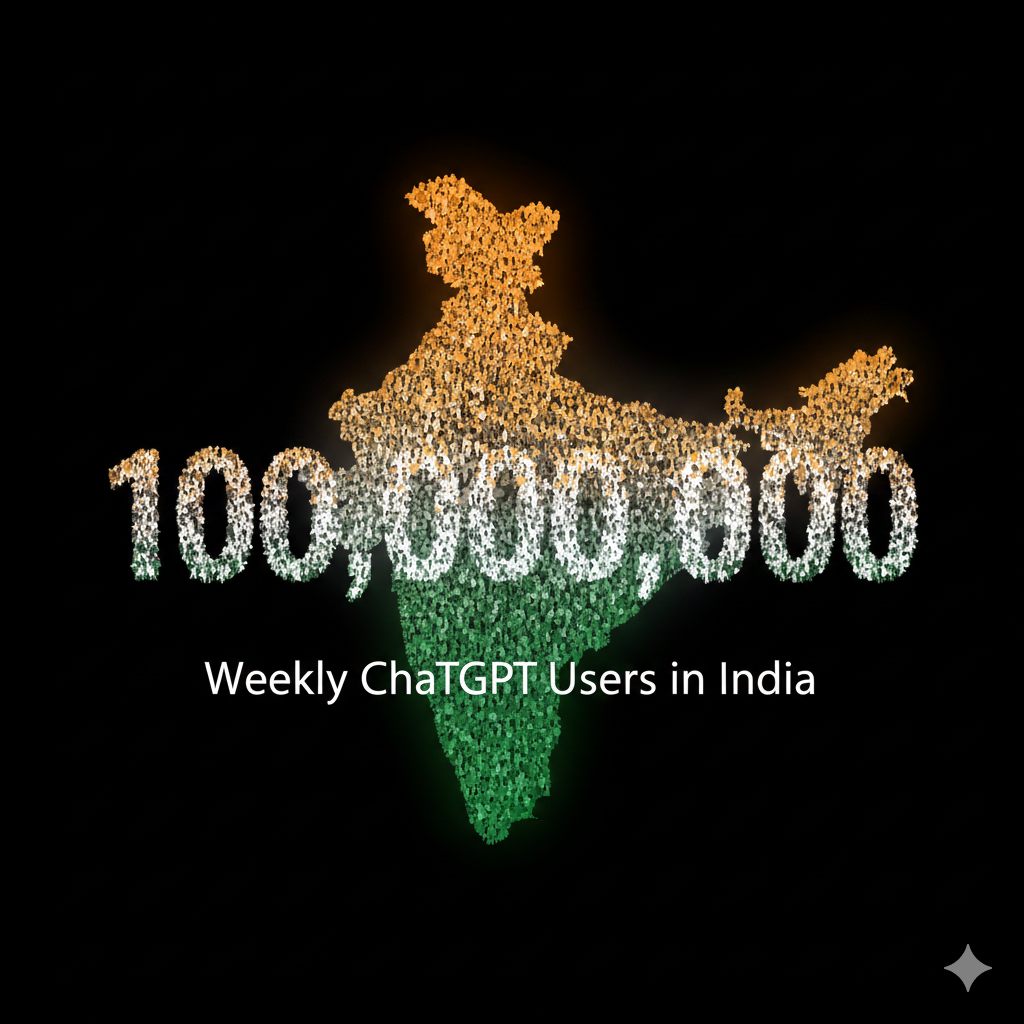
OK, this is the number that made me stop scrolling this morning.
Sam Altman published an article in the Times of India on Sunday — literally the day before the summit — revealing that India now has 100 million weekly active ChatGPT users. That makes India ChatGPT's second-biggest market after the US.
Let me put this in context. ChatGPT has roughly 800-900 million weekly users globally. India — a single country — accounts for more than 10% of that. One in every nine ChatGPT users on earth is Indian.
And here's the part that blew my mind: India has the largest number of student users of ChatGPT in the entire world. Not the US. Not the UK. India. Students are the primary growth engine — using it for studying, exam prep, research, career guidance, everything.
Now, I track AI adoption pretty closely, and I'll be honest — I didn't see this scale coming this fast. When OpenAI opened its Delhi office in August 2025, I thought it was a long-term play. Eighteen months later, they have 100 million weekly users. That's not a long-term play. That's a wildfire.
But here's the question nobody's asking loudly enough: can OpenAI actually make money from these users?
They launched ChatGPT Go for under $5/month in India. Then made it free for a year. That's a classic land-grab move — acquire users now, figure out monetization later. It works when you have $13 billion in funding. It's a lot harder when investors start asking about unit economics.
I'll be watching this closely. 100 million users is a headline. 100 million paying users would be a revolution.
India's Playbook: Show Up Late, Scale Faster Than Everyone
If you only know India from headlines, you might think: "India in the AI race? Really?"
But India has a pattern that most Western observers consistently underestimate. And I think understanding this pattern is the key to understanding why every major tech CEO is in Delhi right now.
India missed the PC revolution. Completely. Then it became the world's largest IT services industry — powering the back-end of half of Fortune 500 companies.
India had barely any landline infrastructure. It skipped that entirely and went straight to mobile. Nearly a billion smartphones today.
India didn't have a credit card culture. So it built UPI — a unified payments interface — and leapfrogged to the most advanced digital payments ecosystem in the world. More digital transactions than the US and Europe combined.
India didn't have universal ID. So it built Aadhaar — biometric identity for 1.4 billion people — and it's now exporting the blueprint. Countries like the Philippines, Morocco, and Uganda are building their national ID systems on MOSIP, an open-source platform directly inspired by Aadhaar.
See the pattern? India doesn't lead the first wave. It watches, learns, and then scales the second wave faster than anyone thought possible.
AI is the next wave. And India ranks third globally in AI competitiveness (behind the US and China), according to Stanford's HAI index.
Abhishek Singh, additional secretary at the Ministry of Electronics and IT, put it well: by overlaying AI on top of existing digital identity, payments, healthcare, and governance infrastructure, India is trying to compress decades of development into years.
I actually believe that's plausible. Not certain — but plausible. And clearly, so do Sam Altman and Sundar Pichai.
Param2 and Sarvam AI: India Stops Waiting for Silicon Valley

This is the part of the summit that excites me most — and the part getting the least media coverage.
Two major Indian AI models are being unveiled this week.
BharatGen's Param2
BharatGen is a government-backed consortium pulling together research from India's top engineering institutions. Their new model, Param2, is a 17-billion parameter system supporting 22 Indian languages. It's voice-first — designed for a population where hundreds of millions of people are more comfortable speaking than typing.
Rishi Bal, BharatGen's CEO, said something that stuck with me: "In India and much of the developing world, cost is not an afterthought."
He's right. And this is the fundamental disconnect between Silicon Valley AI and Global South AI. When OpenAI prices GPT-5 at $200/month, they're building for knowledge workers in San Francisco. When BharatGen builds a voice-first model for farmers in Uttar Pradesh, they're building for an entirely different reality. Both are valid. But only one serves a billion people who've been left out of the AI revolution so far.
Sarvam AI
Sarvam AI is the VC-backed contender — funded by Lightspeed Venture Partners and Khosla Ventures (Vinod Khosla is Indian-born, so there's a personal connection there). They're unveiling an even larger model with similar voice-first, multilingual orientation.
Here's my honest take on these models: they won't compete with GPT-5 or Claude Opus on coding benchmarks. That's not the point. The point is building AI that works in Hindi, Tamil, Bengali, Marathi, Telugu, and 17 other languages — at a price point that a small clinic in a tier-3 city can afford.
If that sounds like a small market to you, remember: India's "small markets" have a habit of becoming the largest in the world within a decade.
Big Tech Is Fighting Over India Right Now
I want to be real about what's happening in Delhi this week. This isn't just a government summit. It's a land grab.
OpenAI is all in. Delhi office since August 2025. Free ChatGPT for students. 100 million weekly users. Altman literally wrote that OpenAI is building AI "in India, with India, and for India." When a CEO uses that phrasing, he's not writing a love letter — he's staking a claim.
Google is matching them move for move. Free AI Pro subscriptions for Indian students. India has the highest global usage of Gemini for learning. They're expanding data centers and deeply embedded in India's developer ecosystem through Android and Cloud.
Anthropic setting up India operations caught me off guard. They've been very US-centric until now. If Dario Amodei is personally attending a summit in Delhi, that tells me Anthropic's board sees India as a must-win market, not a nice-to-have.
Meta is expanding infrastructure. Nvidia is pushing chips (despite Jensen skipping the summit). Everyone wants a piece.
But here's the tension I keep thinking about: the more these companies invest in India, the more data and developer talent India accumulates. And the more India accumulates, the stronger its own homegrown models get. Big Tech is essentially funding its own future competitor. They know it. They're doing it anyway because the alternative — letting your rival own the market — is worse.
It's a fascinating strategic dilemma, and I don't think it gets enough analysis in the tech press.
The Problems Nobody on Stage Will Talk About

Look, I'm genuinely excited about India's AI moment. But I'd be lying if I said there weren't real problems that the summit's glossy presentations will probably gloss over.
The R&D gap is real. India produces world-class AI researchers — who then go work at Google Brain, Meta FAIR, and OpenAI in California. Building frontier models requires not just talent but the institutional research infrastructure to retain that talent. India doesn't have that yet. Aakrit Vaish, founder of AI-focused fund Activate, nailed it: India needs to strengthen its research ecosystem so it's not just "a testing lab for Silicon Valley's algorithms."
Making money in India is brutally hard. Every global tech company has the same experience: Indian users adopt fast and pay slow. 100 million ChatGPT users sounds incredible until you realize most of them are on the free tier. India's GDP per capita is roughly $2,700. Pricing AI products here requires a fundamentally different business model than the US.
Compute infrastructure is still thin. Training large models requires massive GPU clusters. India doesn't have the data center capacity to train frontier models domestically — not yet. That's a dependency that limits true AI sovereignty.
The brain drain hasn't stopped. This is the elephant in the room at every Indian tech event. The people best positioned to build India's AI future are disproportionately living in the Bay Area. Until India creates conditions — compensation, research freedom, institutional prestige — to bring them back or keep them, the gap will persist.
I'm not saying these problems are fatal. I'm saying that any honest analysis of India's AI future has to account for them alongside the optimism.
My Take: Why This Summit Matters More Than Paris or Seoul
I've followed every major AI summit since Bletchley Park. And I think this one matters the most. Here's why.
It's the first time the Global South is hosting. This isn't symbolic — it changes the conversation. When AI governance is discussed in London or Paris, the agenda naturally centers on problems that rich countries care about: job displacement for white-collar workers, deepfake regulation, copyright law. When it's discussed in Delhi, suddenly you're talking about AI for 500 million farmers, healthcare for people who've never seen a specialist, and education in languages that GPT-4 couldn't even handle two years ago. Different venue, fundamentally different priorities.
The "safety vs. impact" shift is overdue. I say this as someone who cares deeply about AI safety — the last three summits spent too much time on hypothetical existential risk and not enough on "how do we get AI to a rural school in Bihar?" India's reframing toward People, Planet, and Progress isn't abandoning safety. It's adding urgency. And urgency is what was missing.
India's affordable AI playbook could become the global template. This is the biggest strategic implication nobody's discussing. If Param2 and Sarvam AI prove that you can build useful, multilingual, voice-first AI at a fraction of Silicon Valley's cost — that playbook doesn't stay in India. It goes to Africa. Southeast Asia. Latin America. The Middle East. Everywhere the next billion AI users live.
And that's the real story of this summit. Not the photo ops with Altman and Pichai. Not Macron's keynote. The real story is whether India can prove that AI isn't just a rich country's game.
From everything I've seen this week, they've got a real shot.
FAQ
What is the India AI Impact Summit 2026?
The India AI Impact Summit is a five-day global AI event held February 16–20, 2026 at Bharat Mandapam in New Delhi. It's the first global AI summit hosted in the Global South, following Bletchley Park (UK, 2023), Seoul (2024), and Paris (2025). The Indian government expects 250,000 visitors, with 3,250+ speakers, 500+ sessions, and delegates from over 100 countries.
Who is attending the India AI Impact Summit?
Confirmed attendees include OpenAI CEO Sam Altman, Alphabet CEO Sundar Pichai, Anthropic CEO Dario Amodei, Google DeepMind CEO Demis Hassabis, Meta AI Chief Scientist Yann LeCun, Mistral CEO Arthur Mensch, Scale AI CEO Alexandr Wang, French President Emmanuel Macron, Brazilian President Lula, and Indian PM Narendra Modi. Nvidia CEO Jensen Huang withdrew on February 14 citing "unforeseen circumstances."
How many ChatGPT users does India have in 2026?
India has 100 million weekly active ChatGPT users as of February 2026, making it ChatGPT's second-largest market after the US. Sam Altman disclosed the figure in a Times of India column on February 15. India also has the world's largest number of student ChatGPT users. The user base reportedly quadrupled in the past year.
What is BharatGen Param2?
Param2 is a 17-billion parameter Mixture of Experts AI model supporting 22 Indian languages, built by BharatGen — a government-backed consortium under IIT Bombay's Technology Innovation Hub. It launched at the summit on February 16, 2026. It was trained using approximately 4,000 GPUs over one month and is being released as a national public digital good, not a commercial B2C product.
What is Sarvam AI?
Sarvam AI is an Indian AI startup backed by Lightspeed Venture Partners and Khosla Ventures. They're building multilingual, voice-first large language models and recently launched Sarvam Edge — an AI platform that runs fully offline on smartphones and laptops for speech recognition, translation, and text-to-speech without cloud servers.
Where does India rank in global AI competitiveness?
India ranks third globally in AI competitiveness behind the US and China, according to Stanford University's HAI index. The country has over one billion internet users, 100 million weekly ChatGPT users, and a growing AI startup ecosystem. Google, Microsoft, and Amazon have committed a combined $68 billion in AI and cloud infrastructure investment in India through 2030.
Why did Jensen Huang skip the India AI Summit?
Nvidia confirmed on February 14 that CEO Jensen Huang was "unable to travel to India at this time" due to "unforeseen circumstances." No specific reason was given. Nvidia sent a senior delegation led by EVP Jay Puri and stated the company "remains deeply committed to the AI Impact Summit and to India's rapidly advancing AI ecosystem."
Why does this summit matter for developing countries?
It's the first global AI summit hosted in the Global South, shifting the conversation from theoretical AI safety to practical AI deployment for billions of people. India's affordable, voice-first, multilingual AI approach — exemplified by BharatGen's Param2 model supporting 22 languages as a public digital good — could become the template for AI adoption across Africa, Southeast Asia, Latin America, and the Middle East.
Learn Generative AI in 2026: Build Real Apps with Build Fast with AI
Want to master the entire AI agent stack, not just OpenClaw?
GenAI Launchpad (2026 Edition) by Build Fast with AI offers:
✅ 100+ hands-on tutorials covering LLMs, agents, and AI workflows
✅ 30+ production templates including Kimi-powered applications
✅ Weekly live workshops with Satvik Paramkusham (IIT Delhi alumnus)
✅ Certificate of completion recognized across APAC
✅ Lifetime access to all updates and materials
Trusted by 12,000+ learners in India and APAC.
8-week intensive program that takes you from beginner to deploying production AI agents.
👉 Enroll in GenAI Launchpad Now
Connect with Build Fast with AI
Website: buildfastwithai.com
LinkedIn: Build Fast with AI
Instagram: @buildfastwithai

