


MIT Study: AI Can Already Replace 11.7% of U.S. Workforce—Here's What It Means
Introduction: The Hidden Cost of AI Automation
A groundbreaking study from the Massachusetts Institute of Technology (MIT) released this week reveals a sobering reality: artificial intelligence can already replace 11.7% of the U.S. labor market, affecting as much as $1.2 trillion in wages across finance, healthcare, and professional services sectors.
But here's the critical insight: the most visible disruptions—tech layoffs in coastal hubs—represent only 2.2% of total wage exposure ($211 billion). The real threat lies hidden beneath the surface, affecting routine functions in human resources, logistics, finance, and office administration across all 50 states. This is what MIT researchers call Project Iceberg, and it's reshaping how policymakers understand AI's impact on American workers.
What Is the Iceberg Index?
The Iceberg Index is a labor simulation tool created by MIT and Oak Ridge National Laboratory (ORNL), powered by the Frontier supercomputer. It operates as a "digital twin" of the U.S. labor market, simulating how 151 million American workers interact across the country and how they're affected by AI adoption.
Key capabilities of the Iceberg Index:
Maps over 32,000 skills across 923 occupations in 3,000 counties
Tags each of the 151 million workers as individual agents with unique skills, tasks, occupation, and location data
Measures where current AI systems can already perform those skills today
Runs population-level experiments to reveal how AI reshapes tasks and labor flows long before changes appear in the real economy
Offers detailed disruption maps down to the zip code level
According to Prasanna Balaprakash, Oak Ridge National Laboratory Director and co-leader of the research: "Basically, we are creating a digital twin for the U.S. labor market."
The Visible vs. Hidden AI Threat: Understanding the Iceberg
The research reveals a striking contrast between what we see and what lies beneath the surface:
MetricTech & Computing (Visible)Across All Industries (Total)Wage Exposure$211 billion (2.2%)$1.2 trillion (11.7%)Primary FocusCoastal tech hubsAll 50 states, rural areasAffected FunctionsSoftware, IT rolesHR, logistics, finance, adminVisibility in ForecastsHighly visibleOften overlooked
The bottom line: The layoffs and role shifts making headlines in tech represent just the tip of the iceberg. The real disruption spreads across routine administrative and operational functions that span every state, county, and community in America.
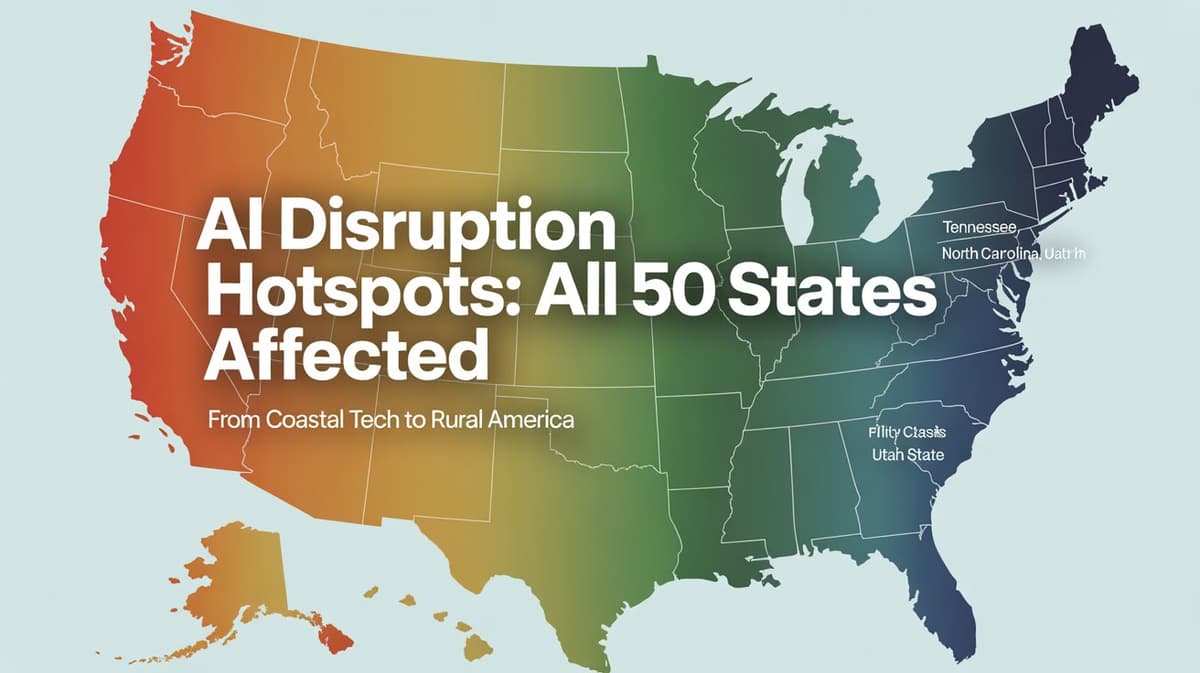
Geographic Spread: AI Disruption Is Everywhere, Not Just Silicon Valley
One of the most important findings from Project Iceberg challenges a common misconception: AI risk is not confined to coastal tech hubs.
The index's simulations show exposed occupations spread across:
All 50 states
Inland and rural regions often left out of AI conversations
Urban and suburban centers facing different automation risks
North Carolina State Senator DeAndrea Salvador, who worked closely with MIT on the project, explains the importance of this geographic granularity:
"One of the things that you can drill down to is county-specific data to essentially say, within a certain census block, here are the skills that are currently happening now, and then matching those skills with what the likelihood of them being automated or augmented, and what could that mean in terms of shifts in the state's GDP in that area, but also in employment."
This localized insight is invaluable for policymakers preparing billion-dollar reskilling and training investments.
Which Industries Face the Most Exposure?
Research shows AI automation exposure concentrates in several key sectors:
High Exposure Sectors:
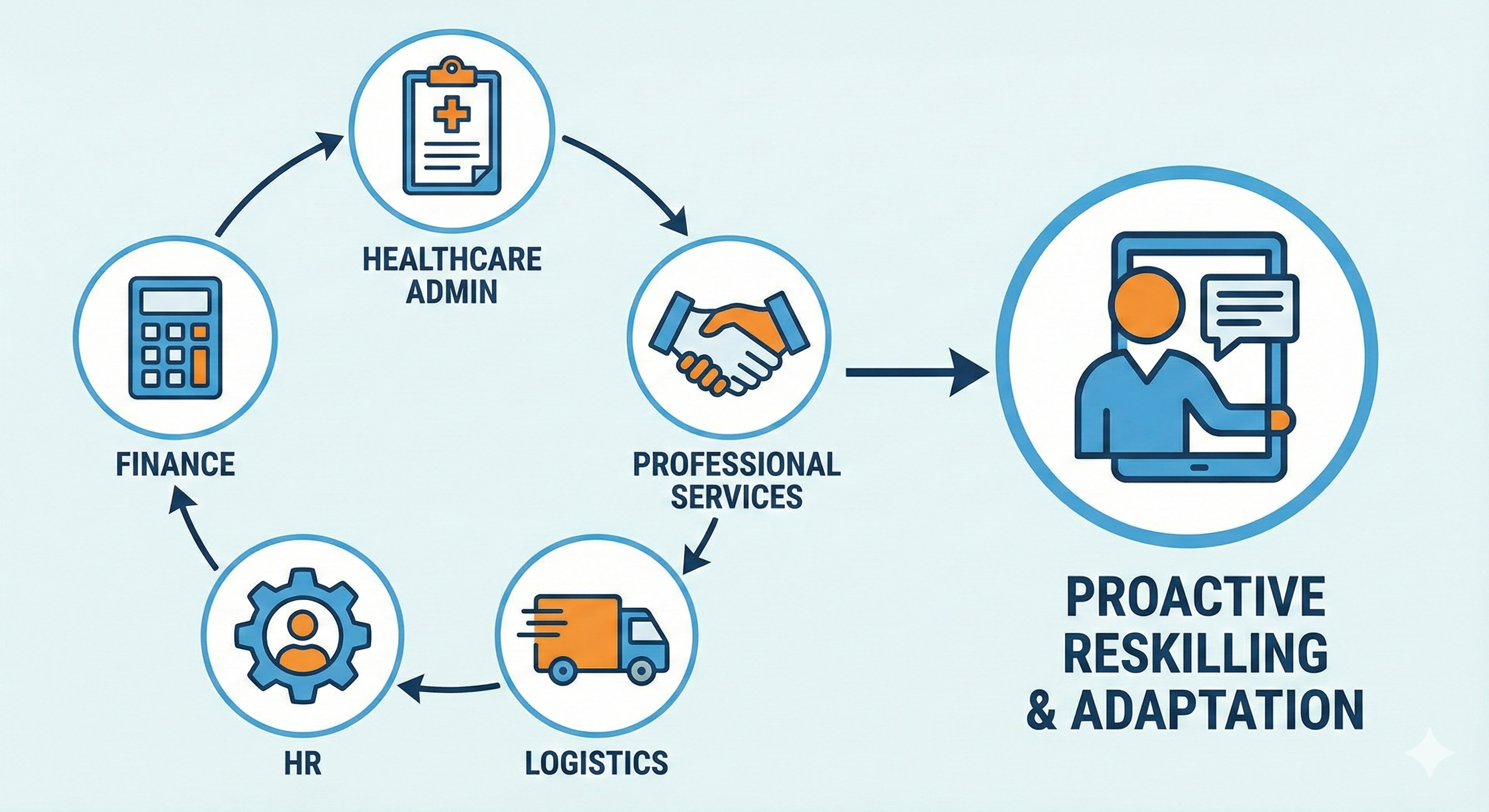
Finance: Routine analysis, reporting, data entry
Healthcare Administration: Insurance processing, billing, scheduling
Professional Services: Legal research, document review, client management
Human Resources: Recruitment screening, onboarding, payroll
Logistics: Route optimization, inventory management
Office Administration: Data entry, scheduling, communications
Lower Exposure Sectors (Physical Dependency):
In contrast, states like Tennessee with heavy dependence on physical work—healthcare delivery, nuclear energy, manufacturing, and transportation—show greater insulation from purely digital automation. However, the question remains: how can these industries leverage robotics and AI assistants to strengthen operations rather than replace workers?
How States Are Using Project Iceberg for Policy Planning
Recognizing the research's value, multiple state governments have partnered with MIT to build proactive workforce strategies:
Tennessee: Became the first state to cite the Iceberg Index in its official AI Workforce Action Plan released this month, using the data to anticipate disruption and plan interventions.
North Carolina: State leaders are preparing similar reports based on Iceberg's modeling to guide workforce development investments.
Utah: Working with MIT to validate models and develop state-specific policy scenarios.
The interactive simulation environment allows policymakers to experiment with different policy levers, including:
Shifting workforce training dollars
Tweaking reskilling programs
Exploring technology adoption scenarios
Testing how changes affect local employment and GDP
What This Means for Businesses and Workers
For Business Leaders:
The Iceberg Index helps identify which functions and roles are most exposed to AI automation, enabling proactive workforce planning and strategic technology adoption that complements rather than replaces human workers.
For Policymakers:
The research provides a structured roadmap to prioritize training investments, identify exposure hotspots, and test interventions before committing billions to implementation.
For Workers:
Understanding your skill exposure helps guide career development and reskilling priorities. The data suggests focusing on skills that complement AI—complex problem-solving, human-centered roles, and specialized domain expertise.
Project Iceberg: A Living Sandbox, Not a Crystal Ball
It's important to note: Project Iceberg is not a prediction engine about exactly when or where jobs will be lost. Instead, it's designed as a skills-centered snapshot of what today's AI systems can already do, offering policymakers a structured way to explore what-if scenarios before committing real money and legislation.
As North Carolina Senator Salvador emphasizes: "It is really aimed towards getting in and starting to try out different scenarios."
The research represents a paradigm shift in how we approach AI workforce planning—moving from reactive layoff announcements to proactive, data-driven policy design.
The Bottom Line: Preparation Over Panic
The MIT Iceberg Index study reveals that AI disruption is already here, but it's not evenly distributed. It's concentrated in routine, administrative, and analytical functions spread across all 50 states—not just in coastal tech companies.
The good news: We have the data and tools to prepare. States, businesses, and workers can use insights from Project Iceberg to:
Identify exposure hotspots in their regions and industries
Prioritize reskilling investments in high-exposure occupations
Build AI-complementary strategies that strengthen industries rather than hollow them out
Test interventions before full-scale implementation
The question isn't whether AI will disrupt the workforce—it's whether we'll be proactive or reactive in managing that disruption.
Resources & Next Steps
Explore the Iceberg Index: https://iceberg.mit.edu/
Read Tennessee's AI Workforce Action Plan: https://www.tn.gov/content/dam/tn/finance/aicouncil/documents/TN%20AI%20Advisory%20Council%20Action%20Plan%20-%20November%202025.pdf
Learn more about MIT's research: Massachusetts Institute of Technology
Conclusion
The MIT Iceberg Index study fundamentally changes how we discuss AI and employment. It moves the conversation from sensational tech layoffs to a detailed, data-driven understanding of where automation truly threatens American workers—and where we can intervene with policy, training, and strategic technology adoption.
For policymakers, business leaders, and workers alike, Project Iceberg is an essential tool for navigating the AI-driven future of work.
Master Generative AI in Just 4 Weeks
Want to go from AI news consumer to AI builder? Join the GenAI Launchpad by Build Fast with AI.
Gain hands-on, project-based learning with 100+ tutorials, 30+ ready-to-use templates by Satvik Paramkusham (IIT Delhi alum). No coding required—start building real-world AI solutions today.
👉 Enroll now: www.buildfastwithai.com/genai-course
⚡ Limited seats available!
Resources & Community
Join our vibrant community of 12,000+ AI enthusiasts and level up your AI skills—whether you're just starting or already building sophisticated systems. Explore hands-on learning with practical tutorials, open-source experiments, and real-world AI tools to understand, create, and deploy AI agents with confidence.
Website: www.buildfastwithai.com
GitHub (Gen-AI-Experiments): git.new/genai-experiments
LinkedIn: linkedin.com/company/build-fast-with-ai
Instagram: instagram.com/buildfastwithai
Twitter (X): x.com/satvikps
Telegram: t.me/BuildFastWithAI

